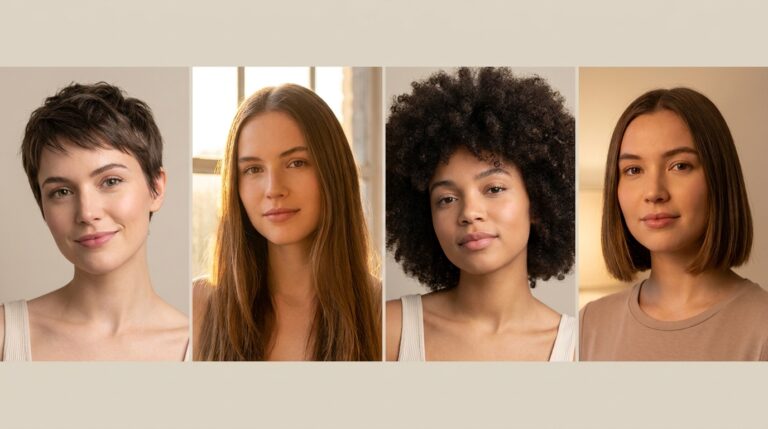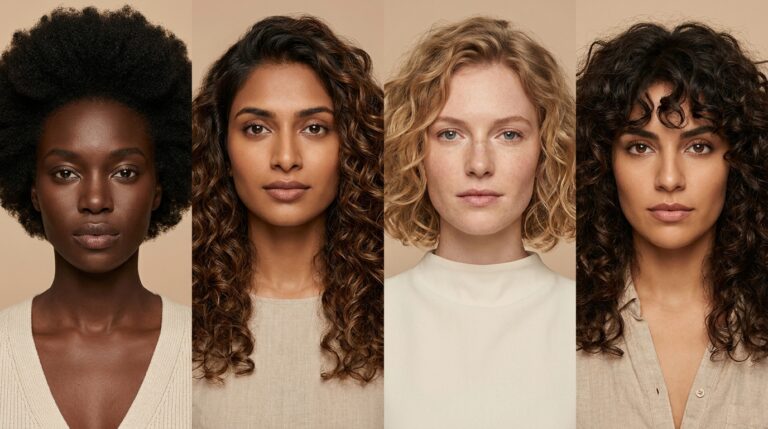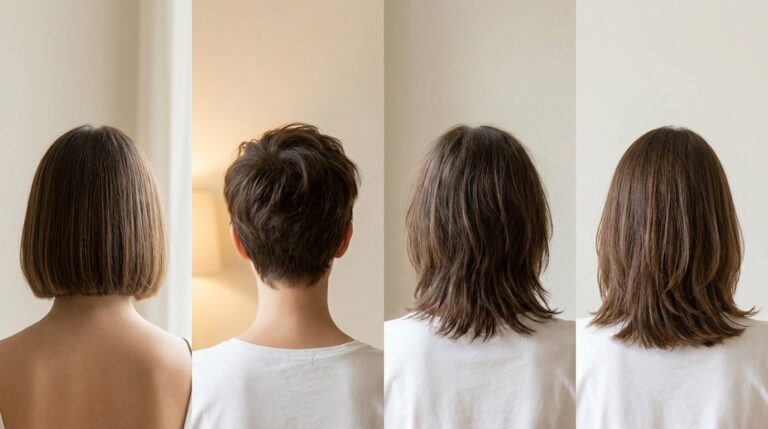
Best Hairstyles for Round Face Shapes
Round face shapes are defined by soft curves, full cheeks, and a similar width and length across the forehead, cheeks, and jaw, with very few sharp angles anywhere along the hairline or jawline. It’s a face shape that photographs beautifully and tends to look youthful for longer than more angular shapes, but it also means most of the rules around flattering hairstyles come down to one consistent goal: adding the illusion of length and angles where the face is naturally soft and curved.
That doesn’t mean round faces are limited in their options. Quite the opposite, in fact. The right haircut can elongate, add dimension, or shift focus toward your best features, and the wrong one can just as easily emphasize roundness you’d rather soften. The good news is that the underlying principles are simple once you know them, and they apply whether you’re working with short hair, long hair, straight strands, or curls. Below are the cuts and styles that tend to work especially well for round faces, along with a few worth approaching a little more carefully, plus some quick styling tips to help any of these looks go the extra mile.
How to Tell If You Have a Round Face
Before diving into styles, it helps to confirm the shape you’re actually working with, since face shape guidelines only work if you’ve correctly identified your starting point. Round faces typically have a similar width at the forehead, cheekbones, and jawline, with a softly curved hairline and chin rather than an angular one. The cheeks are often the widest, fullest point of the face, and the overall structure reads as gently circular rather than long or angular.
A simple way to check: measure the width of your face at its widest point and the length from hairline to chin. If your face is roughly as wide as it is long, with curved rather than pointed edges, you’re very likely working with a round shape. Another quick test is to look at your jawline in the mirror. If it curves smoothly without a defined point at the chin, and your cheeks are the fullest part of your face, that’s a strong sign too. It’s worth noting that round faces aren’t the same as full or heart-shaped faces, even though people sometimes confuse them. A heart-shaped face narrows sharply toward the chin, while a round face keeps a soft, even curve all the way down.
Long Layers

Long layers that start below the chin are one of the most universally flattering options for round faces. By removing bulk around the cheek and jaw area while keeping length elsewhere, layers create a slimming, elongating effect without requiring a dramatic cut. This is part of why long layers show up so consistently as a recommendation across nearly every face shape guide, but they’re particularly useful here because of how directly they address the width that defines a round face.
Why it works: The layers fall away from the face rather than hugging the cheeks, which breaks up width and adds vertical movement instead. The longer the layers, the more elongating the effect tends to be, so if you’re after a more dramatic slimming look, ask your stylist to keep the shortest layers below your chin rather than at cheek level.
The Long Bob (Lob)
A lob that hits between the chin and shoulders is a great middle ground option for anyone who wants shorter hair without going straight into a traditional bob. Kept slightly longer than chin length, it avoids cutting straight across the widest part of the face, which is the main risk with shorter bobs on round shapes.
Why it works: The length grazes past the cheeks rather than stopping right at them, which keeps the eye moving downward instead of stopping at the jaw. A lob also tends to be easier to style day to day than longer hair, which makes it a practical choice if you want a flattering shape without a lengthy morning routine.
Side-Swept Bangs
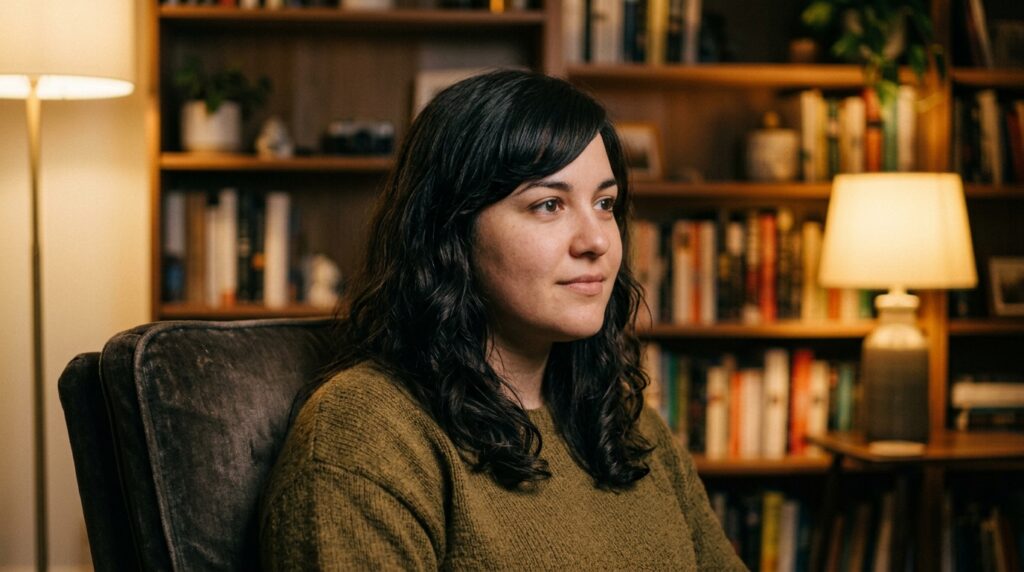
Full, blunt bangs cut straight across tend to shorten the face and widen the forehead visually, which isn’t ideal for round shapes. Side-swept bangs do the opposite. They create a soft diagonal line that adds asymmetry and subtly elongates the face.
Why it works: The diagonal sweep breaks up horizontal width and draws the eye on an angle rather than straight across. Side-swept bangs also tend to grow out more gracefully than blunt ones, since there’s no hard line to maintain as they lengthen, which makes them a lower-maintenance choice between salon visits.
High Ponytails and Updos
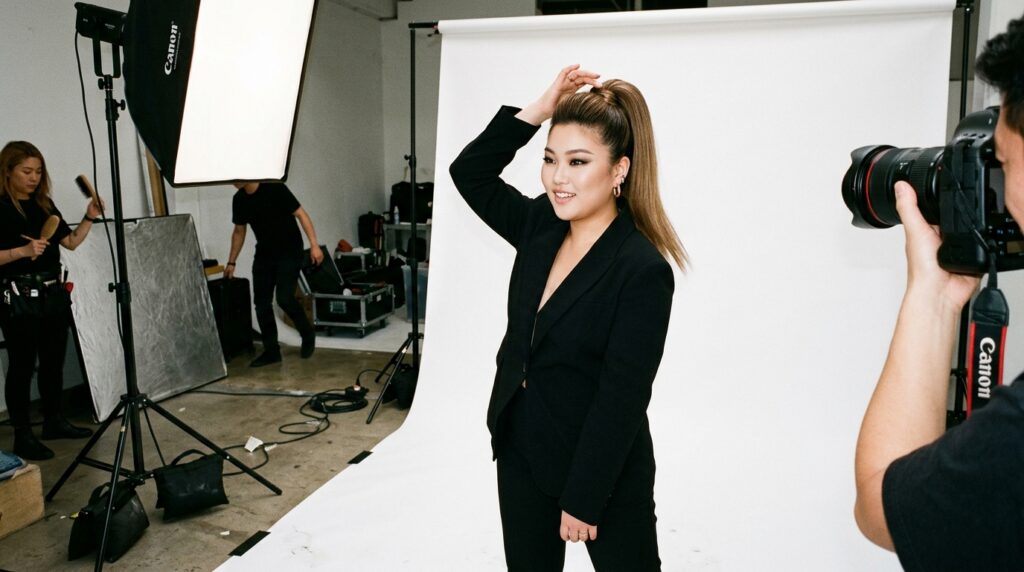
Pulling hair up and away from the face, with some height at the crown, adds vertical length that a round face benefits from. A sleek high ponytail or an updo with volume on top works particularly well for special occasions, though a slightly looser, more relaxed version can work just as well for everyday wear.
Why it works: Height at the crown visually stretches the face vertically, balancing out width at the cheeks and jaw. If you wear ponytails often, try positioning yours slightly higher than usual and adding a bit of backcombing or volumizing product at the roots before pulling your hair up, since the height is doing most of the flattering work here.
Long, Face-Framing Layers with a Deep Side Part
Combining long layers with a deep side part, rather than a center part, adds asymmetry that naturally slims the face. A center part, by contrast, can emphasize width by splitting the face into two equal, round halves, drawing attention to exactly the kind of symmetry a round face already has.
Why it works: The deep part creates an angular line down one side of the face, interrupting the otherwise symmetrical curve of a round shape. This is a small, easy change to make at home if you’re not ready for a haircut yet. Simply shifting your part further to one side can have a noticeable slimming effect almost immediately.
Shag Haircuts
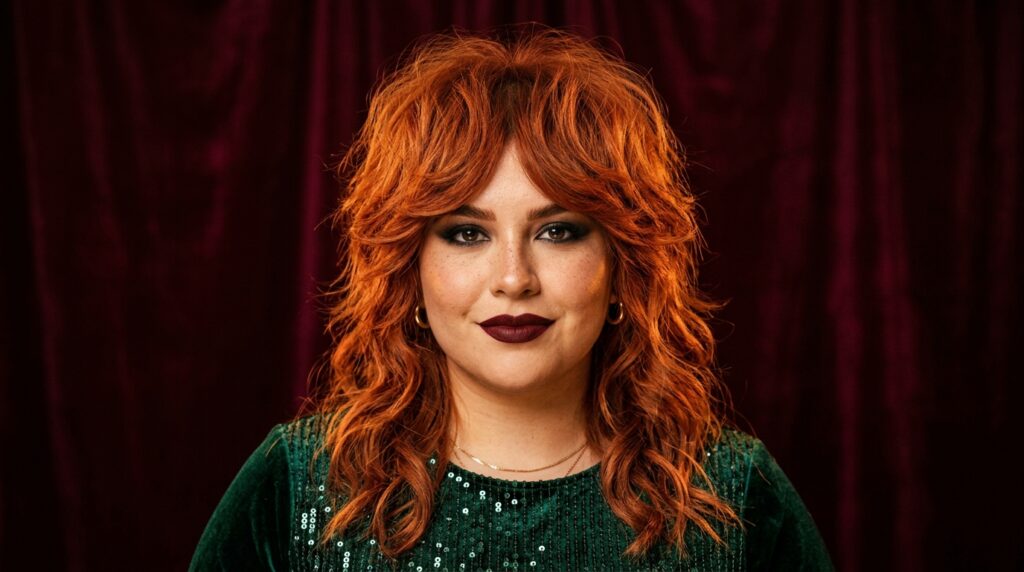
A shag’s heavy, choppy layering, especially around the crown and face-framing pieces, adds texture and movement that distracts from width. The volume tends to sit higher on the head rather than out at the cheeks, which is a flattering trade off for round faces.
Why it works: Volume concentrated at the crown elongates the silhouette, while face-framing layers soften the jawline without adding bulk at the widest point. Shags also tend to suit round faces particularly well because the choppy texture itself reads as more angular, even without a single sharp line in the cut.
Asymmetrical Bobs
An asymmetrical bob, where one side is cut noticeably shorter than the other, introduces an angular line that a perfectly round face doesn’t naturally have. It’s a more daring option than most on this list, but an effective one for adding genuine structure rather than just softening curves.
Why it works: The uneven line breaks the natural symmetry of a round face, adding the kind of angularity that softer, even cuts can’t replicate. Because the asymmetry is doing the visual work, this cut tends to look most striking on straight or only slightly wavy hair, where the line stays clearly defined.
Long, Loose Waves
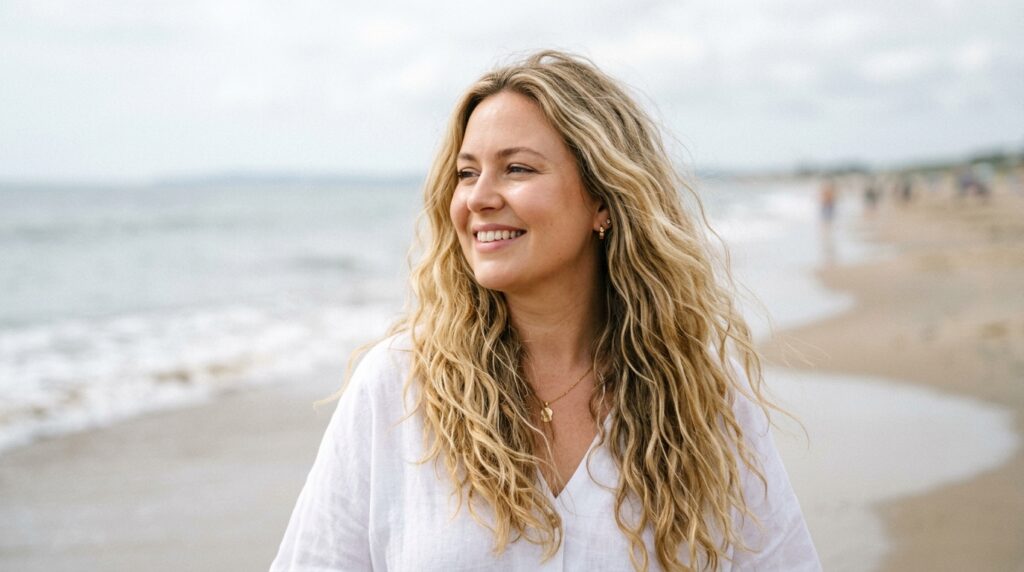
Soft waves add volume primarily in the mid-lengths and ends, rather than tight curls or pin-straight hair, which tends to stay closer to the cheeks. This keeps fullness lower down rather than bulking up the widest part of the face.
Why it works: Waves create movement and shape that sit below the jawline, drawing the eye downward and elongating the overall look. If your hair is naturally straight, loose waves from a wand or flexi-rods can recreate this effect without committing to a perm, and they tend to look most flattering when the waves start a few inches below the chin rather than right at the roots.
Curtain Bangs
Unlike full, blunt bangs, curtain bangs part down the middle and sweep outward on a soft diagonal. They frame the face on both sides instead of cutting straight across the forehead, which avoids the width-adding effect you tend to get with a traditional fringe.
Why it works: The diagonal, parted shape echoes the same slimming angle as a deep side part, while still giving you the option of bangs. Curtain bangs are also one of the more versatile fringe styles to grow out, since they can be tucked back or pinned to the sides on days you’d rather not style them.
Layered Lengths Past the Collarbone
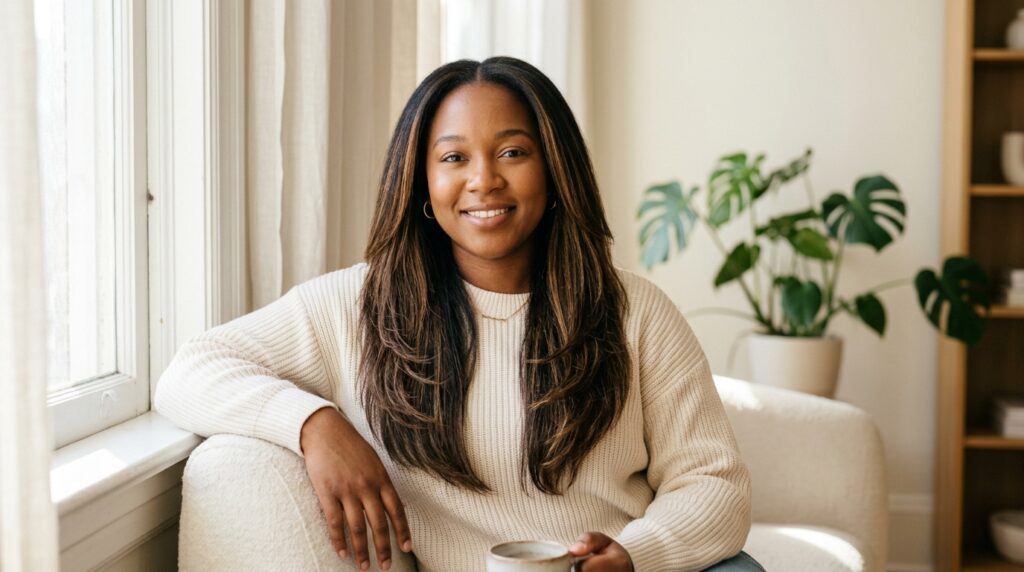
For those who want to keep their hair long, layering becomes even more important the longer the hair gets. Heavy, blunt ends on very long hair can pool weight at the bottom without doing much to slim the face higher up. That’s why it helps to have layers cut throughout, not just at the very ends, so movement keeps happening near the cheeks and jaw too.
Why it works: Layers distributed through the length, rather than only at the tips, continue the elongating, slimming effect all the way down rather than stopping it at the shoulders. This is a particularly good option if you’ve grown your hair out for years and don’t want to lose much length, since the layering can be added without significantly shortening the overall style.
Styles to Approach Carefully
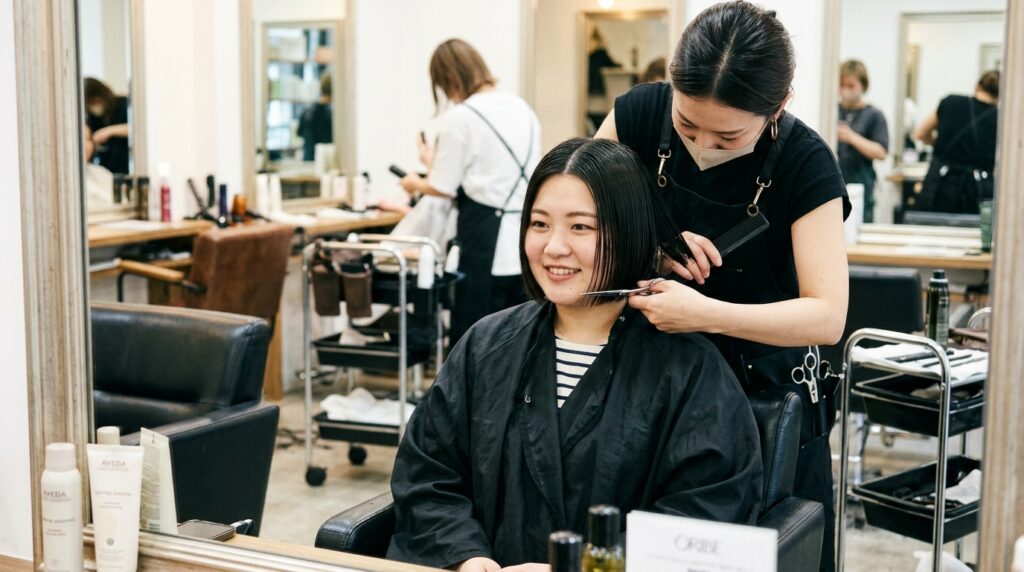
A few styles tend to work against round face shapes rather than for them, though approaching carefully doesn’t mean avoiding entirely. A skilled stylist can adapt almost anything to suit your face shape with the right tweaks.
Chin length blunt bobs cut straight across tend to land right at the widest part of the face, emphasizing roundness rather than softening it. Full, blunt bangs can shorten the face and add width at the forehead. Center parted styles with no layering keep the face perfectly symmetrical, which reinforces the round shape rather than breaking it up.
If you love any of these styles regardless, ask your stylist about modifications. Slightly longer length, added layers, or a side part can make a meaningful difference while keeping the overall look you want. Plenty of people with round faces wear all three of these styles confidently. The key is usually a small adjustment rather than avoiding the look altogether.
Quick Styling Tips for Round Faces
Beyond the cut itself, a few simple styling habits can reinforce the slimming, elongating effect you’re going for. Adding volume at the crown, whether through backcombing, a round brush blowout, or a volumizing mousse, draws the eye upward and helps balance out width lower on the face. Avoiding volume directly at the cheeks or jaw, such as voluminous curls that flare out right at ear level, helps prevent emphasizing the face’s widest point.
Highlights and face-framing color placed slightly forward, around the cheekbones and jaw, can also create a similar slimming illusion to a haircut, even without changing the cut itself. This is a useful option if you’re not ready to commit to a new style but still want a subtle change. Finally, texture matters more than people expect. Sleek, glassy styles tend to emphasize the smooth curve of a round face, while textured, piecey styles break that curve up, which is part of why so many of the recommendations above lean on layers, waves, or choppy ends rather than perfectly smooth finishes.
Frequently Asked Questions
Do bangs make a round face look rounder? It depends on the type of bangs. Full, blunt bangs cut straight across tend to shorten the face and add width, which isn’t ideal. Side-swept or curtain bangs, on the other hand, create a diagonal line that has the opposite effect, making them a much safer choice for round faces.
Is short hair flattering on round faces? Yes, with the right shaping. Shorter cuts like a shag or an asymmetrical bob can work very well, since the key isn’t really about length. It’s about avoiding a straight, even line right at the widest part of your face and instead adding some kind of angle, texture, or asymmetry.
Should I avoid a center part completely? Not necessarily, but a deep side part is generally more flattering for round faces, since it interrupts the natural symmetry that a center part preserves. If you prefer a center part for other reasons, pairing it with long layers or waves can help offset the effect.
Finding What Works for You
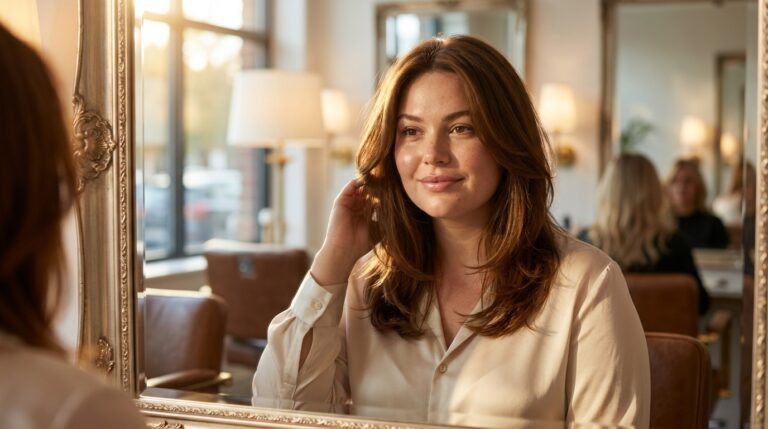
Face shape guidelines are a helpful starting point, not a strict rulebook. Hair texture, density, hair color, and personal style all play a role in how any given cut actually looks on you, and plenty of people with round faces wear chin-length bobs or full bangs beautifully by adjusting the smaller details, like a slight angle, some added texture, or a side part instead of a center one. The goal isn’t to avoid every style on the approach-carefully list. It’s to understand why those styles behave the way they do, so you can make an informed choice rather than guessing.
The throughline across nearly every flattering option here is the same: add length, add asymmetry, or add volume somewhere other than directly at the cheeks. Keep that principle in mind, bring two or three reference photos to your next appointment, and don’t be afraid to ask your stylist how a style you love could be tailored specifically to your face shape rather than ruled out entirely.