Haircuts That Give Chubby Faces More Definition
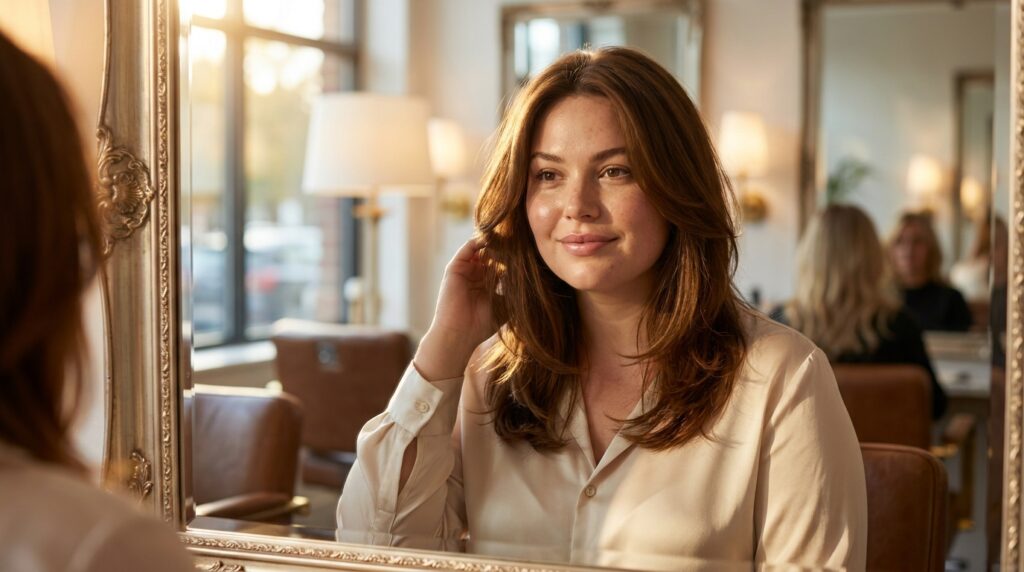
Choosing a hairstyle for a fuller face should not feel like a problem to solve. And yet most hairstyle guides for chubby or round faces are written entirely around minimizing, slimming, and disguising, which misses the point entirely. The goal of a good hairstyle is not to make your face look like a different face. It is to find the cut, length, and style that flatters your features and makes you feel genuinely confident in what you see in the mirror.
That said, there are hairstyle principles that work consistently well for fuller faces, and understanding them gives you a useful framework for making decisions that suit your specific features. This guide covers the hairstyles that look most flattering on chubby and fuller faces, what makes each one work, and the styling details that make a real difference.
What the Styling Principles Actually Mean
The styling principles for fuller faces are about creating visual balance rather than hiding anything. Fuller faces tend to be widest at the cheeks and have a rounded overall silhouette. Hairstyles that add height at the crown and length below the chin create a vertical visual line that adds the impression of length to the face. Hairstyles that add significant width at the cheek level do the opposite. Understanding these principles as tools for balance rather than rules for disguise makes choosing a hairstyle a considerably more empowering process. The best hairstyle for a fuller face is the one that balances your features in a way that feels like you, not one that makes you look like someone with a different face shape entirely.
The Long Layered Lob
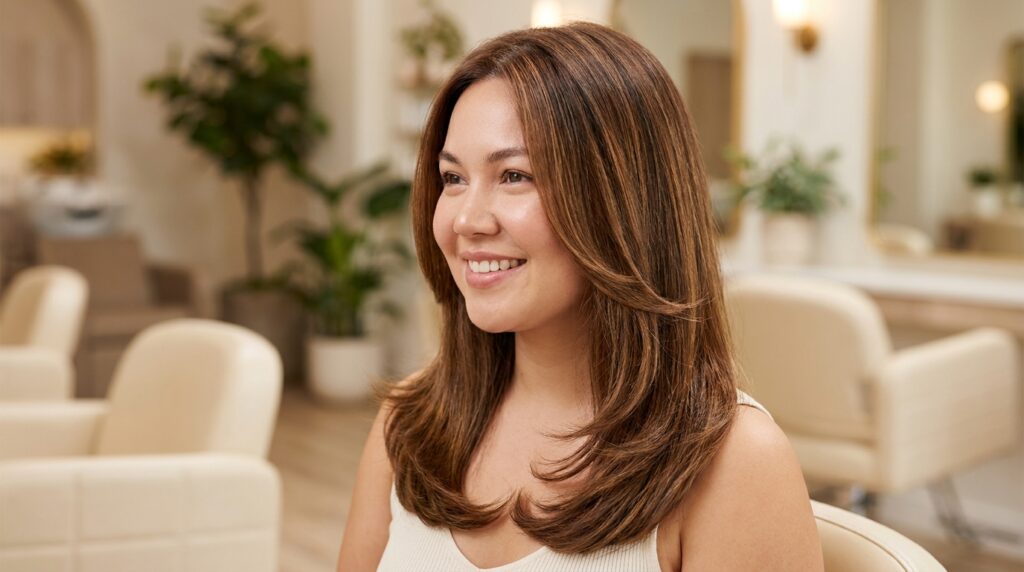
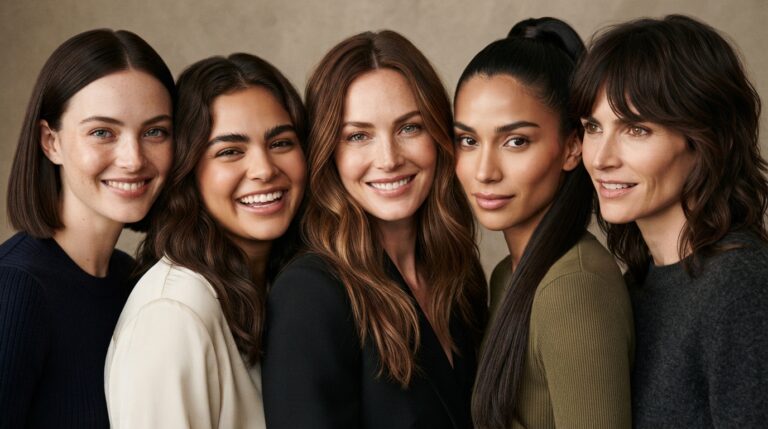
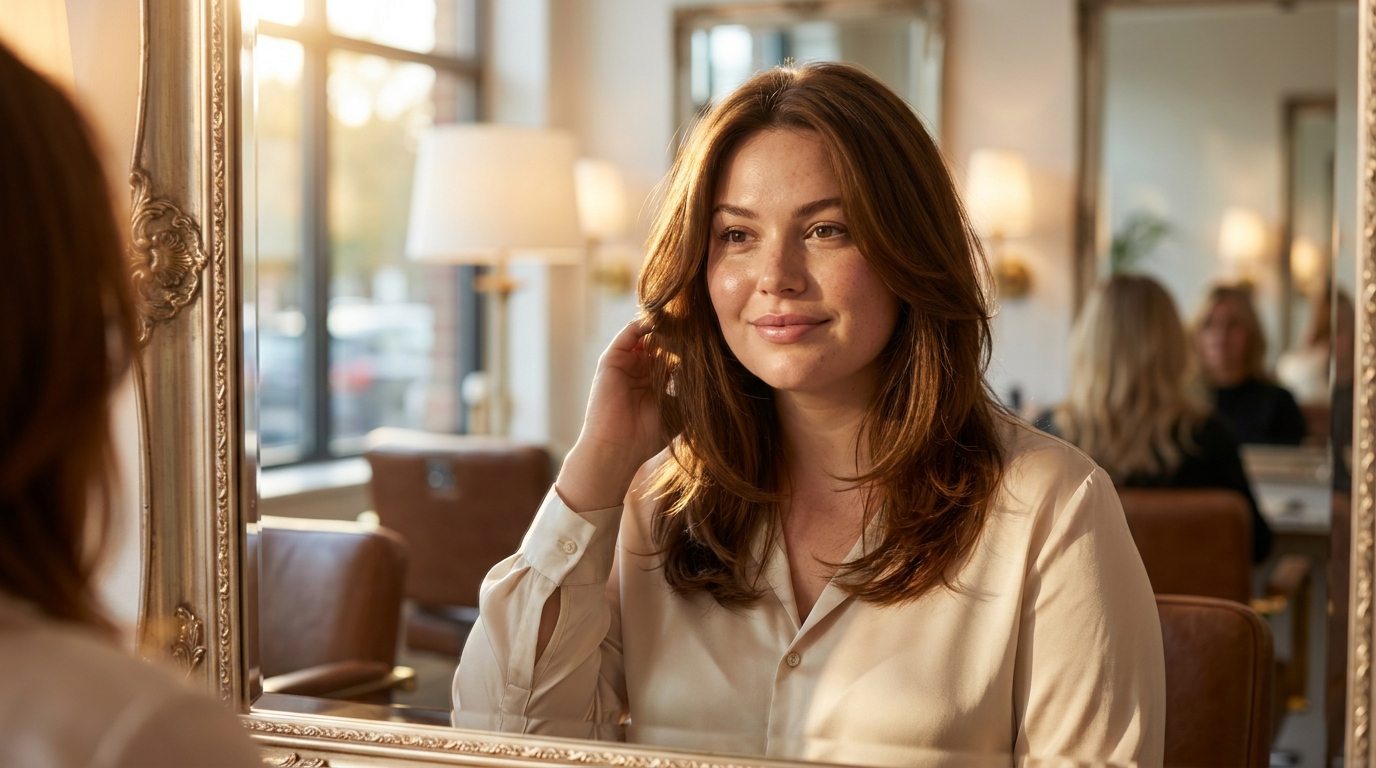
A lob with soft layers that fall below the chin is one of the most consistently flattering hairstyles for fuller faces because the length below the chin creates a vertical visual line that adds the impression of length to the face. The key detail is that the hair falls below the chin rather than ending at it, which draws the eye downward rather than letting it settle on the widest part of the face. Soft layers throughout the length create movement and prevent the hair from adding width at the cheek level. Face-framing layers at the front add definition without adding width. A lob with curtain bangs and soft layers is one of the most complete and flattering combinations for a fuller face and is consistently one of the most recommended styles for this face type.
Curtain Bangs
Curtain bangs are one of the most universally recommended additions to any hairstyle for a fuller face because the center-parted fringe creates a vertical line at the center of the face that draws the eye inward and upward. The soft fringe falls to each side of the face from a center part, creating a narrowing effect at the forehead that adds the visual impression of length. Curtain bangs work on straight, wavy, and curly hair and suit every hair length from a bob to very long hair. They also suit the fuller face particularly well because they frame the forehead without sitting flat against it or cutting the face in half the way a blunt fringe can. Growing curtain bangs out is also considerably easier than growing out a blunt fringe, making them a lower-commitment starting point.
The Side Part
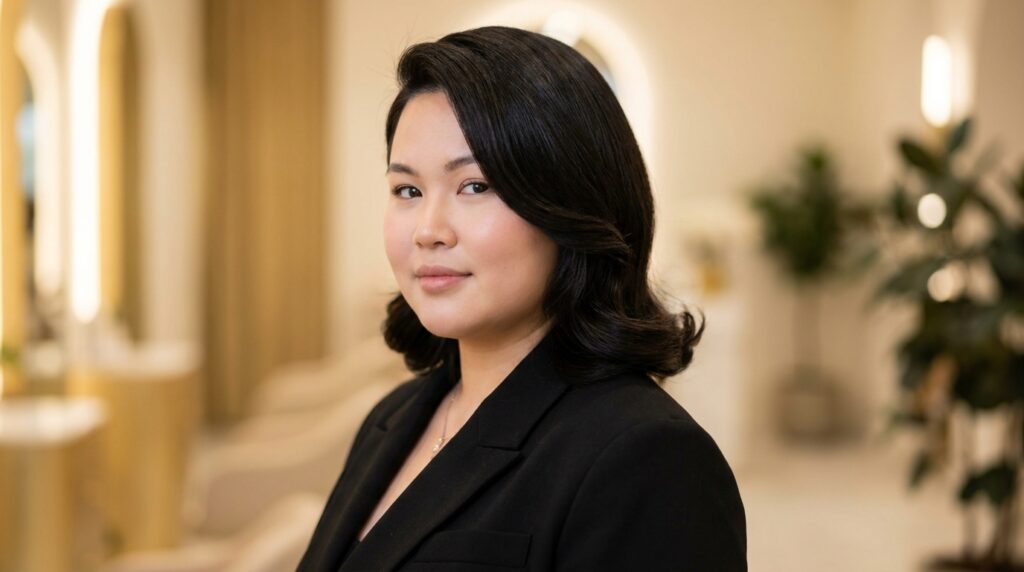
A deep side part is one of the simplest and most effective styling changes for a fuller face because it creates asymmetry that breaks up the symmetrical roundness of the face and adds the visual impression of length. Moving the parting from the center to one side creates a diagonal line across the top of the head that draws the eye vertically rather than horizontally. On medium and long hair the side part sweeps a larger volume of hair to one side, which creates the impression of a slimmer face by concentrating the visual weight. On shorter hair the side part still adds the asymmetry that makes the face look longer and more defined. A deep side part works on every hair length and hair type.
Long Layers
Long layers are one of the most structurally important hairstyle choices for fuller faces because they create movement and a flowing silhouette that draws the eye downward rather than outward. Single-length hair on a fuller face can add visual width at the cheek level by sitting against the face as a flat, solid curtain of hair. Long layers that start around the collarbone and build through the length allow the hair to fall away from the face naturally, which creates a more slimming silhouette. Face-framing layers at the front add definition and draw attention to the eyes rather than the cheeks. The combination of long layers and a side part is one of the most reliably flattering choices for fuller faces across every hair type.
The High Ponytail
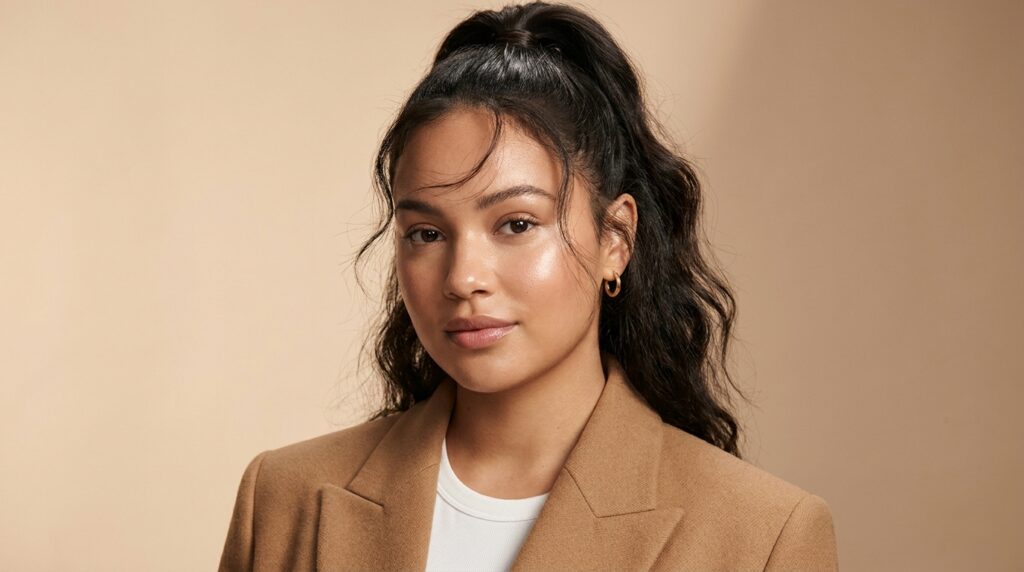
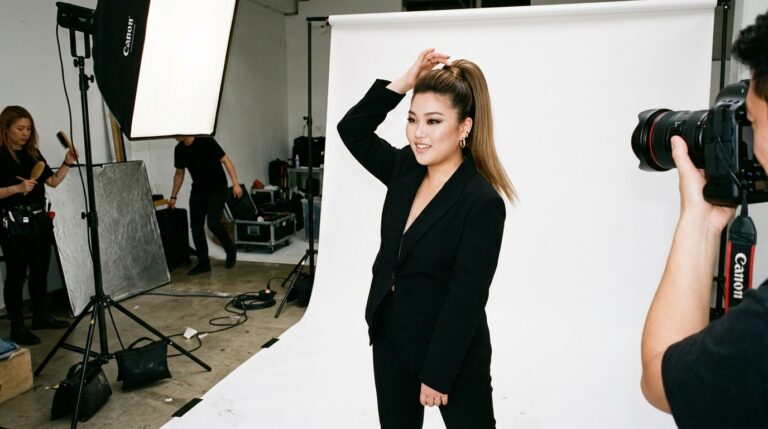
A high ponytail is a particularly flattering updo for fuller faces because it adds height at the crown and draws the eye upward, creating the visual impression of a longer, more defined face. The higher the ponytail, the more vertical lift it creates and the more elongating the effect. A high ponytail with some volume backcombed into the crown before gathering adds additional height. Leaving a few face-framing pieces loose around the forehead softens the look and prevents the style from appearing too severe. A high ponytail works at medium and long lengths and suits every hair type. It is also one of the fastest and most reliable everyday styles for a fuller face, which makes it worth having as a go-to option.
The Sleek High Bun
A sleek high bun creates the same vertical lengthening effect as a high ponytail and is one of the most elegant updo options for fuller faces. The height at the crown adds visual length to the face and the sleekness of the style creates a clean, polished silhouette that suits formal and professional occasions. On a fuller face a bun positioned high at the crown is significantly more flattering than a low bun at the nape, which draws the eye downward and can make the face appear wider. A few soft face-framing pieces left out around the forehead and temples add a feminine touch that prevents the style from looking too severe. The sleek high bun works on medium to long hair of every type.
The Wavy Lob
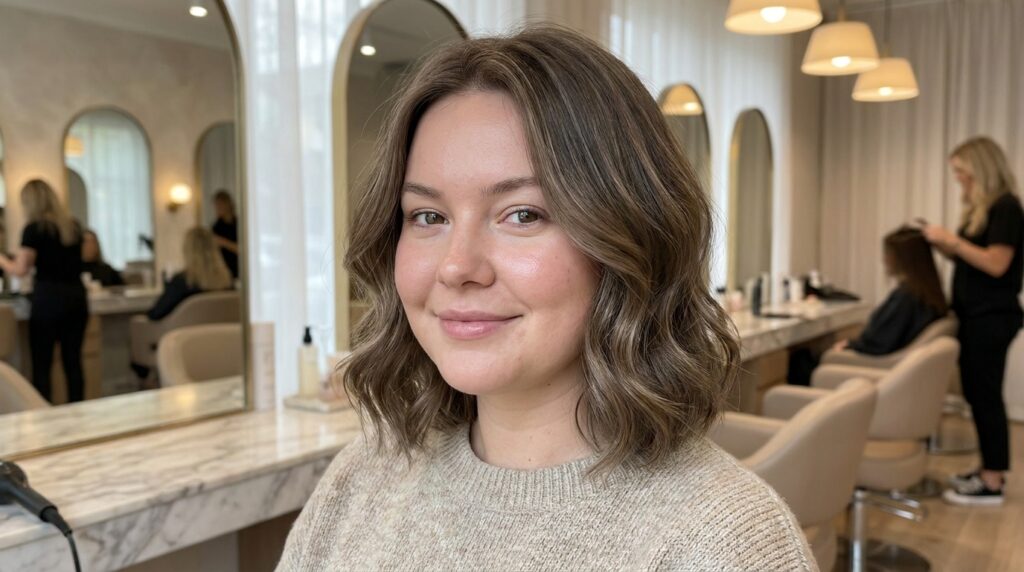
A wavy lob is a softer, more relaxed version of the layered lob and it suits fuller faces because the waves create vertical movement that draws the eye down rather than outward. Waves that start from the mid-lengths downward keep the hair relatively smooth and flat around the cheek area while creating volume and movement below the chin, which is the ideal distribution of volume for a fuller face. A large barrel curling wand used on alternating sections away from the face creates the natural, slightly irregular wave pattern that looks most flattering. On naturally wavy hair a curl cream and air-dry creates a similar effect with no heat required. The wavy lob suits oval, round, and heart-shaped faces and is one of the most Pinterest-friendly hairstyles for fuller faces.
The Pixie Cut for Fuller Faces
A pixie cut on a fuller face is a bold choice that works beautifully when approached with the right styling details, and it is significantly more flattering on this face type than most guides suggest. The key is ensuring the pixie has volume and texture at the crown rather than being flat and close-cropped, which adds the vertical height that a fuller face benefits from. A side-swept detail at the front replicates the narrowing effect of a side part at a very short length. A tapered pixie with close-cropped sides reduces the width at the sides while keeping fullness at the top, which is exactly the distribution of volume that flatters a fuller face. The pixie on a fuller face suits women with strong, confident features and is a style that rewards boldness.
What to Think About With Blunt Bobs
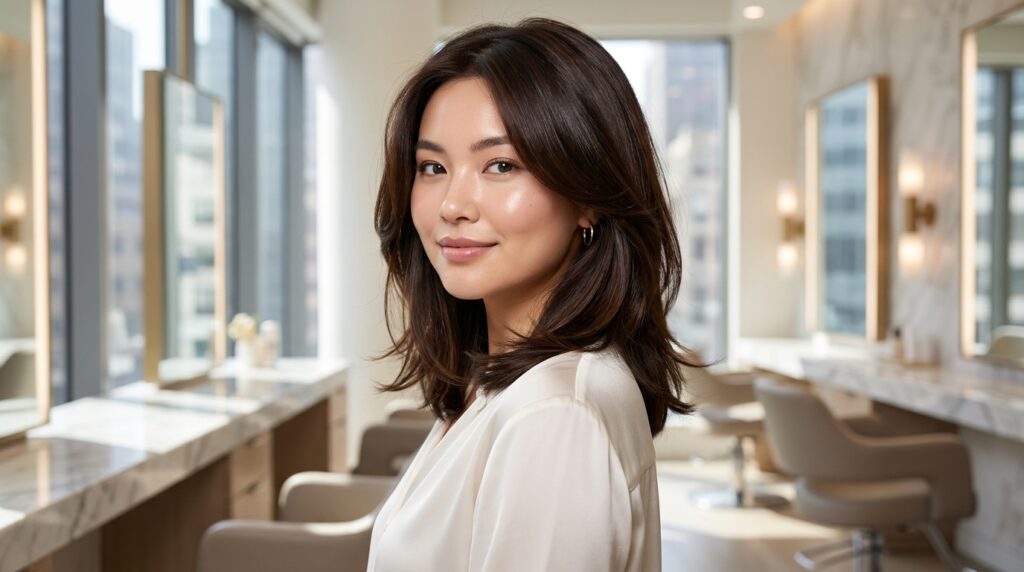
A chin-length blunt bob requires some consideration for fuller faces because the ends of the hair sit directly at the widest point of the face. A very blunt bob ending precisely at the chin can draw the eye directly to the cheeks and add the impression of width. However, a slightly longer bob that falls just below the chin, or a bob with textured, undone ends rather than a sharp blunt line, creates considerably more movement and is more flattering. An A-line bob, where the hair is shorter at the back and longer at the front, is particularly effective because the longer front sections draw the eye downward and frame the face rather than sitting squarely against the jaw. A bob with a deep side part is also considerably more flattering on a fuller face than the same bob with a center part.
The Half-Up with Volume at the Crown
A half-up style with some volume lifted at the crown is one of the most flattering and practical everyday hairstyles for fuller faces. Gathering the top section and securing it while backcombing the crown slightly first creates lift at the top of the head that adds the vertical visual length the fuller face benefits from. The loose sections below the half-up frame the lower face and draw the eye downward. On wavy or curly hair the natural texture of the loose sections adds further vertical movement. A half-up with a high secured section and a few face-framing pieces left loose around the forehead is one of the most reliably flattering everyday styles for this face type across every hair length.
The Long Bob With a Center Part
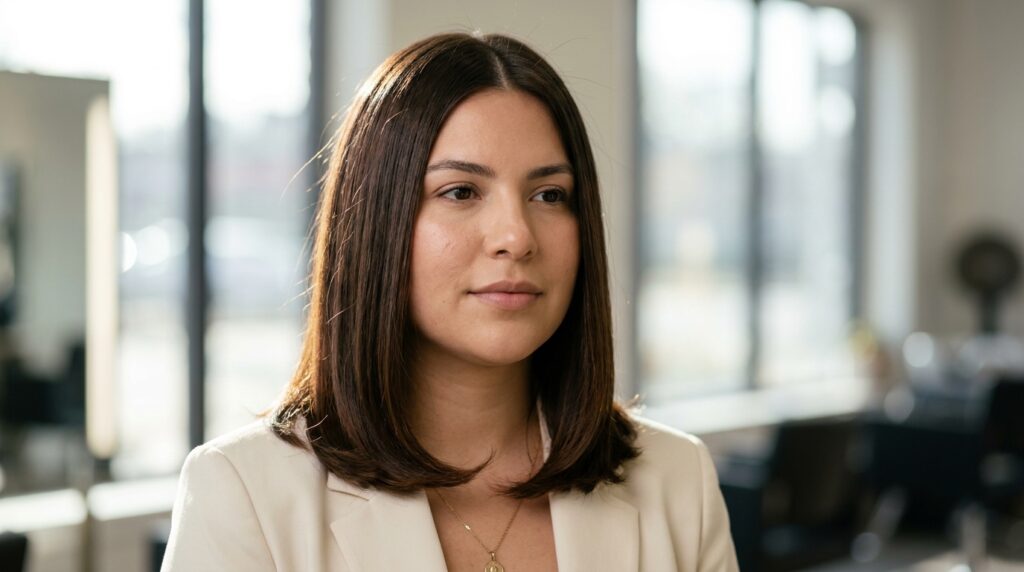
A long bob with a center part is a subtly flattering style for fuller faces when the bob falls below the chin because the center part creates a vertical line at the center of the face and the length below the chin draws the eye downward. This is a more relaxed, understated option than a deep side part and it suits women who prefer a more symmetrical, minimal aesthetic. The center part works best for fuller faces when the bob is long enough to fall clearly below the chin rather than ending at it. On straight or wavy medium hair this style has a clean, effortless quality. A light texturizing spray and a quick scrunch creates the natural, lived-in finish that makes the center part lob look its most flattering and modern.
The Wolf Cut for Fuller Faces
The wolf cut is a surprisingly flattering hairstyle for fuller faces because its defining features align well with the styling principles that work for this face type. The significant volume at the crown adds the vertical height that draws the eye upward. The heavy face-framing layers at the front create definition around the forehead and temples rather than at the cheek level. The length that falls toward the back keeps the visual emphasis on the upper face rather than the lower. The wolf cut works best for fuller faces when the crown volume is built upward rather than outward and when the face-framing layers fall forward to frame the forehead. On thick wavy or curly hair the wolf cut is particularly effective because the natural texture creates the crown volume automatically.
The Sleek Straight Blowout
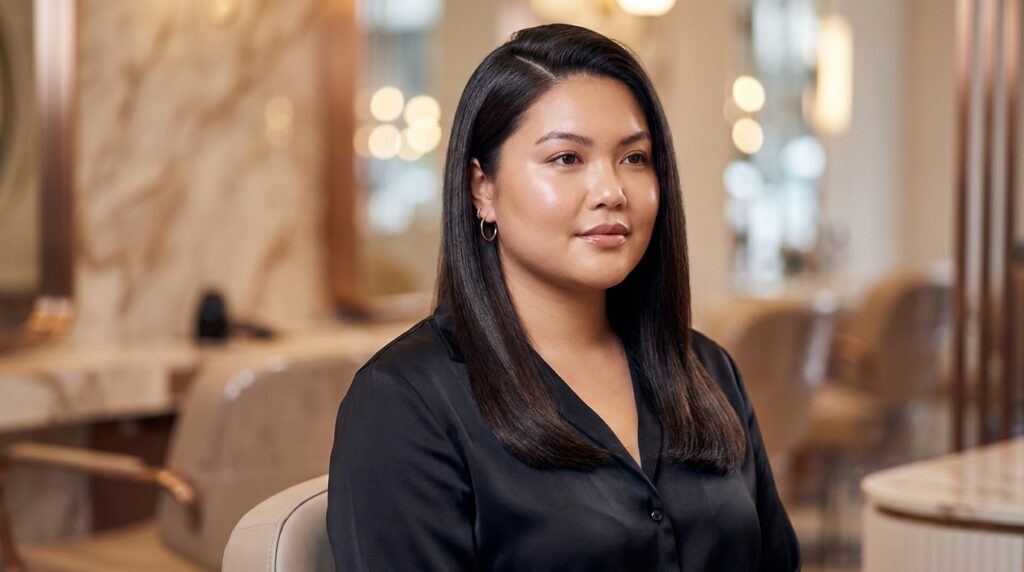
A sleek blowout with a deep side part on medium or long hair is one of the most polished and consistently flattering hairstyles for fuller faces because the combination of a smooth surface and a strong side part creates a clean, elongating silhouette. The sleekness of the blowout prevents the hair from adding width at the cheek level, which textured or voluminous styles can do. The deep side part creates the asymmetry that draws the eye vertically rather than horizontally. A large round brush used to lift the roots at the crown before smoothing the rest of the hair downward adds the vertical height at the top that complements the elongating effect of the side part. On medium and long hair of any type a sleek side-parted blowout is one of the most reliable flattering options.
Layers and Face Shape Confidence
One of the most important things to understand about choosing hairstyles for a fuller face is that the principles here are starting points rather than rigid rules, and confidence in wearing a style is more flattering than any specific cut or length. Many of the most striking and beautiful hairstyles worn by women with fuller faces break every conventional rule about what supposedly suits this face shape. A short close-cropped cut, a blunt bob, a center-parted blowout — all of these can look genuinely beautiful on a fuller face when worn with the right attitude and the right styling details. The principles in this guide help you understand why certain choices tend to be more flattering, not why certain choices are forbidden. Using them as tools rather than restrictions produces better results than following them rigidly and ignoring what you actually want from your hair.
The Dutch Braid for Fuller Faces
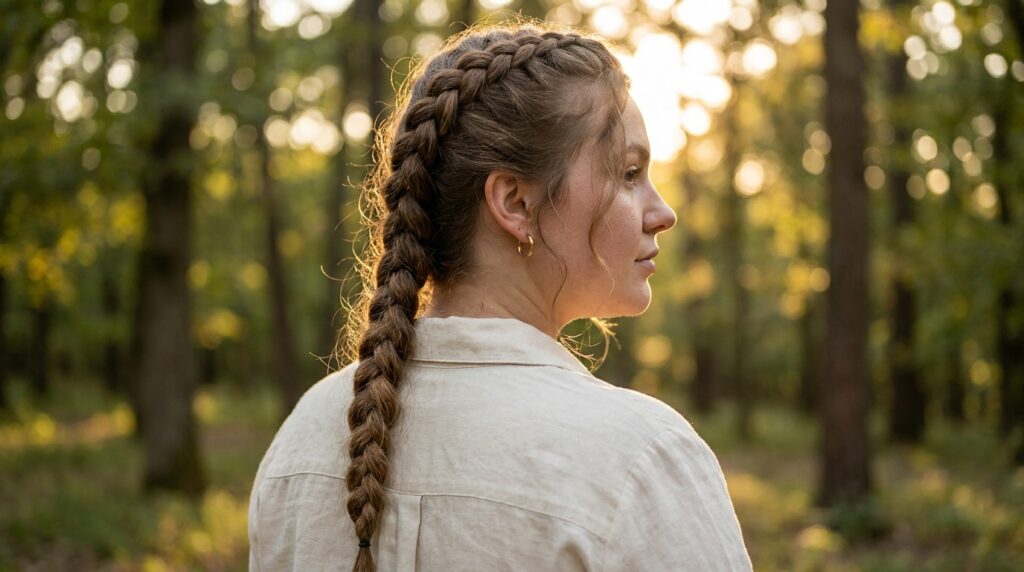
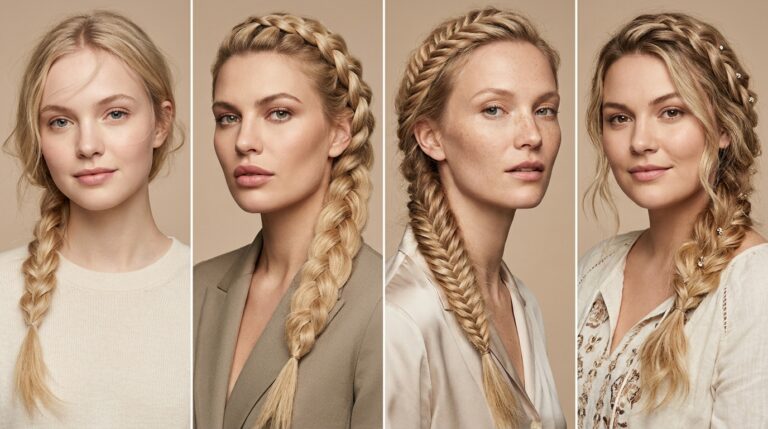
A single Dutch braid down the center back of the head is a particularly flattering braided style for fuller faces because it creates a strong vertical line from the crown downward that draws the eye along the length of the head rather than across the width of the face. The raised, three-dimensional quality of the Dutch braid creates a centered visual focal point that leads the eye upward and downward rather than sideways. Pulling the sections of the braid apart slightly after securing creates a fuller, more voluminous braid that emphasizes the vertical line further. On medium and long hair the Dutch braid is one of the most practical and flattering braided styles for fuller faces. A side Dutch braid swept to one side is an alternative that adds asymmetry alongside the vertical line.
Hairstyles Worth Approaching Thoughtfully
Certain styling choices are worth thinking about carefully for fuller faces, not because they are off-limits but because understanding their effect helps you make more informed decisions. Very short, close-cropped cuts without any volume at the crown can make a fuller face look wider by removing any vertical visual line. Very voluminous styles that expand significantly at the cheek level add width to the widest point of the face. A center part on a chin-length blunt bob creates a symmetrical line that can draw attention to the fullness of the cheeks rather than leading the eye vertically. Understanding these effects means you can modify each style with a detail, like adding volume at the crown or switching to a side part, to make it more flattering rather than avoiding it entirely.
Frequently Asked Questions
What is the most flattering hairstyle for a chubby face?
A long layered lob with curtain bangs and a side part is the most consistently flattering combination because it addresses length, face-framing, and asymmetry simultaneously.
Should chubby faces avoid short hair?
No. A pixie with crown volume and a tapered side is very flattering on fuller faces. The key is avoiding flat, close-cropped styles with no height at the crown.
Does a center part suit a fuller face?
It depends on the length. A center part on long hair creates a flattering vertical line. On a chin-length bob it can draw attention to the cheeks. A side part is generally more flattering at shorter lengths.
What bangs suit a fuller face?
Curtain bangs are the most flattering because the center part creates a vertical narrowing line. A side-swept fringe also works well. Avoid a heavy blunt fringe cut straight across, which shortens the face further.
Does long hair suit a chubby face?
Yes, particularly with layers. Long hair that falls below the chin creates a vertical visual line that is very flattering for fuller faces. The key is adding layers so the hair does not sit flat and wide against the face.
What is the best updo for a chubby face?
A high bun or high ponytail is the most flattering updo because the height at the crown adds vertical visual length. Low buns at the nape draw the eye downward and can make the face appear wider by contrast.