Hairstyles for Heart Shaped Faces That Complement Your Features
Heart shaped faces have a quality that most other face shapes don’t: a natural, built-in focal point at the top of the face. The wider forehead and prominent cheekbones that define a heart shape draw the eye upward, creating a face that feels naturally expressive and striking. The narrowing toward the chin gives the face a delicate, tapered quality that many people find genuinely beautiful. And yet, for some reason, people with heart shaped faces often spend a lot of time trying to minimize the very features that make their face shape distinctive.
The goal of hairstyling for a heart shaped face isn’t to hide or correct anything. It’s to find styles that complement the face’s natural proportions while drawing attention to its best features. That means understanding a few key principles about what creates balance for this specific shape, and then applying those principles in a way that still leaves room for personal style and preference.
This guide covers what defines a heart shaped face, the specific styles that tend to look best on it, the techniques and details that make those styles work, and the handful of things worth approaching more carefully.
What Makes a Face Shape Heart Shaped
A heart shaped face is wider at the forehead and cheekbones and narrows significantly toward the chin, which is usually pointed or gently tapered rather than rounded or square. The widest point of the face tends to be at the temples or just above the cheekbones, and the face gradually narrows from there downward. Some heart shaped faces also have a widow’s peak, a natural V-shaped point in the hairline at the center of the forehead, which accentuates the heart-like silhouette.
The key distinguishing feature is the contrast between the upper and lower face. A round face is similarly wide but has a rounded chin. A pear shape is narrower at the top and wider at the bottom. A heart shape has significant width at the top and a distinctly narrower, often pointed chin. If your forehead and cheekbones are noticeably wider than your jaw and chin, and your chin comes to a relatively narrow point, you’re most likely working with a heart shape.
It’s also worth noting that heart shaped faces come in different proportions. Some are longer and more oval-like with a pointed chin. Others are shorter with a wider, more prominent forehead. The general principles apply across these variations, but some specific style recommendations work better for longer heart shapes while others suit shorter, wider ones. Paying attention to how the length of your face compares to its width helps refine the advice further.
The Balancing Principle
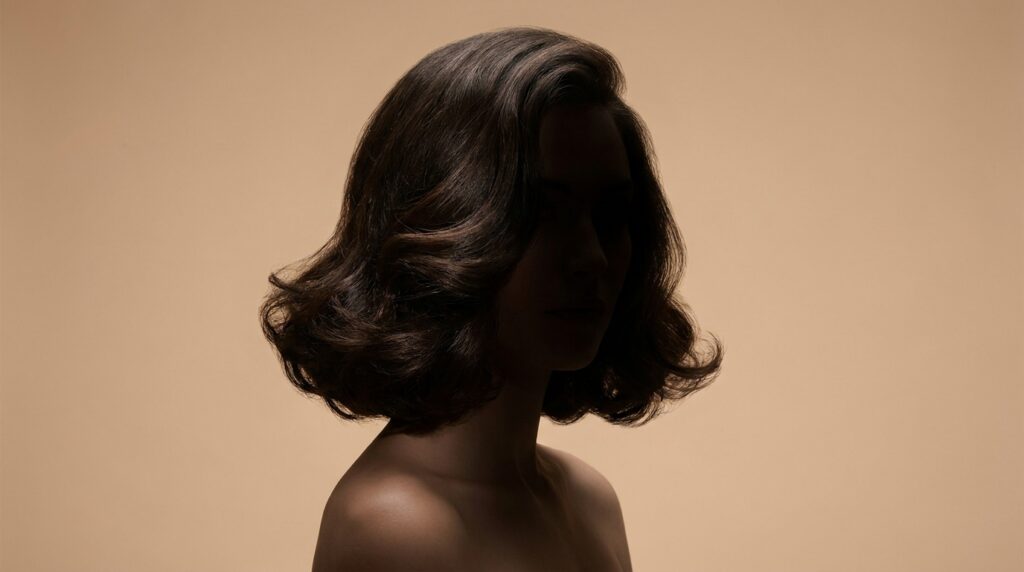
The central styling goal for heart shaped faces is creating visual balance between the wider upper face and the narrower lower face. In practical terms this means finding ways to add some visual weight or interest to the lower half of the face, around the jaw and chin area, while avoiding styles that add additional width or volume to the already-wide forehead and temple area.
This doesn’t mean every style choice has to be about correction. Many people with heart shaped faces wear styles that theoretically don’t “balance” the face and look wonderful in them, because their overall features, hair texture, and personal confidence carry the look regardless of proportional guidelines. These are principles to help you make more deliberate choices, not rules that override personal style.
The practical application of this principle shows up in a few specific ways: avoiding very voluminous styles at the crown and temples, favoring length and volume at the jaw and below, choosing side parts or asymmetrical styles over center parts that emphasize the forehead’s width, and being thoughtful about fringe choices since bangs directly affect how the forehead reads.
Long Layers Below the Jaw
Long layers that fall below the chin and jaw are one of the most reliably flattering choices for heart shaped faces, and the reasoning is straightforward. Volume and movement at or below the jaw adds visual weight to the lower half of the face, which creates the balance between upper and lower face that heart shapes benefit from most.
The placement of layers matters significantly here. Layers that are cut short around the crown and temples add width where a heart shape already has plenty of it. Layers that start at the cheekbone and get progressively longer toward the ends add volume where it’s most helpful, around the jaw and below. A good stylist will understand this distinction and cut layers accordingly, but it’s worth knowing the principle so you can ask for what you actually want.
Long layers also add movement and texture that makes the hair look fuller and more dynamic around the lower face, which reinforces the visual balancing effect. Hair that sits flat and straight against the cheeks provides less of this counterbalance than hair with some wave, texture, or layered movement.
The Lob and Medium Length Styles
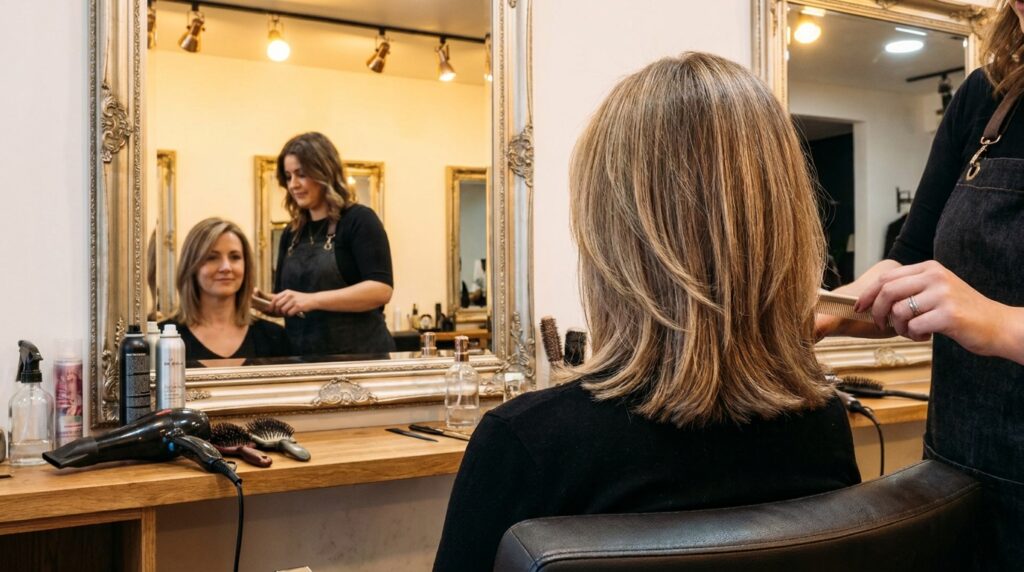
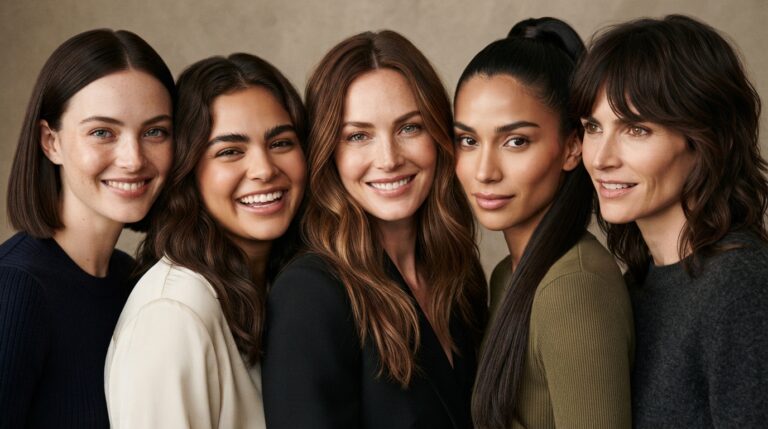
Medium length hair that falls between the chin and the shoulder is a particularly strong choice for heart shaped faces because it consistently delivers volume and movement at exactly the right place. The lob, sitting somewhere between the jaw and the collarbone, is one of the most frequently recommended cuts for heart shapes and deserves that reputation.
A lob with soft layers and a side part is a combination that tends to work beautifully for heart shapes. The length provides visual weight at the jaw level. The layers add movement and texture rather than a blunt, flat edge. The side part breaks the symmetry of the forehead and introduces a diagonal line that draws the eye downward rather than horizontally across the widest point of the face.
The key is avoiding a lob that ends exactly at the jaw in a blunt, horizontal line, since this can draw attention to the contrast between the width of the cheekbones above and the narrowness of the chin below in an unflattering way. A lob that falls slightly past the jaw, or that has some layering at the ends to soften the line, tends to work significantly better.
Waves and Curls at Jaw Level
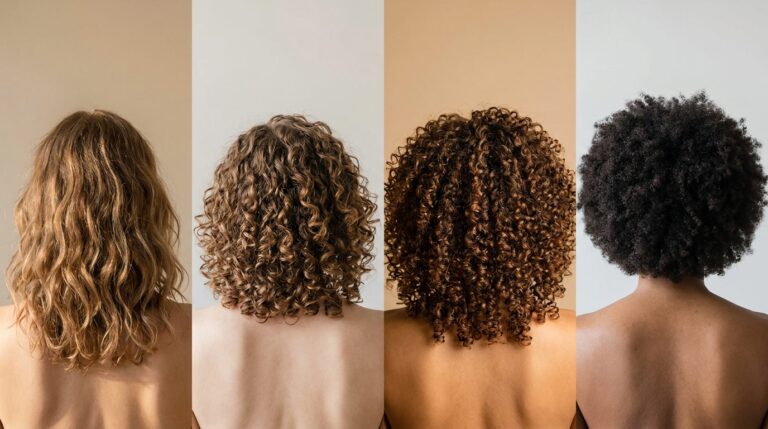
Waves and curls that fall at or below the jaw are particularly effective for heart shaped faces because they add visual fullness at exactly the point where the face is narrowest. The organic, irregular movement of waves and curls creates a naturally softer, fuller look around the lower face that hair worn straight and flat against the cheeks doesn’t provide.
Loose, beachy waves are one of the most flattering options for heart shapes because the volume they create sits primarily in the mid-lengths and ends rather than at the roots and crown. Volume at the roots adds width at the temples and forehead, which doesn’t benefit a heart shape. Volume in the lengths, concentrated at and below the jaw, adds exactly the balance that does.
Curly and coily hair on a heart shaped face works beautifully when the curl pattern is allowed to flourish at and below the jaw rather than being flattened or smoothed out. The natural volume and definition of curls creates a fuller lower face silhouette that complements the heart shape’s proportions naturally. Styles that preserve and celebrate the curl’s volume rather than compressing it tend to be the most flattering for this face shape.
Side-Swept Bangs
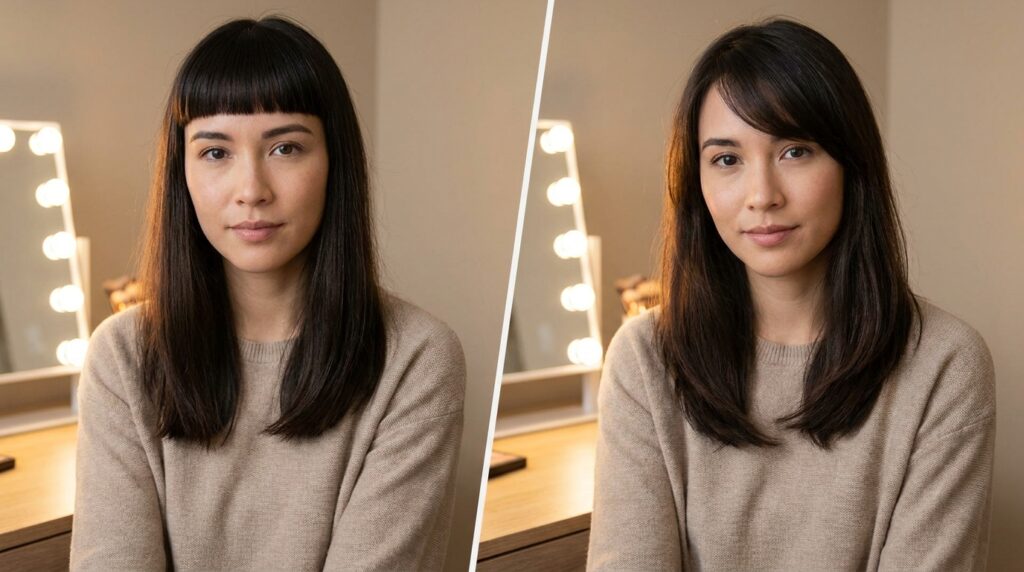
Bangs are a genuinely important consideration for heart shaped faces because the forehead is one of the most prominent features of this shape, and how the hairline is styled directly affects how prominent that area appears. Full, blunt bangs cut straight across at the brow can draw significant attention to the forehead, which emphasizes the upper face’s width rather than creating balance.
Side-swept bangs are a far more flattering option for most heart shapes. A long, sweeping fringe that crosses the forehead diagonally serves several purposes simultaneously: it softens the forehead’s width by covering part of it, it creates an asymmetrical diagonal line that draws the eye downward rather than across, and it adds a face-framing quality that highlights the cheekbones without emphasizing the contrast between the wide upper face and the narrow chin.
Curtain bangs, parted in the center and swept to either side, are another option worth considering for heart shaped faces, particularly for people who want the softness of a fringe without the full forehead coverage of side-swept bangs. The center parting of curtain bangs creates a V shape rather than a horizontal line, which adds visual length to the forehead rather than emphasizing its width.
Very short, blunt bangs cut high on the forehead are the option most worth approaching carefully on a heart shape, since they expose and frame the full width of the forehead in a way that emphasizes the face’s upper width. That said, plenty of people with heart shaped faces wear short blunt bangs beautifully, particularly when the rest of the style has enough volume at the jaw to provide counterbalance.
The Pixie Cut
Short hair on a heart shaped face works well when it’s approached with the right details, and the pixie is a good example of a short style that can genuinely flatter a heart shape when executed thoughtfully. The key consideration is keeping volume and length toward the front and sides of the cut rather than creating significant lift and volume at the crown, which would add width to the already-prominent upper face.
A pixie with slightly longer, textured pieces at the sides and front frames the face in a way that softens the forehead’s width and draws attention toward the cheekbones rather than accentuating the contrast between the wide upper face and narrow chin. Textured, slightly undone pixies tend to work better than very sleek, geometric ones for this reason.
A longer pixie that has some volume and movement at the front rather than being closely cropped all over gives the face more framing and tends to be more flattering for heart shapes than a very short, uniform crop that leaves the full width of the forehead completely exposed.
Updos and Pulled-Back Styles
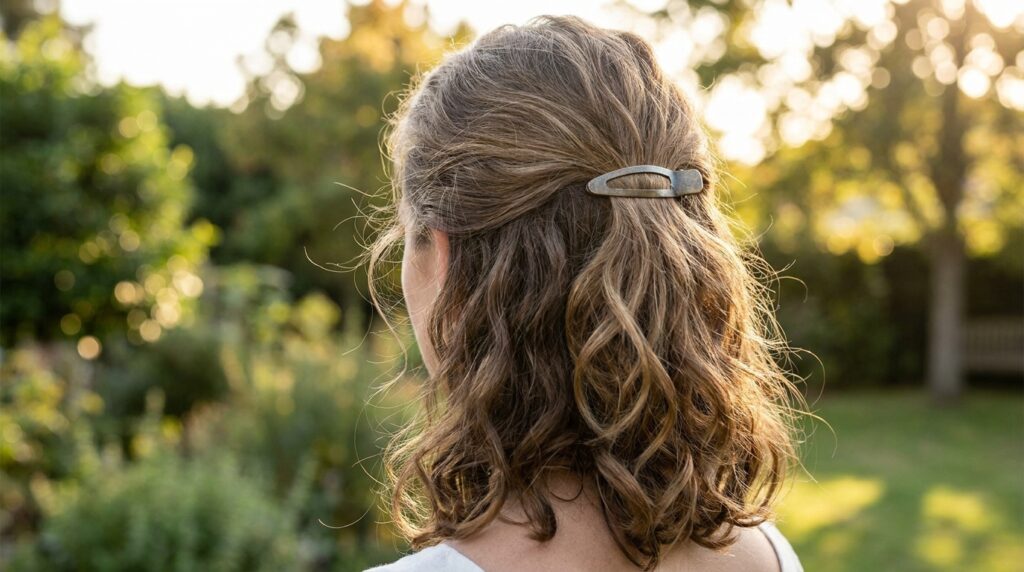
Updos and pulled-back styles require some thought for heart shaped faces because pulling all the hair back exposes the full forehead, which is the most prominent feature of this face shape. That doesn’t mean updos don’t work. It means that the details of how the updo is done matter more than they might for a face shape where the forehead isn’t as prominent a feature.
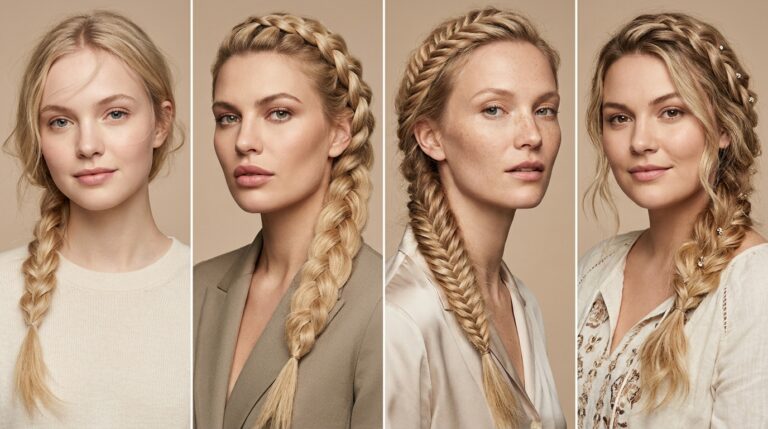
Low buns and chignons at the nape of the neck are generally more flattering for heart shaped faces than high buns, since a high bun adds visual height and attention to the upper face. A low, elegant chignon draws the eye downward and keeps the visual weight of the hairstyle lower on the head, which creates a more balanced overall silhouette.
Leaving face-framing pieces out around the forehead and cheeks when wearing an updo softens the effect of having the hair pulled back and provides some coverage and framing for the forehead. Even a few loose wisps around the hairline make a meaningful difference to how a pulled-back style reads on a heart shaped face.
Half-up half-down styles are a particularly good option for heart shaped faces because they give the benefits of volume and movement at the jaw and shoulders while still keeping some hair away from the face. The length that falls below the half-up section adds visual weight to the lower face, and the style tends to be flattering across a range of hair lengths and textures.
Styles to Approach Carefully
Very voluminous styles at the crown and temples are worth approaching carefully on a heart shaped face since they add width to the already-wide upper face rather than creating balance. Blowouts with significant root lift concentrated at the crown, very full and wide styles worn at temple level, and hairstyles that deliberately add volume at the top of the head all risk emphasizing the upper face’s width rather than softening it.
Very short styles that closely crop all the hair and leave the full face exposed require particularly thoughtful execution on a heart shape because there’s no hair framing or softening the forehead’s width or providing volume at the jaw. This doesn’t mean very short styles don’t work, but they tend to need more deliberate shaping and detailing to look balanced on a heart shape than on some other face shapes.
Center parts with no layering or framing split the face symmetrically and draw the eye horizontally across the widest point of the forehead rather than downward. If you prefer a center part, combining it with face-framing layers, waves, or curtain bangs helps offset this effect.
The Bigger Picture
These guidelines are meant to help, not to restrict. Heart shaped faces are genuinely distinctive and striking, and many of the features that the balancing principle asks you to work with, the wide cheekbones, the prominent forehead, the delicate chin, are features that many people consider the most beautiful and photogenic aspects of this face shape. Hairstyling advice exists to help you feel your best, not to make you feel like your natural features are problems to be solved.
Bringing reference photos to your stylist and having an honest conversation about what you’re hoping to achieve and what your hair texture and lifestyle realistically allow for is always more productive than trying to describe what you want in words alone. A skilled stylist can take the principles described here and adapt them specifically to your hair’s natural behavior and your face’s individual proportions in a way that a general guide can only approximate.
Frequently Asked Questions
Can heart shaped faces wear short hair?
Yes, with the right styling details. Short hair works well on heart shaped faces when volume is concentrated at the sides and front rather than at the crown, and when some face-framing pieces soften the forehead rather than leaving it fully exposed. Textured pixie cuts and longer crops with movement at the front tend to be more flattering than very closely cropped, uniform styles.
Is a center part flattering for a heart shaped face?
A center part can work, particularly when paired with curtain bangs, face-framing layers, or waves that add volume at the jaw. On its own, a center part with no additional framing draws attention to the forehead’s width by splitting the face symmetrically at its widest point. A side part is generally more flattering as a default for heart shaped faces.
Do bangs suit heart shaped faces?
It depends on the type. Side-swept bangs and curtain bangs tend to be the most flattering options since they soften the forehead rather than emphasizing it. Full blunt bangs can work but draw significant attention to the forehead, which accentuates the upper face’s width. The length and style of bangs matters as much as whether you have them at all.
What length works best for heart shaped faces?
Medium lengths, particularly the lob falling between the chin and shoulder, tend to be the most consistently flattering since they deliver volume and movement at exactly the right level. That said, both shorter and longer styles work well for heart shaped faces with the right details. Very short styles need careful shaping and longer styles benefit from layering and waves to provide jaw-level fullness.
Is the heart shape the same as an inverted triangle face shape?
They’re very similar and sometimes used interchangeably, but there’s a subtle difference. A heart shape typically has a widow’s peak or curved hairline and a more delicate, gently pointed chin. An inverted triangle tends to have a straighter hairline and a more angular jaw and chin. The styling principles for both shapes are essentially the same since both share the defining characteristic of a wider upper face tapering to a narrower lower face.
Can heart shaped faces wear their hair up?
Yes, though the details matter. Low buns and chignons tend to be more flattering than high buns since they keep visual weight lower on the head. Leaving some face-framing pieces loose around the hairline softens the effect of having the hair pulled back. Half-up half-down styles are a particularly strong option since they combine the elegance of an updo with the balancing effect of hair falling at the jaw and below.