Best Hairstyles for Oval Face Shapes
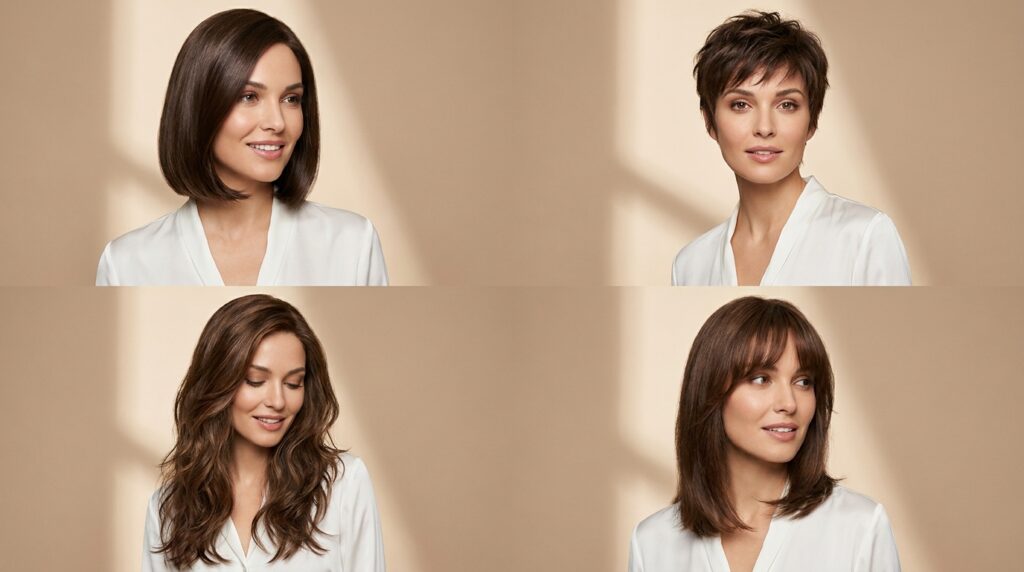
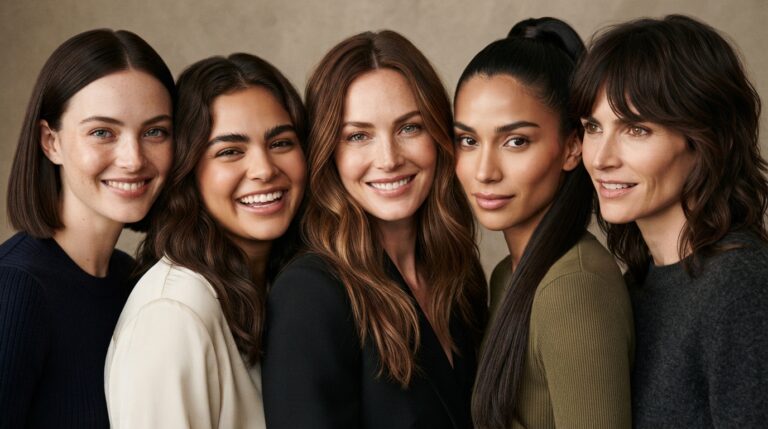
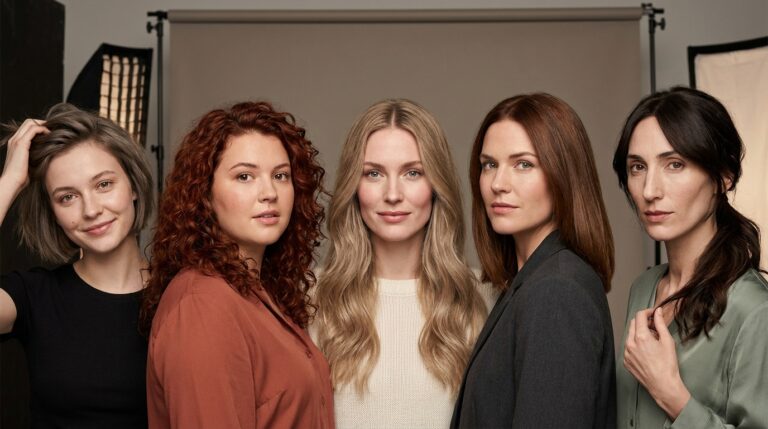
If you’ve ever read a face shape guide and noticed that oval faces always seem to get the most flattering description, there’s a reason for that. Oval is widely considered the most versatile face shape when it comes to hairstyling, not because it’s objectively better than any other shape, but because its balanced proportions mean that almost any haircut, length, or style tends to work rather than just a select few. Where round faces benefit from added length and square faces benefit from softening, oval faces don’t need either corrective approach. The goal is simply to choose styles you love and wear them well.
That said, “almost anything works” isn’t particularly helpful advice when you’re standing in a salon trying to decide what to ask for. Understanding why oval faces suit such a wide range of styles, and which specific cuts and techniques look especially striking on this shape, gives you a much more useful framework for making decisions. Knowing what flatters you most isn’t about following rules. It’s about understanding your features well enough to make deliberate, confident choices.
This guide covers the defining characteristics of an oval face shape, the styles that consistently look best on it, and the handful of things worth being mindful of even when most options are on the table.
What Makes a Face Shape Oval
An oval face is longer than it is wide, with a forehead that’s slightly wider than the jaw and a gently rounded chin. The cheekbones tend to be the widest point of the face, sitting between the forehead and the jaw, and the overall silhouette curves gently rather than having sharp angles or a very pronounced jawline. The proportions are balanced enough that the face reads as harmonious from every angle, which is why it photographs well and tends to suit a broad range of styles.
The key identifiers are the gentle narrowing at the forehead and jaw and the soft curve of the chin rather than a pointed or very rounded finish. If your face is noticeably longer than it is wide, your cheekbones are the fullest part of your face, and your forehead and jaw are similar in width with the forehead being slightly broader, you’re very likely working with an oval shape.
One thing worth noting is that many people overestimate or underestimate the length of their face when trying to determine their shape. A common mistake is categorizing a longer oval face as oblong, or a shorter, rounder oval as round. The key distinction is that an oval has balanced proportions without being as circular as a round face or as elongated as an oblong one. The gentle curve from forehead to chin is the defining characteristic rather than extreme length or extreme width.
Almost Anything Works, But These Work Best
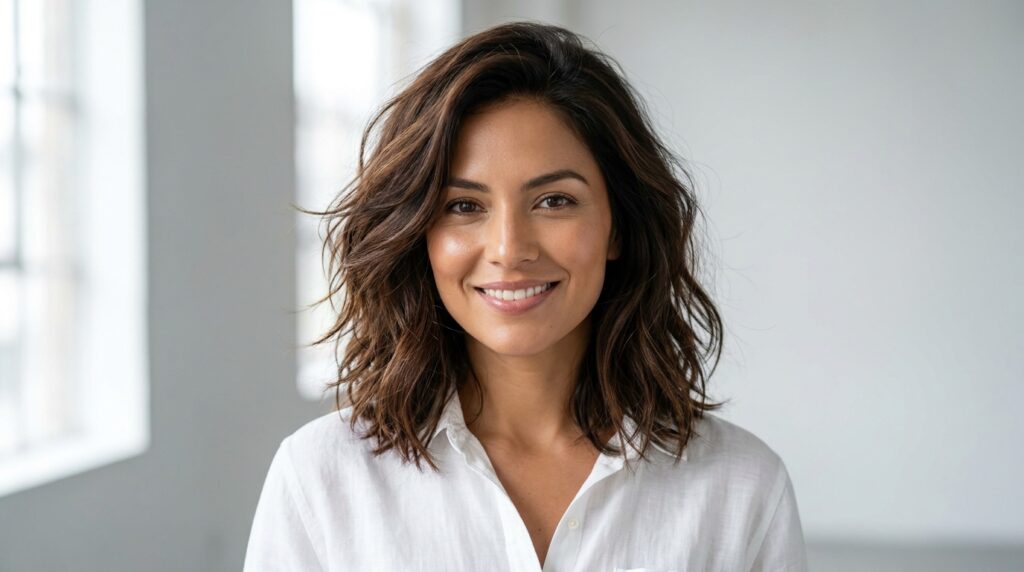
The versatility of an oval face shape is genuine, but certain styles take particular advantage of its balanced proportions. Styles that create drama, strong silhouettes, or interesting shapes look especially striking on oval faces because there’s no corrective styling needed to balance the proportions first. The face itself is already balanced, so the hairstyle can be purely expressive rather than functional.
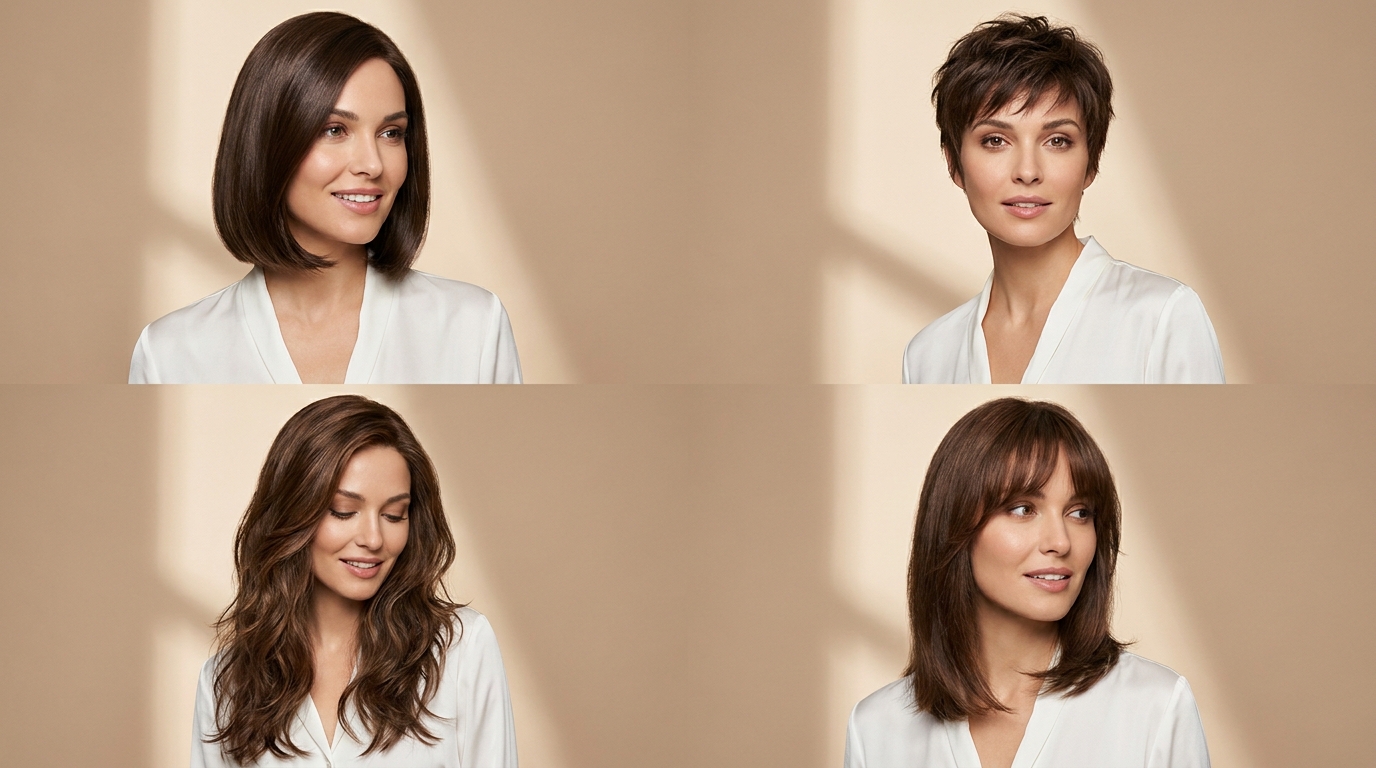
Bold, graphic cuts like the blunt bob, the sharp lob, and the precision pixie tend to look particularly strong on oval faces because the face shape’s own balance allows the geometry of the cut to take center stage. When a square or round face wears a blunt bob, the cut needs to be adjusted slightly to work with the face’s proportions. On an oval face, the cut can be worn exactly as intended, which is why these styles often look especially clean and deliberate.
Long, flowing styles with or without layers work beautifully on oval faces because the length of the hair complements the length of the face without creating any imbalance. Very long hair on a very round face can create odd proportions, but on an oval face the relationship between face length and hair length tends to feel natural regardless of how long the hair is.
The Classic Bob
The bob is one of the most reliably flattering cuts for oval faces, and the reason is simple. Because the oval face doesn’t need corrective styling, it can wear a bob at virtually any length, from a very short crop just below the ear to a longer version that grazes the collarbone, and have the result look intentional and polished. The jaw-length bob that can be tricky for square faces, and the chin-length version that requires careful adjustment for round faces, both sit easily on oval proportions without any modification needed.
A blunt bob on an oval face looks particularly striking because the clean, graphic line of the cut has nothing to compete with in terms of the face’s proportions. The oval’s balanced structure lets the geometric precision of the blunt line read clearly rather than being softened or adjusted to work around stronger facial angles.
A layered bob adds movement and texture that suits oval faces particularly well for the same reason that bold cuts do: the layers can be placed for purely aesthetic reasons rather than to correct or balance anything. A stylist cutting a layered bob on an oval face has creative freedom that they don’t always have with other shapes, which tends to result in a more expressive, interesting cut.
The Pixie Cut
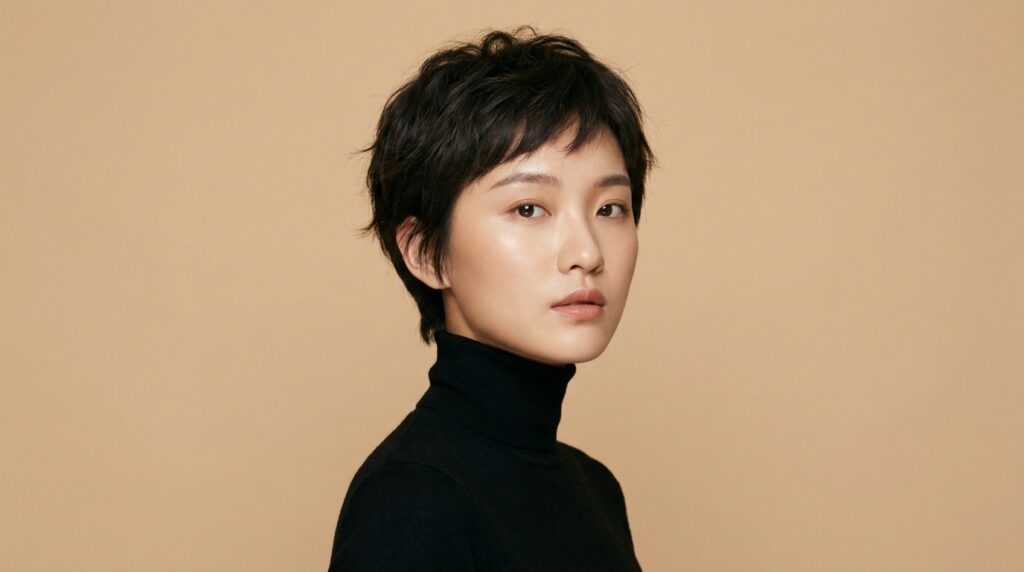
Very few face shapes can wear a pixie cut as effortlessly as an oval, and this is one of the clearest examples of why oval faces benefit from their proportions. A pixie cut exposes the face almost entirely, which means the face itself does most of the visual work. On a face with strong, balanced proportions and a gently curved jawline, this exposure is flattering. On a face shape that benefits from strategic framing, a pixie can require more careful adaptation.
A classic pixie with short sides and a slightly longer top is one of the cleanest, most striking styles an oval face can wear. The short sides emphasize the cheekbones, which are typically the widest and most prominent part of an oval face, and the slightly longer crown adds a small amount of height that keeps the proportions feeling balanced rather than flat.
A textured, choppy pixie with irregular layers is another strong option that takes advantage of the oval face’s flexibility. Where a very smooth, sleek pixie might feel too severe on a round face, the oval face’s inherent balance handles a range of pixie variations from very polished to quite undone without any of them looking off.
Long Layers
Long layers are consistently one of the most popular styles for oval faces, and deservedly so. The combination of length and movement that long layers create works naturally with an oval face’s proportions, adding visual interest without disrupting the face’s balance. Layers that start at the cheekbone and fall forward create a gentle frame that highlights the face’s natural width at its most flattering point.
Face-framing layers cut specifically to highlight the cheekbones are particularly effective on oval faces. Since the cheekbones are typically the widest point of the face and a strong visual feature, layers that fall to or just past the cheekbone draw attention to this area in a flattering way that shorter layers at the chin or longer layers past the collarbone don’t quite achieve.
Long layers with a center part is a combination that tends to look especially elegant on oval faces. The center part divides the face symmetrically, which works well when the face has balanced proportions to begin with. On a round face, a center part can emphasize width. On an oval, it highlights the face’s natural symmetry and length in a way that tends to look intentional and striking.
Curtain Bangs
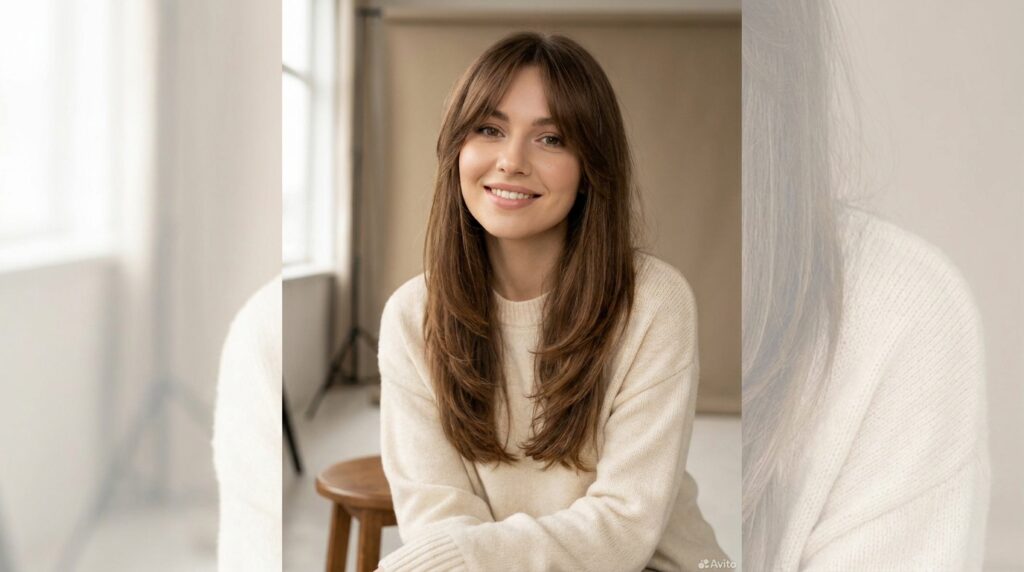
Curtain bangs are having a sustained moment in popularity, and oval faces are particularly well-suited to wearing them. The center-parted fringe that sweeps to either side creates a soft frame around the upper portion of the face that complements the oval’s natural proportions without adjusting or correcting them. On round or square faces, curtain bangs serve a specific function of softening angles or adding length. On an oval face, they’re purely a style choice rather than a corrective one, which gives them a more natural, effortless quality.
Longer curtain bangs that blend into the rest of the hair are especially flattering on oval faces because they add a soft, romantic quality without changing the overall silhouette of the hairstyle significantly. They work with virtually any hair length and texture, from a short lob to very long hair, from straight to wavy, which makes them one of the most versatile additions to any oval-faced person’s styling repertoire.
Shorter curtain bangs cut closer to the brow create a more defined, editorial look that oval faces can carry confidently. The shorter fringe creates more visual contrast between the bangs and the rest of the hair, which adds a graphic quality that the oval’s balanced features support without looking overwhelming.
The Shag
The shag haircut has enjoyed a significant revival, and oval faces are among the shapes it suits most naturally. The shag’s defining characteristics, choppy layers, face-framing pieces, and often a fringe, create a textured, lived-in quality that looks particularly good on a face shape that can handle the visual complexity without needing the layers to perform any corrective function.
A shag with a fringe works especially well on oval faces because the face’s proportions can accommodate the additional visual weight of a fringe without feeling bottom-heavy or top-heavy. The fringe adds interest to the forehead area while the choppy layers throughout the rest of the cut add texture and movement that keeps the style looking dynamic rather than flat.
A shag at medium length, falling somewhere between the chin and the shoulder, tends to be particularly flattering because it creates a silhouette that sits right at the most balanced point of most oval faces. The layers add width at the cheekbone level, where the oval face is naturally widest, which reinforces rather than disrupts the shape’s natural proportions.
Updos and Pulled-Back Styles
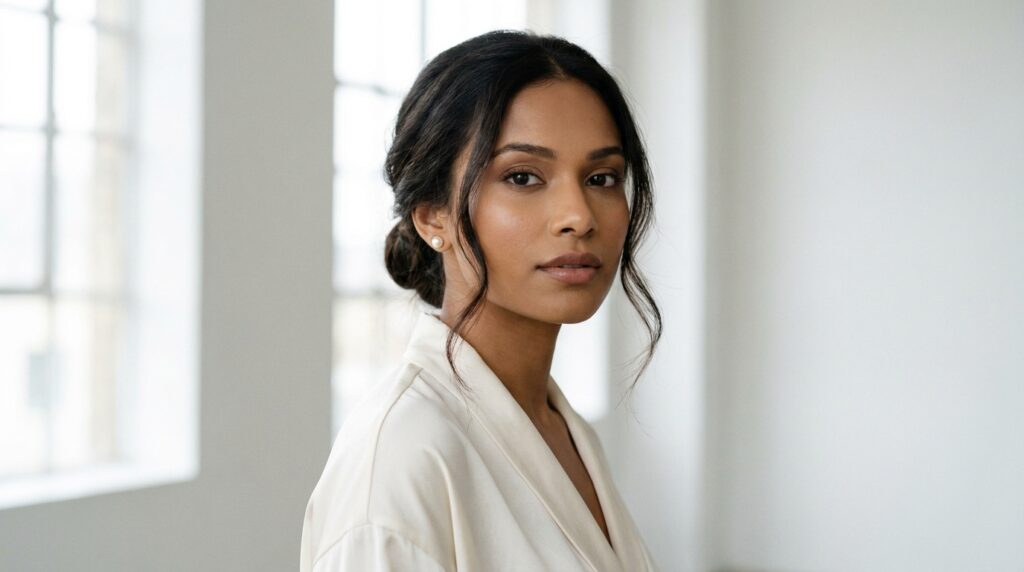
Oval faces are particularly well-suited to updos and pulled-back styles because the face’s own proportions and features do the visual work when the hair is off the face. Many face shapes benefit from at least some hair framing the face to soften angles or add width. Oval faces can go fully pulled back without losing the flattering quality of the overall look.
A sleek, high bun or chignon looks especially striking on oval faces because it adds height and exposes the full face, which works in the oval’s favor. The high position creates vertical length that complements the face’s natural proportions, and the clean lines of a sleek bun have a visual sophistication that the oval’s balanced features support without any adjustments needed.
Loose, romantic updos with face-framing pieces offer a softer alternative that still takes advantage of the oval’s ability to wear hair off the face beautifully. Leaving a few loose pieces around the face adds warmth and softness to the structure of an updo while still keeping the hair primarily away from the face and showing off the oval’s proportions.
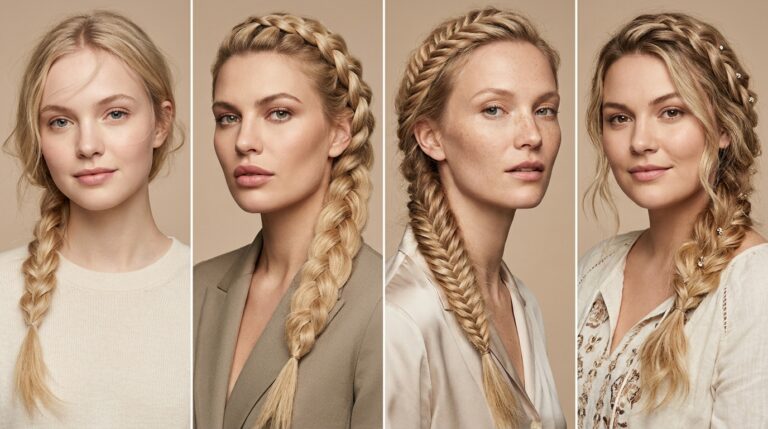
Low buns and gathered styles at the nape of the neck create an elegant, elongated line from face to nape that suits oval proportions naturally. The low position keeps the visual weight of the hairstyle closer to the natural center of gravity and creates a more refined, understated look compared to high updos.
Things Worth Being Mindful Of
Even with the most versatile face shape, a few styles are worth approaching thoughtfully rather than assuming the oval’s flexibility means absolutely anything will look good without any consideration at all.
Very wide, voluminous styles that add significant horizontal width at the sides of the head can push the proportions of even an oval face toward an unbalanced silhouette. This isn’t common and isn’t a hard rule, but very large, wide styles that add a lot of bulk directly at cheek level can sometimes make the face appear wider than its natural balanced proportions.
Extremely long, very flat styles with no layering or texture can occasionally make a longer oval face appear even longer, since there’s nothing to introduce visual width or break up the vertical line of the hair and face together. Adding some layers or a subtle side part can address this without requiring a significant change to the overall style.
Very severe, geometric styles that clash with the oval’s soft curves are worth trying carefully before committing to. While oval faces handle bold cuts well in general, very harsh geometric shapes, sharp lines at unexpected places, or extremely architectural cuts occasionally look at odds with the oval’s natural softness rather than complementing it. That said, this is more of a consideration than a rule, and individual features, hair texture, and personal style all play a role in how any style ultimately looks.
Working With Your Hair Texture
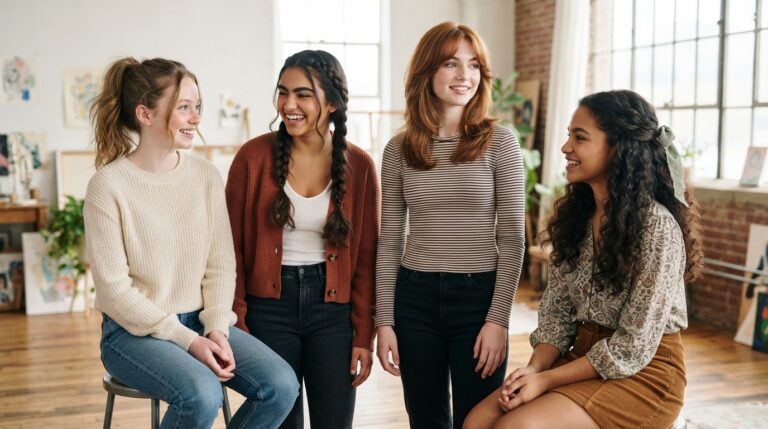
One of the advantages of having an oval face shape is that hairstyle decisions can be made primarily based on hair texture and personal preference rather than being filtered first through corrective styling needs. This means that for oval faces, texture-appropriate choices matter more than face-shape-appropriate ones in many cases.
Fine, straight hair on an oval face tends to look best with some layering to add movement and prevent the hair from lying completely flat against the face, which can make even a beautiful oval face look a bit blank. A layered lob, a textured pixie, or a long shag with plenty of movement all work with fine hair’s natural tendency to lie close to the head.
Thick, wavy, or curly hair on an oval face pairs beautifully with styles that allow the hair’s natural texture to take center stage, since the oval’s proportions can handle the visual volume and movement of textured hair without any of it overwhelming the face. A curly shag, a wavy long bob, or a full curly style worn without heat are all excellent options that take advantage of both the hair’s texture and the face shape’s versatility.
Frequently Asked Questions
Can oval faces wear any hairstyle?
Almost. Oval faces are the most versatile face shape in terms of what tends to be flattering, but that doesn’t mean every single style looks equally good on every oval face. Hair texture, personal style, lifestyle, and individual features all play a role. The advantage of an oval face is that the starting point is more flexible than most other shapes, not that the outcome is guaranteed regardless of what you choose.
Is a center part or side part more flattering for oval faces?
Both work well. A center part highlights the face’s natural symmetry and length, which tends to look elegant and intentional on oval proportions. A side part adds asymmetry and a slightly softer quality. The choice comes down to personal preference and the overall style rather than a face-shape-based rule.
Can oval faces wear blunt bangs?
Yes. Blunt, straight-across bangs that might shorten the appearance of round faces or emphasize the width of square faces can work well on oval faces because the face’s proportions are balanced enough to accommodate the additional visual weight at the forehead without looking top-heavy or overly boxy. The result depends on the specific cut and the individual’s features, but blunt bangs are generally a viable option for oval faces.
What length looks best on an oval face?
Almost any length can look great on an oval face, which is one of the shape’s main advantages. Very short pixie cuts, medium-length bobs and lobs, and very long styles all work naturally with oval proportions. The best length is ultimately the one that suits your hair texture, your lifestyle, and your personal preferences.
Does an oval face suit short hair?
Very much so. Short hair tends to look particularly striking on oval faces because the face’s own proportions are exposed and do most of the visual work. Pixie cuts, short bobs, and textured crops are all excellent options for oval faces wanting to go shorter.
Should oval faces avoid any specific styles?
There are very few genuine no-go styles for oval faces, which is what makes this shape so versatile. Very wide, voluminous styles that add significant horizontal bulk at cheek level and very long, completely flat styles with no texture are the two areas worth approaching thoughtfully, but even these can work well depending on the individual’s hair texture and features. The honest answer is that oval faces have fewer genuine restrictions than any other shape.