How to Choose a Nail Shape That Suits Your Hands
Most people put far more thought into their nail color than their nail shape, which is a little backwards when you think about it. Color washes off in a couple of weeks. Shape sticks around for the entire life of a manicure, and it quietly affects how your fingers look, how your hands photograph, and even how practical your nails are for everyday life. A gorgeous polish color on the wrong shape for your hands still won’t look quite right, while a flattering shape can make even a basic, no frills polish look polished and intentional. It’s one of those details that does a lot of quiet work without ever getting much credit.
The tricky part is that nail shape advice online tends to get treated like a strict rulebook, as if there’s one correct shape for every hand type and everything else is a mistake. In reality, it’s much more like hairstyling advice for face shapes. There are general patterns that tend to be flattering, but personal taste, lifestyle, and what you actually enjoy wearing matter just as much. This guide walks through the most common nail shapes, what kind of hand and finger type each one tends to suit, and how to think about choosing a shape that actually works for you rather than just copying whatever’s trending on a feed somewhere.
Why Nail Shape Matters More Than People Think
Before getting into specific shapes, it helps to understand what shape is actually doing visually. Nail shape interacts with the proportions of your fingers in a few key ways. It can make fingers appear longer or shorter, make nail beds look wider or narrower, and change how much of your fingertip is visible versus covered by the nail itself.
This is similar to how a haircut interacts with a face shape. The goal generally isn’t to disguise or hide your natural proportions, but to work with them in a way that feels balanced. Someone with short fingers might choose a shape that elongates them. Someone with already long, slender fingers might prefer a shape that doesn’t exaggerate that length even further. And plenty of people simply pick a shape because they like how it looks or how it feels day to day, which is just as valid a reason as any proportion based argument.
It’s also worth saying upfront that nail shape is one of the lowest stakes style decisions you can make. Unlike a haircut, which takes months to grow out if you don’t like it, a nail shape can be changed at your very next manicure. That makes this a great area to experiment in if you’re someone who likes trying new things but feels nervous about bigger style changes elsewhere.
How Shape and Length Work Together
One detail that often gets overlooked is that nail shape and nail length aren’t separate decisions. They work together, and the same shape can look completely different depending on how long the nails are. A square shape on very short nails reads as practical and minimal, almost office appropriate, while the same square shape on long nails starts to look bold and a little more editorial. Almond and coffin shapes in particular depend heavily on length to read clearly at all. Try to create an almond taper on a very short nail and it often just looks like a slightly rounded square, since there isn’t enough length for the taper to develop visually.
This matters when you’re deciding what to ask for at the salon, because describing a shape alone doesn’t tell your nail technician everything they need to know. It helps to also have a rough length in mind, whether that’s natural length, a short extension, or a longer dramatic set, since the combination of the two is really what determines the final look. If you’re not sure, bringing a reference photo that shows both the shape and the length you’re drawn to will get you a much more accurate result than describing the shape in isolation.
Square Nails
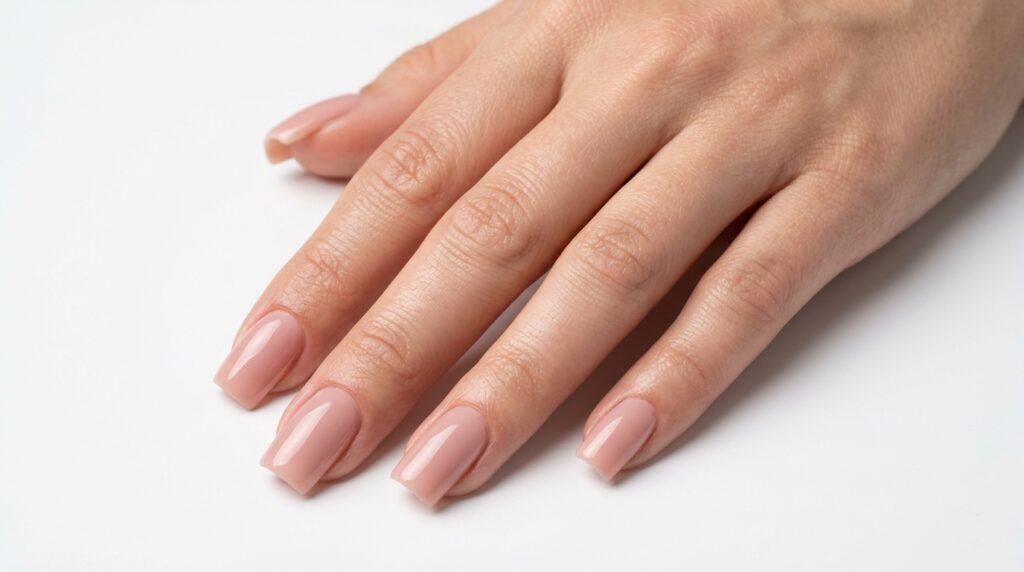
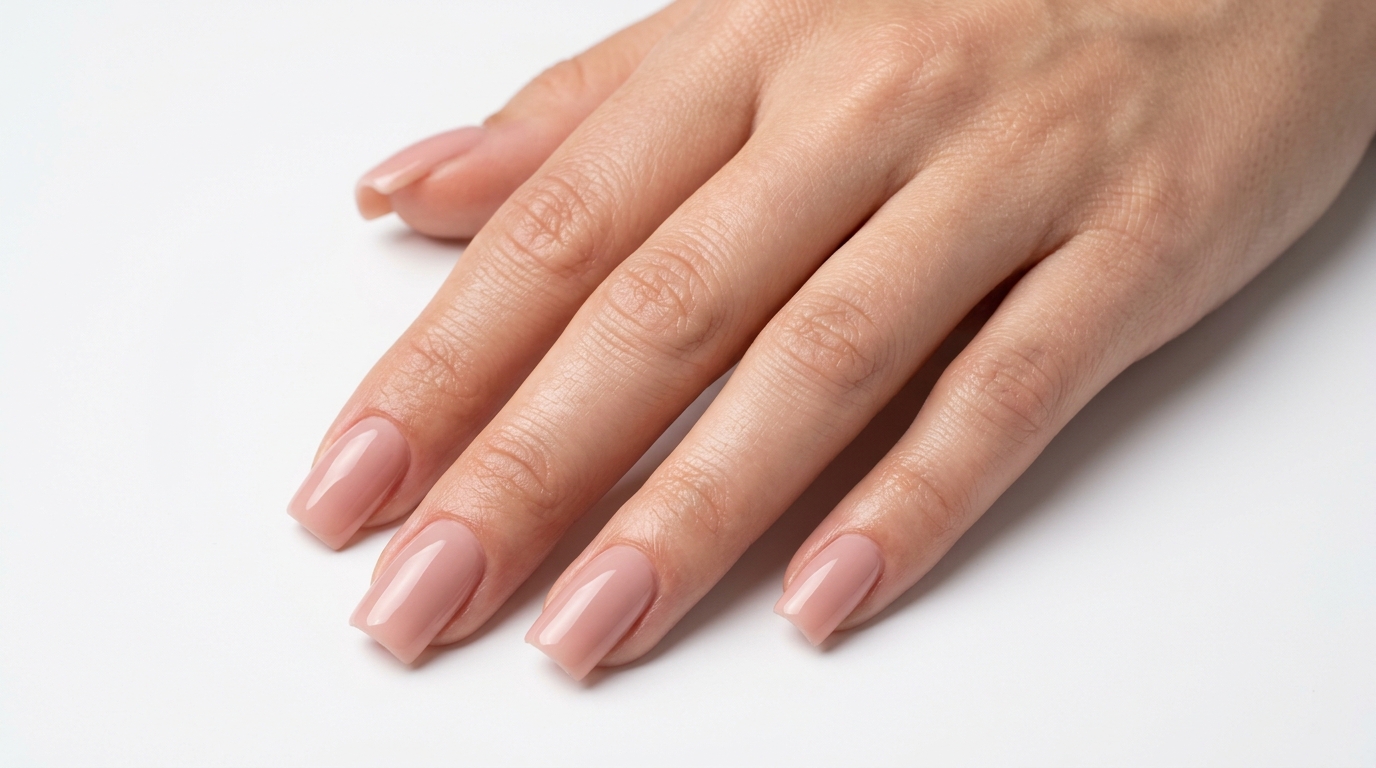
Square nails have a flat edge across the top with sharp, defined corners, creating a clean, geometric line. The sides run straight rather than tapering inward, which gives this shape its boxy, structured look.
This shape tends to suit shorter or wider fingers particularly well, since the flat top edge visually shortens the appearance of the nail length while the straight sides add a sense of structure. It’s also a popular choice among people with naturally strong, healthy nails, since the squared off corners are less prone to snagging or catching on things compared to more tapered shapes, though they can be slightly more prone to chipping right at the corner if not filed carefully.
Square nails have become especially popular again recently in their shorter form, often paired with a French manicure or a simple, glossy single color. If you have shorter nail beds or fingers on the wider side, this is one of the more forgiving and practical shapes to start with, and it works well whether you’re growing your nails out or keeping them short and low maintenance. It’s also a particularly good shape if you do a lot of typing or other repetitive hand movements throughout the day, since the flat edge tends to feel sturdier underfoot, so to speak, against keys and surfaces compared to a tapered tip.
Round Nails
Round nails follow the natural curve of the fingertip, with rounded corners and a soft, gently curved tip rather than a flat edge or sharp point. This is often considered the most natural feeling shape, since it closely follows what nails tend to look like before any shaping is done at all.
This shape is particularly flattering on shorter or narrower nail beds, since the rounded edge tends to make nails look fuller and slightly wider without adding length. It’s also one of the most low maintenance shapes to keep up, since there are no sharp corners to catch on clothing or snag against surfaces, and the rounded shape tends to grow out a little more gracefully between salon visits compared to sharper shapes.
Round nails are a great option if you use your hands a lot for typing, cooking, or other hands-on tasks, since the lack of sharp corners makes them genuinely more practical day to day. They’re also a comfortable, classic choice if you’re someone who prefers your nails to look clean and understated rather than dramatic or eye catching.
Oval Nails
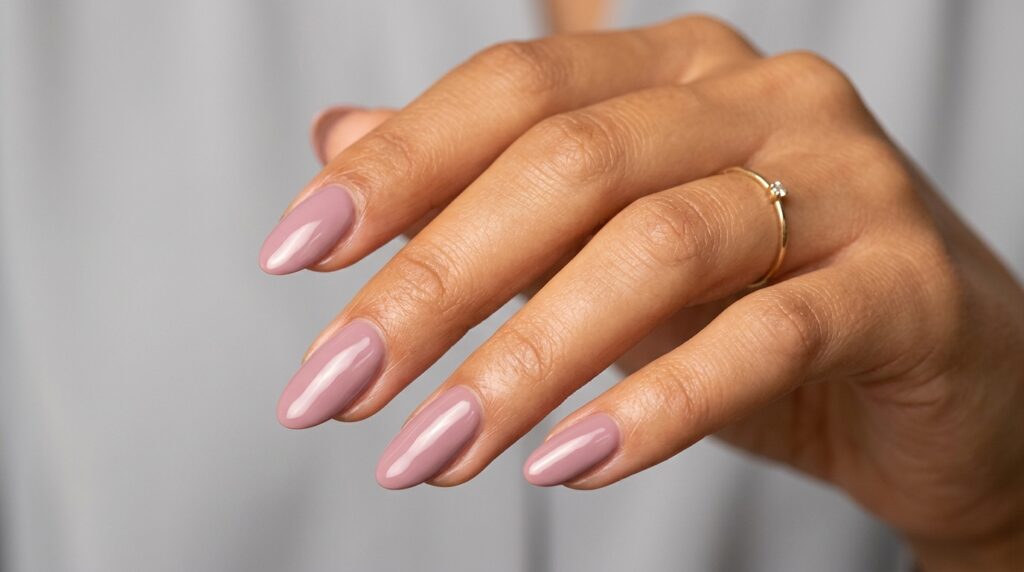
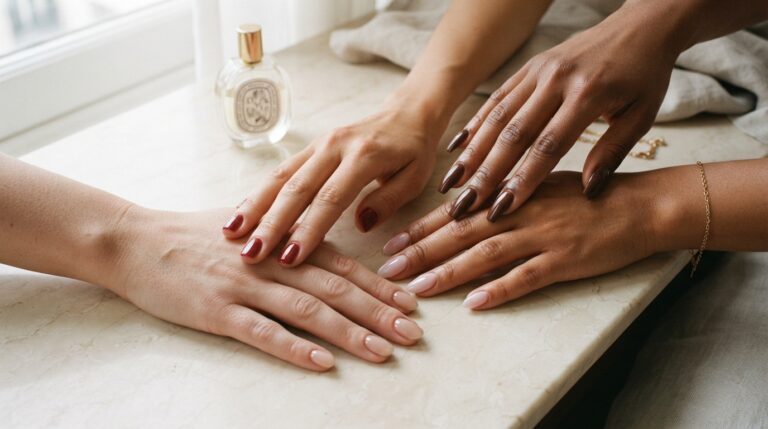
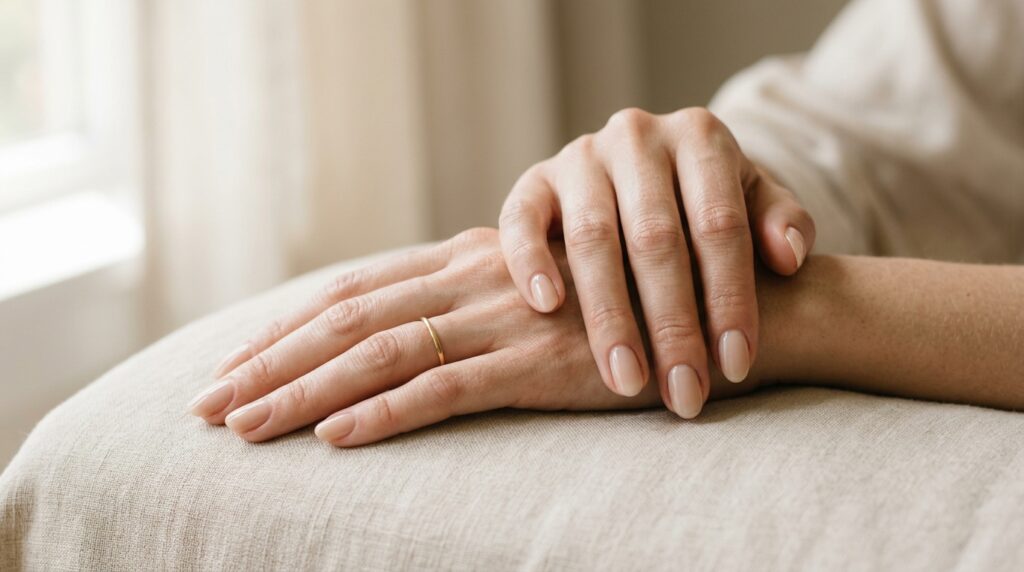
Oval nails combine a rounded tip with slightly tapered sides, creating a shape that’s a bit more elongated than round nails while still feeling soft and wearable. Think of it as round nails with the sides gently angled inward rather than running straight up and down.
This shape is frequently recommended for people with shorter fingers, since the tapering sides combined with the rounded tip create a real elongating effect. It tends to make nail beds look longer and slimmer without requiring excessive length, which is part of why it’s a popular choice for anyone who wants the appearance of longer nails without committing to dramatic length.
Oval nails also tend to suit a wide range of hand sizes and finger shapes, which is probably why this shape shows up so consistently across different eras of nail trends rather than disappearing the way more dramatic shapes sometimes do. If you’re not sure where to start and want something that’s broadly flattering and easy to maintain, oval is a safe, classic choice.
Almond Nails
Almond nails taper inward more dramatically than oval nails, coming to a softly rounded point at the tip that resembles, unsurprisingly, the shape of an almond. The sides narrow gradually from a wider base near the cuticle to a narrower, rounded tip.
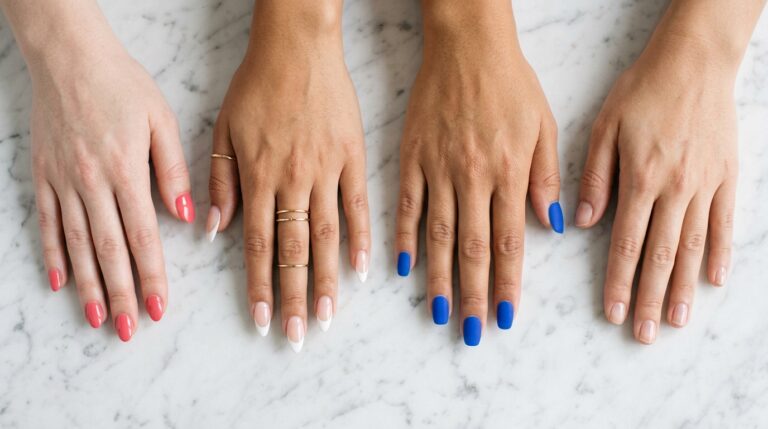
This shape is especially elongating, making it a favorite for people with shorter or wider fingers who want a noticeably slimming effect. The tapering shape draws the eye upward along the length of the finger rather than across its width, which creates a more elegant, elongated look overall. Almond nails do typically require a bit more length to execute well, since the tapering effect doesn’t read as clearly on very short nails.
One practical consideration with almond nails is durability. Because the shape tapers down to a narrower point, almond nails can be a little more prone to breaking near the tip compared to wider, flatter shapes like square. If you use your hands heavily for manual tasks, this is worth keeping in mind, though a slightly thicker gel or acrylic application can help reinforce the tip and reduce the risk.
Coffin or Ballerina Nails
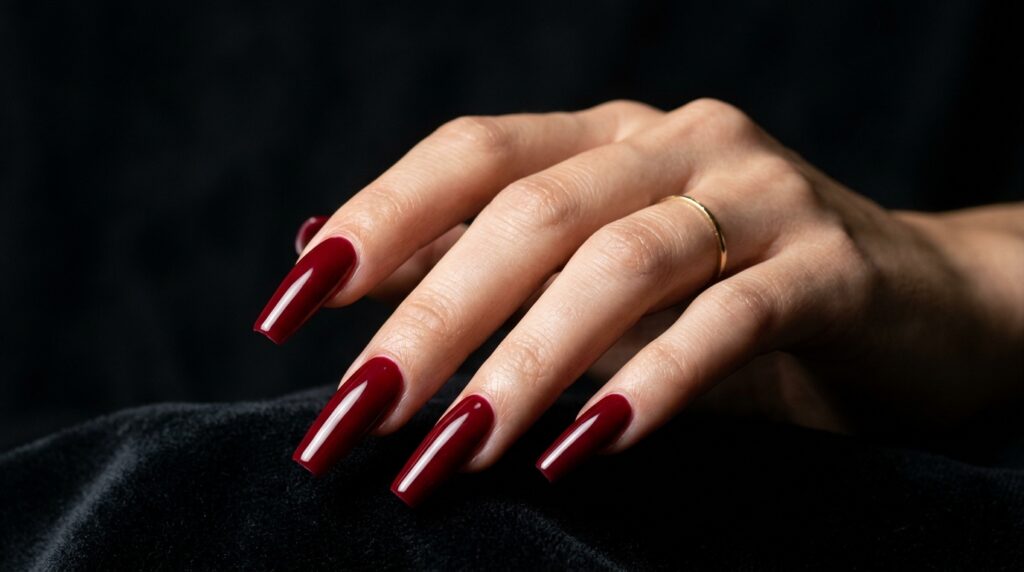
Coffin nails, sometimes called ballerina nails, taper inward like almond nails but end in a flat, squared off tip rather than a rounded point. The result looks a bit like a narrow, elongated rectangle with the corners softened, similar in silhouette to a ballet slipper or, as the name suggests, a coffin.
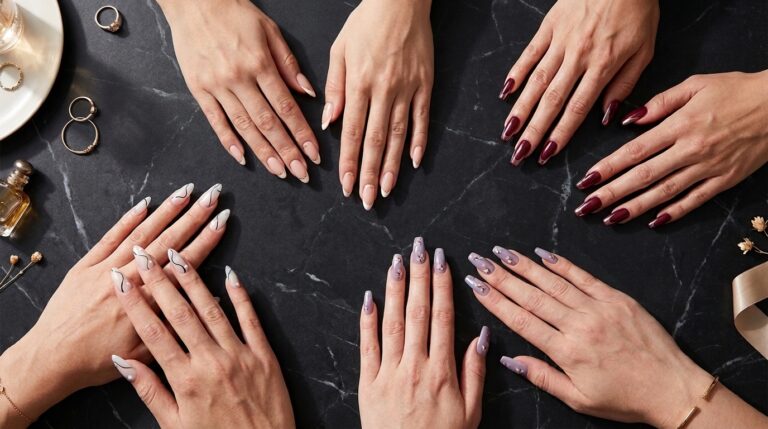
This is a bolder, more dramatic shape that tends to suit longer nail beds and longer fingers especially well, since the elongated taper combined with the flat tip really only reads clearly with a decent amount of length to work with. It’s a popular choice for elaborate nail art and statement manicures, since the flat tip provides a wider canvas at the end of the nail for detailed designs compared to the narrower point of an almond shape.
Coffin nails do require more length and more maintenance than most of the shapes mentioned so far. The dramatic taper means more acrylic or gel extension is usually needed to achieve the look properly, and the flat tip at the end can be more prone to chipping or breaking if it catches on something. If you love a bold, elongated look and don’t mind a bit more upkeep, this shape can look genuinely striking, especially on longer fingers where the proportions have more room to play out.
Squoval Nails
Squoval nails are exactly what the name suggests: a hybrid between square and oval, with a mostly flat tip that has softened, rounded corners rather than the sharp corners of a true square shape. It splits the difference between the structure of square nails and the softness of oval ones.
This shape tends to be a great middle ground option for people who like the clean, flat edge of square nails but find the sharp corners a bit too harsh or prone to catching on things. It works well across a wide range of finger shapes and nail bed widths, which is part of why it’s become such a popular everyday choice. It manages to look polished and intentional without leaning too far into either the boxy structure of square or the softness of round.
If you’re torn between square and round and can’t decide, squoval is often the easiest compromise, and it tends to be just as low maintenance and practical as round nails while still offering a bit more visual structure.
Stiletto Nails
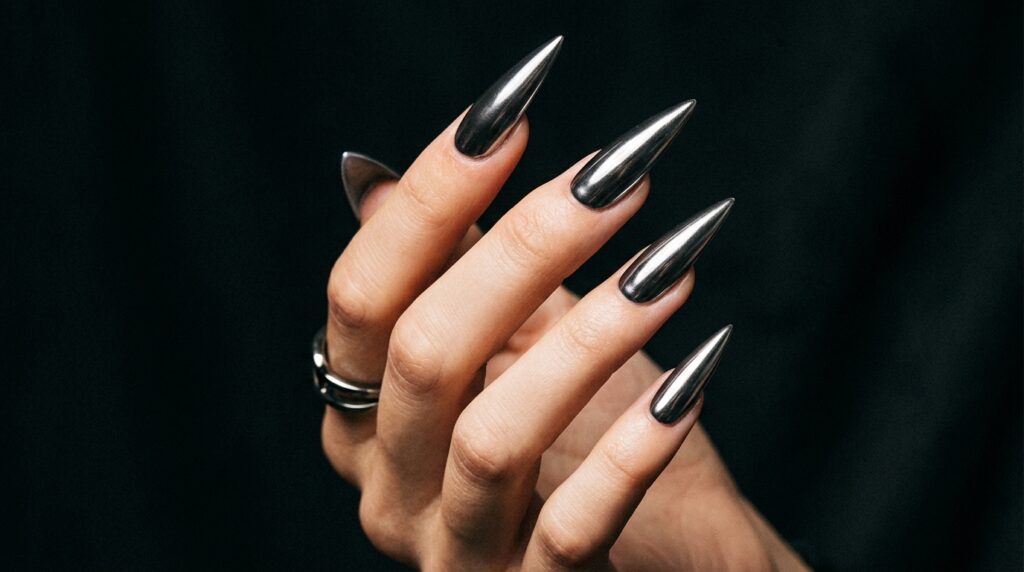
Stiletto nails taper to a sharp, pointed tip rather than a rounded or flat one, creating a dramatic, almost weapon like silhouette. They’re one of the boldest and most attention grabbing shapes on this list, requiring significant length to achieve the pointed effect properly.
This shape is best suited for people who genuinely want a dramatic, eye catching look and don’t mind the practical tradeoffs that come with it. Stiletto nails are not particularly practical for everyday hands-on tasks, since the sharp point is more prone to snagging, breaking, or simply getting in the way during normal activities like typing or doing dishes. They’re a strong choice for special occasions, photoshoots, or anyone whose daily life doesn’t involve much manual work, but they’re probably not the best everyday option if your hands are constantly busy.
How to Actually Choose
With all these options on the table, the decision usually comes down to a few practical questions rather than one universal rule. First, think about your lifestyle. If you type all day, cook often, or do anything hands-on for work or hobbies, shapes like round, oval, or squoval are going to hold up better and feel less obstructive than something dramatic like stiletto or coffin. If your hands aren’t constantly busy, you have a lot more freedom to choose based purely on looks.
Second, think about your natural nail bed shape and finger length, but treat this as a starting point rather than a strict rule. If your fingers are on the shorter side and you want an elongating effect, oval or almond shapes tend to create that illusion most effectively. If you have longer fingers already and want to keep things balanced, square or round shapes won’t exaggerate that length the way a more tapered shape would. That said, plenty of people happily wear shapes that go against these general guidelines simply because they like how they look or feel, and that’s a perfectly good reason on its own.
Third, consider maintenance honestly. Square and round nails are generally the easiest to maintain and the most forgiving as they grow out. Almond, coffin, and stiletto shapes look striking but require more frequent upkeep to keep the tapered point or flat tip looking crisp rather than grown out and uneven. If you’re someone who gets manicures done professionally every couple of weeks, more maintenance heavy shapes are easier to commit to than if you’re doing your own nails at home and might let things slide for a month at a time.
Finally, don’t underestimate how much nail shape is also just a matter of personal preference and confidence. Some people feel most like themselves with short, practical, rounded nails. Others feel their best with long, dramatic almond or stiletto shapes, regardless of whether it’s the most “practical” choice for their daily life. There’s real value in choosing a shape that makes you feel good every time you look down at your hands, even if it doesn’t perfectly align with every proportion based recommendation out there.
It’s also worth thinking about how a shape will look as it grows out between appointments, not just how it looks freshly done. Square and squoval nails tend to age gracefully, since there’s no sharp taper to lose definition as new growth appears. Almond, coffin, and stiletto shapes need more frequent upkeep to maintain their defined point or taper, and they can start to look a bit blunted or uneven within just a couple of weeks if left untouched. If you’re someone who tends to push appointments back a little longer than planned, factoring this into your decision can save you some frustration later.
A Few Final Tips
If you’re not sure where to start, a good approach is to bring reference photos of a few different shapes to your next appointment and ask your nail technician for their honest opinion based on your natural nail bed and finger shape. Most experienced technicians can tell pretty quickly which shapes will be easiest to maintain on your hands specifically, and they’ve usually seen enough variety to give you a realistic sense of what a shape will actually look like once it grows out a bit, not just on the day you leave the salon.
It’s also worth experimenting gradually rather than jumping straight to the most dramatic option you’re curious about. If you’ve always had short, round nails and you’re curious about something more elongated, almond or oval are a gentler step than going straight to coffin or stiletto. You can always work your way toward something bolder once you know how a slightly different shape feels in daily life.
At the end of the day, nail shape is one of the easiest style choices to change your mind about. Unlike a haircut or a tattoo, a shape you don’t love can be adjusted at your very next appointment with no long term consequences. That makes this a genuinely low risk area to experiment in, so don’t be afraid to try a few different shapes over time until you find the one that feels the most like you.