Gel vs. Acrylic vs. Dip Powder: Which Is Right for You?
You sit down at the nail salon. The technician smiles and asks what you’re getting today. And suddenly your mind goes completely blank.
Gel? Acrylic? Dip powder? You’ve heard all three terms, you’ve probably worn at least one of them at some point, but explaining the actual difference between them in that moment? That’s a different story.
It’s one of those things that feels like it should be common knowledge but genuinely isn’t, and salons don’t always make it easier by laying out clear explanations on their menus. So most people end up just picking one at random, or ordering whatever their friend swears by, without ever really understanding what they’re paying for or whether it’s actually the right fit for their nails.
This guide is here to fix that. We’re going to break down all three options honestly, covering how each one works, how long it lasts, what it does to your natural nails over time, and how much it typically costs. By the end, you should have a pretty clear sense of which direction to go the next time someone asks.
What Is Gel Polish?
Think of gel polish as the upgraded, longer-lasting version of regular nail polish. It goes on in the same basic way, base coat, color, topcoat, but instead of air drying, each layer is cured under a UV or LED lamp. That curing step is what changes everything. It’s what gives gel its hard, glossy, almost glass-like finish, and it’s what makes it last two to three times longer than standard polish.
The result on the nail is smooth, flexible, and noticeably shinier than anything you’d get from a bottle of regular lacquer. It doesn’t add much thickness or length, which is part of its appeal for people who want their natural nails to look polished and healthy rather than dramatically extended.
One thing worth knowing is that most modern salons use LED lamps rather than the older UV versions, which cure faster and emit lower levels of UV radiation. If you get gel manicures regularly, many dermatologists suggest applying SPF to your hands before the lamp exposure as a simple precaution, and it’s a habit worth picking up if you’re in the chair every few weeks.
When it comes to removal, gel needs to be soaked off with acetone rather than peeled away. This is where a lot of nail damage actually happens, not from the gel itself, but from people skipping the soak and just pulling it off. Done properly, gel removal is straightforward and leaves the natural nail in good shape. Done improperly, it strips layers of the nail plate and leaves behind thin, peeling nails that take weeks to recover.
What Are Acrylic Nails?
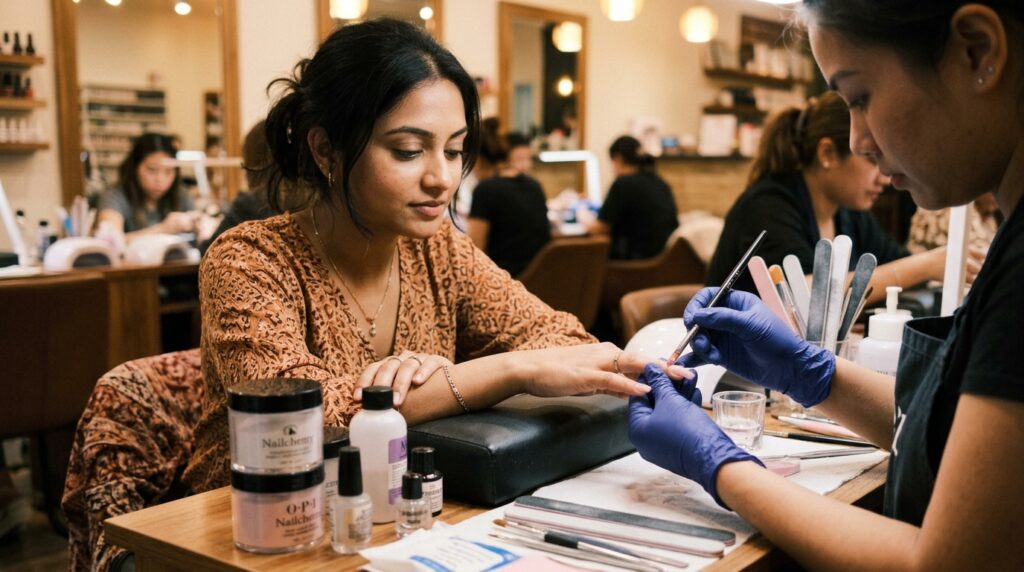
Acrylics have been around the longest of the three, and they’ve earned both their loyal following and their complicated reputation in that time. The application process is quite different from gel. A nail technician mixes a liquid monomer with a powder polymer to create a paste-like substance, which is then applied directly to the nail and sculpted into shape before it hardens in the air through a chemical reaction. No lamp required.
Once hardened, acrylic creates a rigid, durable layer that can be shaped into virtually any nail shape or length. This is why acrylics became the go-to choice for anyone wanting serious length or a dramatic shape. The flexibility in what can be created is genuinely unmatched by the other two options. After the acrylic base is shaped and filed smooth, regular polish or gel color is applied on top.
The maintenance schedule runs roughly every two to three weeks, not because the acrylic wears off, but because the natural nail underneath keeps growing. That gap between the cuticle and the edge of the acrylic starts to show, and a fill appointment closes it back up without having to remove the entire set. For regular acrylic wearers, these fill appointments become part of the routine.
The reputation for damaging natural nails is worth addressing directly here, because the reality is more nuanced than the warnings suggest. Acrylics applied correctly by a skilled technician, on properly prepped nails, and removed carefully through a soak-off process, don’t have to cause significant damage. The problems arise when corners are cut, specifically when acrylics are picked or forced off instead of soaked, or when they’re applied too thick and inflexibly. The product isn’t necessarily the villain. The technique is.
What Is Dip Powder?
Dip powder is the newest of the three, and it’s grown a serious following over the last several years for good reason. The application is unlike either gel or acrylic. A base coat goes on first, then the nail is dipped into a jar of colored powder, which adheres to the wet base. This is repeated a couple of times to build up color and thickness, then an activator is applied to harden the layers, and a topcoat seals everything in. No lamp, no liquid monomer, no strong chemical smell.
The finish is vivid, opaque, and glossy, and it tends to last longer than gel, usually three to four weeks before significant wear or growth shows. That extra week or two between appointments is one of the main reasons people make the switch from gel to dip powder, especially if they find themselves constantly trying to stretch a gel manicure a few days longer than it really wants to go. For busy people who genuinely struggle to carve out time for regular salon visits, that difference in wear time adds up meaningfully over the course of a year.
Dip powder also tends to be a good option for people who like bold, saturated color. Because the pigment is built directly into the powder layers rather than applied as a polish on top, the color tends to look more vivid and consistent across the whole nail, with less chance of the streaky or uneven application you can sometimes get with gel color.
There is one thing worth asking about before your first dip powder appointment, which is the salon’s application method. The traditional process involves dipping the finger directly into a shared jar of powder, which creates an obvious hygiene concern when multiple clients are using the same jar. Many salons now use a sprinkle-on method instead, where the powder is poured or dusted over the nail rather than the finger going into the jar. It’s a simple enough question to ask when you book, and most reputable salons are moving toward the sprinkle method regardless.
How They Compare on Longevity
Here’s where things get practical.
Gel typically lasts two to three weeks, though individual nail chemistry makes a real difference. People with naturally oily nails or those who wash their hands frequently tend to see gel lift sooner than average, sometimes within ten days. The prep work done before application matters enormously here as well. Properly prepped nails, dehydrated and primed before the base coat, hold gel significantly longer than nails that weren’t prepped as carefully. If you’ve had gel that started peeling within a week, the prep was almost certainly the issue rather than the gel formula itself.
Acrylic sets need a fill every two to three weeks, similar timing to gel, but the base itself can technically stay on longer without full removal. Regular wearers often keep the same set going through multiple fills for a month or more, refreshing the color and closing the growth gap at each appointment rather than starting from scratch every time. This makes acrylics quite economical over the long run if you’re committed to wearing them regularly, since the cost of a fill is consistently lower than a full new set.
Dip powder wins on longevity in most direct comparisons. Three to four weeks of solid wear is fairly standard, and because the color is built into the powder layers rather than painted on top, it tends to resist chipping and fading better than gel over that same time period. If minimizing salon visits is a priority for you, this is worth factoring in seriously. Over the course of a year, even one fewer appointment per month adds up to a meaningful difference in both time and money.
How They Compare on Nail Health
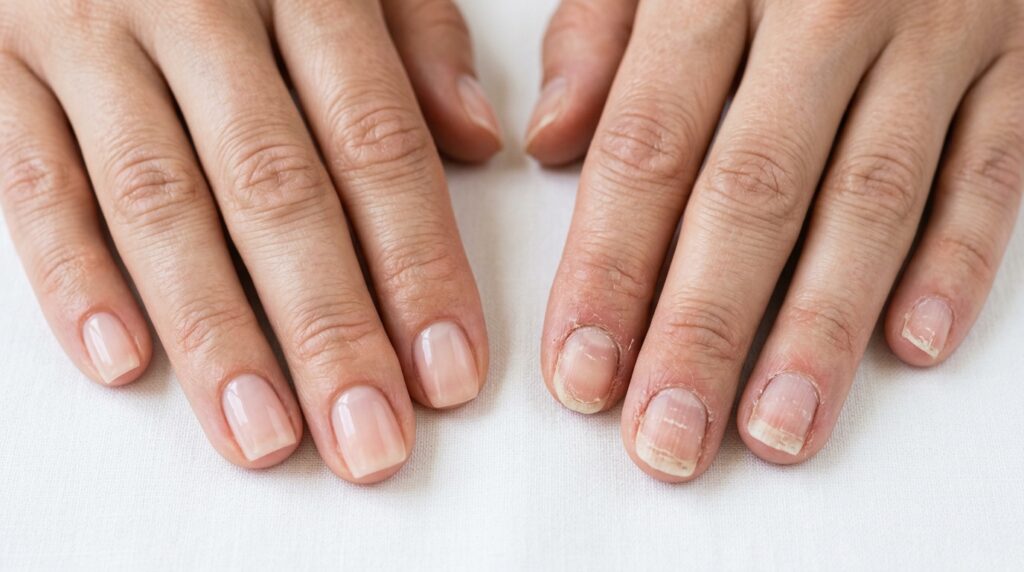
This is probably the question people care most about, and the honest answer is that none of these three options are inherently destructive when they’re applied and removed correctly. The difference in nail health outcomes comes almost entirely down to technique, not product.
Gel sits most lightly on the natural nail and tends to be the gentlest option overall. The main risk is over-filing during prep, since some technicians buff the nail plate more aggressively than necessary to create adhesion, which thins the nail over time. If you notice your natural nails feeling thinner or more flexible than usual after regular gel appointments, it’s worth asking your technician to go lighter on the prep filing.
Acrylic gets the worst reputation here, and some of that reputation is deserved in cases of improper application or forced removal. But well applied, well maintained acrylics removed through a proper soak-off process don’t have to leave the natural nail in bad shape. Plenty of long-term acrylic wearers have perfectly healthy nails under their sets. The key word is proper. Rushing the removal, skipping the soak, or picking at the edges is where the damage comes from, not the acrylic itself.
Dip powder sits somewhere in the middle. The activator used to harden the powder layers is quite drying, which means the nails and cuticles need more consistent moisture between appointments compared to gel or acrylic. Regular cuticle oil application and a good hand cream routine matters more with dip powder than with the other two. Without it, the nails can become brittle and dry over time, which gets blamed on the dip powder itself when it’s really a hydration issue that’s easy to fix.
Across all three, the single best thing you can do for your nail health regardless of which option you choose is to take breaks periodically. A week or two of bare, well-moisturized nails between enhancement sets gives the nail plate a chance to recover and breathe, and it’s genuinely worth building into your routine a few times a year. Even people who have worn enhancements consistently for years tend to notice a real difference in their natural nail strength when they commit to regular recovery periods.
How They Compare on Cost
Prices vary by location and salon, but the general hierarchy tends to hold fairly consistently across most markets.
Gel is usually the most affordable of the three. The process is faster, the materials are less involved, and because it’s been the standard offering for years, competition keeps prices competitive. A gel manicure typically costs noticeably more than a regular polish manicure but less than a full acrylic or dip powder service. If you’re on a budget and want something that looks great and lasts longer than regular polish, gel is almost always the most cost-effective starting point.
Acrylics cost more, particularly for a full set with extensions. The skill and time involved in sculpting and shaping acrylic properly commands a higher price, and rightly so. Fill appointments are usually significantly cheaper than a new full set, which helps manage the ongoing cost over time if you’re a regular acrylic client. Someone who gets a full set once and then fills every three weeks will spend considerably less per month than someone who keeps getting new full sets each time.
Dip powder is generally priced similarly to acrylics or slightly above at many salons. It was positioned as a premium service when it first became mainstream, and prices have come down as it’s become more widely available, but it’s still rarely the budget option on the menu. The longer wear time does help offset the higher per-appointment cost, since fewer appointments per year means the annual spend can actually be quite similar to gel despite the higher single-visit price.
One thing people often forget to factor in is removal cost. All three require a proper soak-off process that takes anywhere from 15 to 30 minutes, and some salons charge for this separately rather than building it into the next appointment price. Always ask about removal costs upfront, especially if you’re switching from one option to another, since removing an existing set before starting a new service can add a meaningful amount to the total bill.
Which One Is Right for You?
If you’ve made it this far, you probably have a sense of where you’re leaning. But here’s a simple way to think about it.
Go with gel if you want a natural, flexible, lightweight feel on your nails and you’re happy to be back in the salon every two to three weeks. It’s the easiest option to transition in and out of, the gentlest on natural nails, and the most affordable. It’s also the best starting point if you’ve never worn nail enhancements before and want to ease into it.
Go with acrylics if you want length, structure, or a very specific dramatic shape that gel alone can’t create. They’re the most versatile option for custom nail looks, and in experienced hands, they can look just as natural as any other option while offering a level of durability that suits people who are hard on their hands.
Go with dip powder if you want something that lasts a genuinely long time between appointments, has excellent color payoff, and doesn’t involve a UV lamp or a strong chemical smell. It’s a great middle ground between the lightweight feel of gel and the durability of acrylic.
And if you genuinely can’t decide? Try a different one each time for the next few appointments. Paying attention to how each option wears on your specific nails, how the removal feels, and which one you find yourself missing when you switch away from it is actually the most reliable way to figure out which one works best for you.
A Few Things to Ask Your Nail Technician
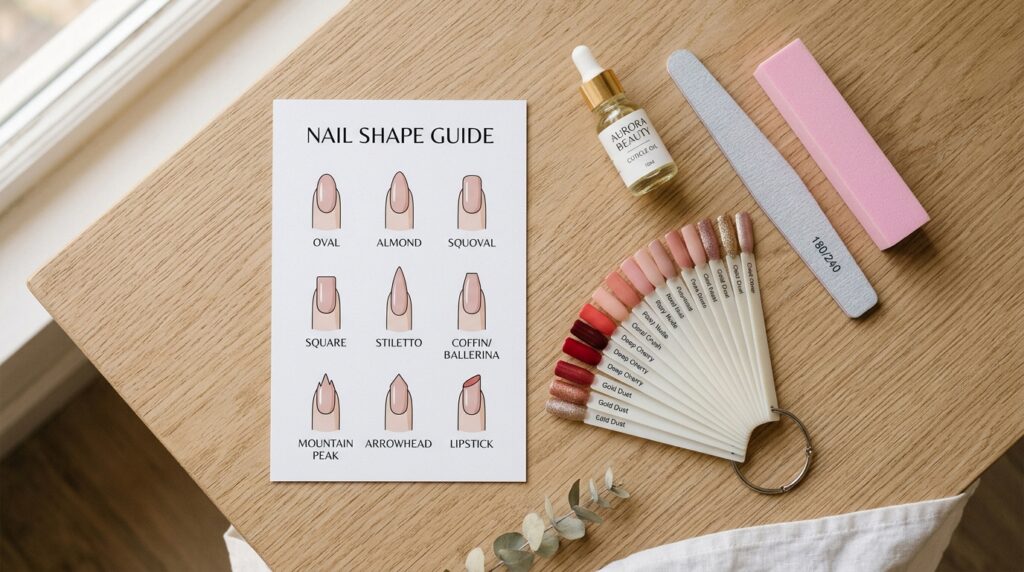
Walking into an appointment with a few specific questions makes a bigger difference than most people realize. Ask your technician what they think suits your natural nail type, since an experienced eye can usually give you a genuinely useful recommendation based on what they can see in front of them. Ask how they handle removal for the service you’re choosing, because the answer tells you a lot about how they approach nail health overall. And if you’ve had a bad experience with one of these options in the past, say so. The problem is often something specific about how it was applied or removed at a particular salon, not the product itself being wrong for you.
A good nail technician will have opinions and will share them. Don’t be afraid to use the first few minutes of the appointment as a proper consultation rather than just pointing at a color and sitting back. Your nails will thank you for it.