Finding the Right Nail Shape for Your Fingers and Natural Nail Shape
Nail shape is one of those details that most people choose based on what they see on someone else rather than what actually suits their own hands. The result is a shape that looks beautiful in a photo or on a friend but somehow does not have the same effect on your own fingers. The reason is almost always that the shape has not been chosen with the specific proportions of the hand and finger in mind.
The right nail shape makes fingers look longer, more slender, or more balanced depending on what each hand type needs. The wrong shape can do the opposite, making short fingers look stubbier or wide nail beds look broader.
Why Nail Shape Matters More Than Length
Nail shape has a more significant visual impact on the appearance of hands than nail length because shape determines the overall silhouette and proportion of the fingertip. A short square nail on a wide nail bed looks completely different from a short oval on the same hand. The oval softens and elongates while the square reinforces the width. Understanding this makes it clear why choosing the right shape for your hand type produces noticeably better results than simply choosing whatever is trending.
How to Identify Your Hand Type
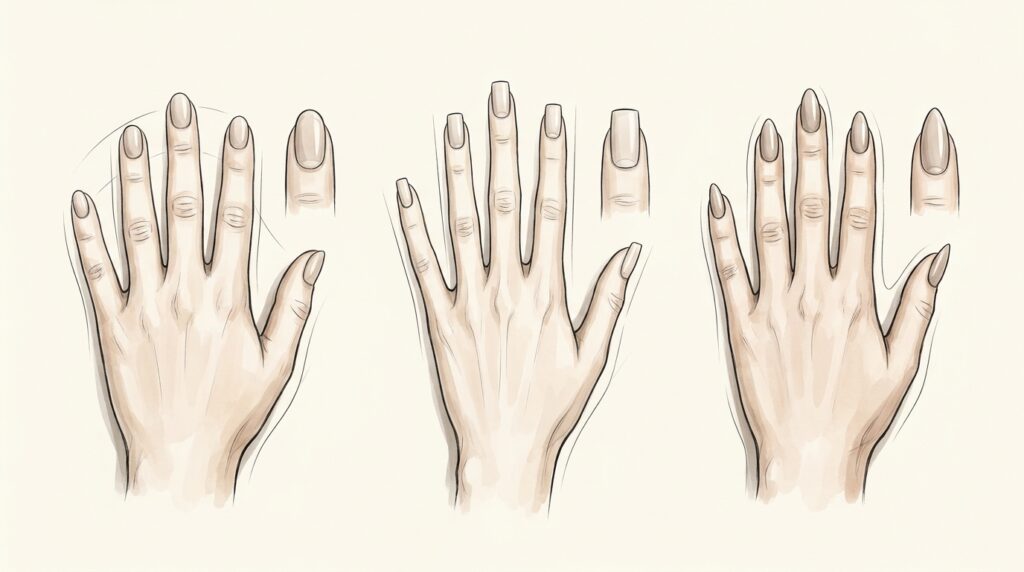
Identifying your hand type before choosing a nail shape is the most important starting point and it requires looking at three things: finger length, finger width, and nail bed shape. Finger length is measured relative to the palm rather than in absolute terms. Long fingers extend well past the knuckle with visible length between each joint. Short fingers are proportionally close to the palm with less distance between the joints. Finger width refers to whether the fingers are slender, average, or wide at the tip. Nail bed shape refers to whether the natural nail grows wide, narrow, or in between. Each combination creates different needs and responds differently to different shapes.
Oval Nails
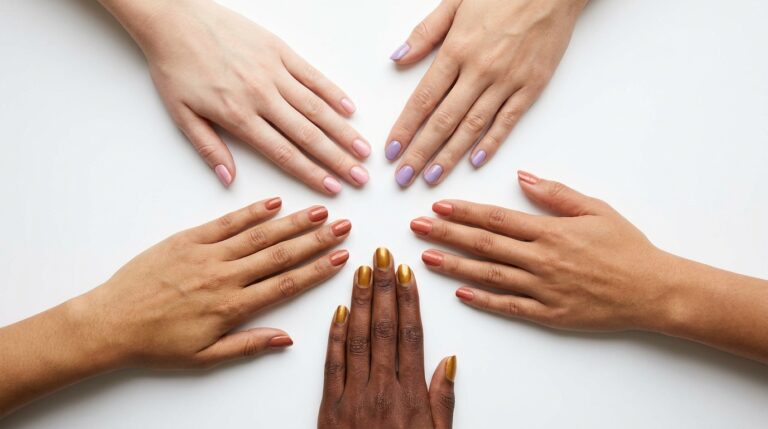
This nail shape is the most universally flattering option available because its soft, rounded sides and slightly elongated silhouette suit the widest range of hand types of any nail shape. Oval nails are filed straight on the sides and rounded at the tip to create a gentle egg-shaped silhouette. The rounded sides create the visual impression of a slimmer finger tip regardless of the actual width of the finger. The elongated tip draws the eye along the length of the finger rather than across its width. Oval nails suit short fingers, wide nail beds, chubby fingers, and every other hand type because they add length without being extreme.
Round Nails
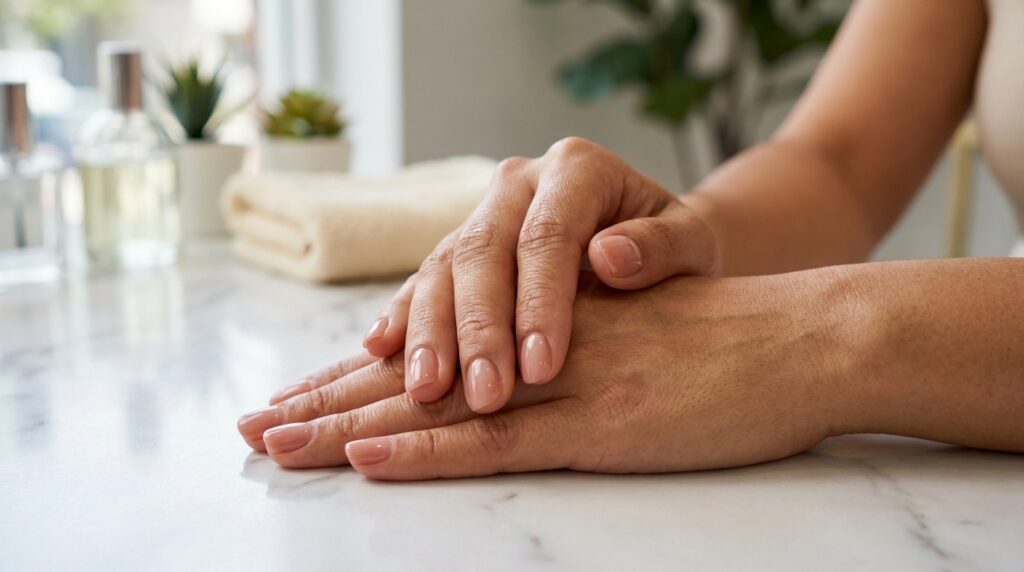
These are filed straight on the sides and curved at the tip to follow the natural curve of the fingertip, creating a clean, low-maintenance shape that suits short fingers and wide nail beds particularly well. The round shape is more compact than oval and does not extend significantly beyond the fingertip, which makes it practical for active lifestyles and hands-on work. On short fingers round nails create a clean, polished appearance without the risk of looking disproportionate. On wide nail beds the rounded tip softens the visual width. Round nails are the easiest shape to maintain at home because the curve follows the natural contour of the fingertip.
Square Nails
The type of nails that are filed straight across the top with sharp corners, creating a geometric, precise shape that suits long, slender fingers and narrow nail beds. The flat top and sharp corners of a square nail create a strong horizontal line at the tip that adds visual width. On long, slender fingers this width is flattering because it balances the length of the finger. On short or wide fingers the same horizontal emphasis makes the finger look shorter and wider, which is why square nails are most recommended for longer finger types. Square nails require precise, consistent filing to maintain the sharp corners and flat top.
Squoval Nails
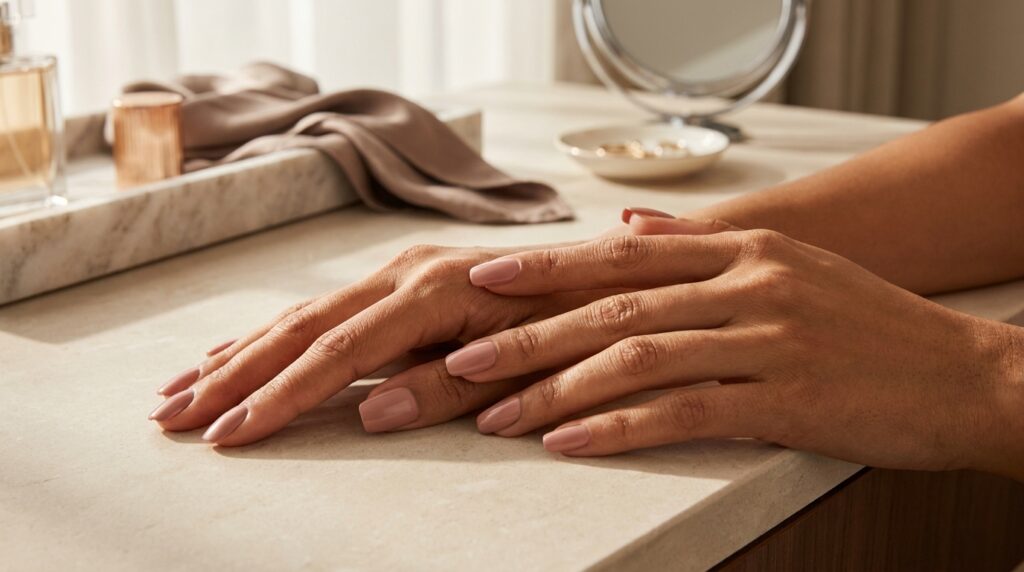
Squoval nails combine the flat top of a square nail with softened, slightly rounded corners that eliminate the sharpness without removing the straight edge. This makes squoval one of the most practical and widely flattering nail shapes because it captures the visual width-adding effect of a square nail without the sharp corners that can snag and break. Squoval suits long and medium-length fingers particularly well. On short fingers it is more forgiving than a fully square shape because the softened corners prevent the tip from looking too wide relative to the finger length. Squoval is also one of the easiest shapes to maintain because the corners can be lightly rounded as they grow without losing the overall shape immediately.
Almond Nails
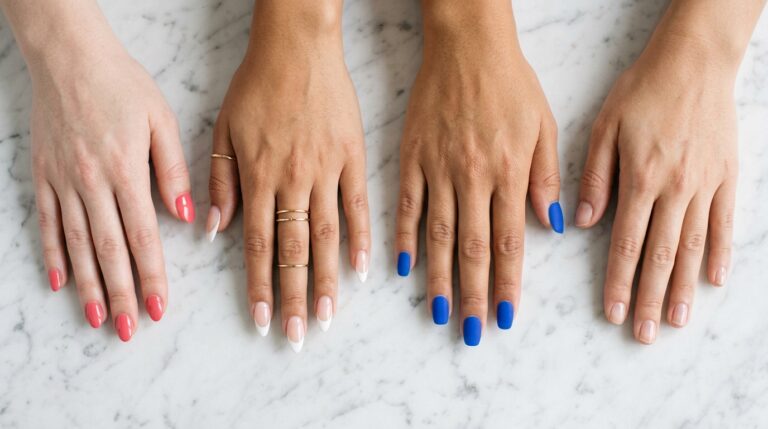
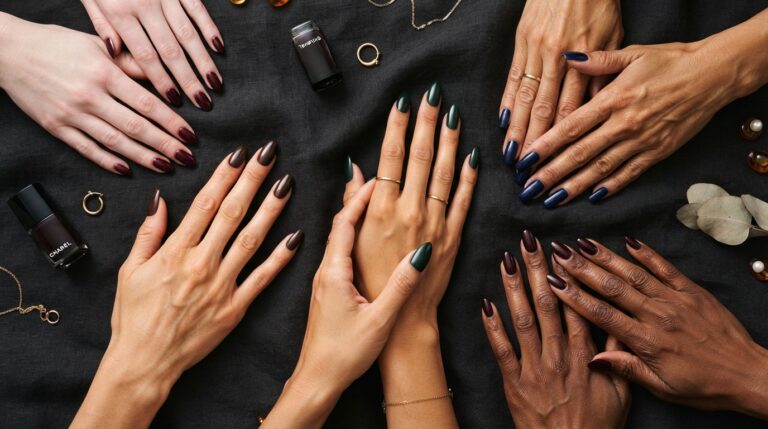
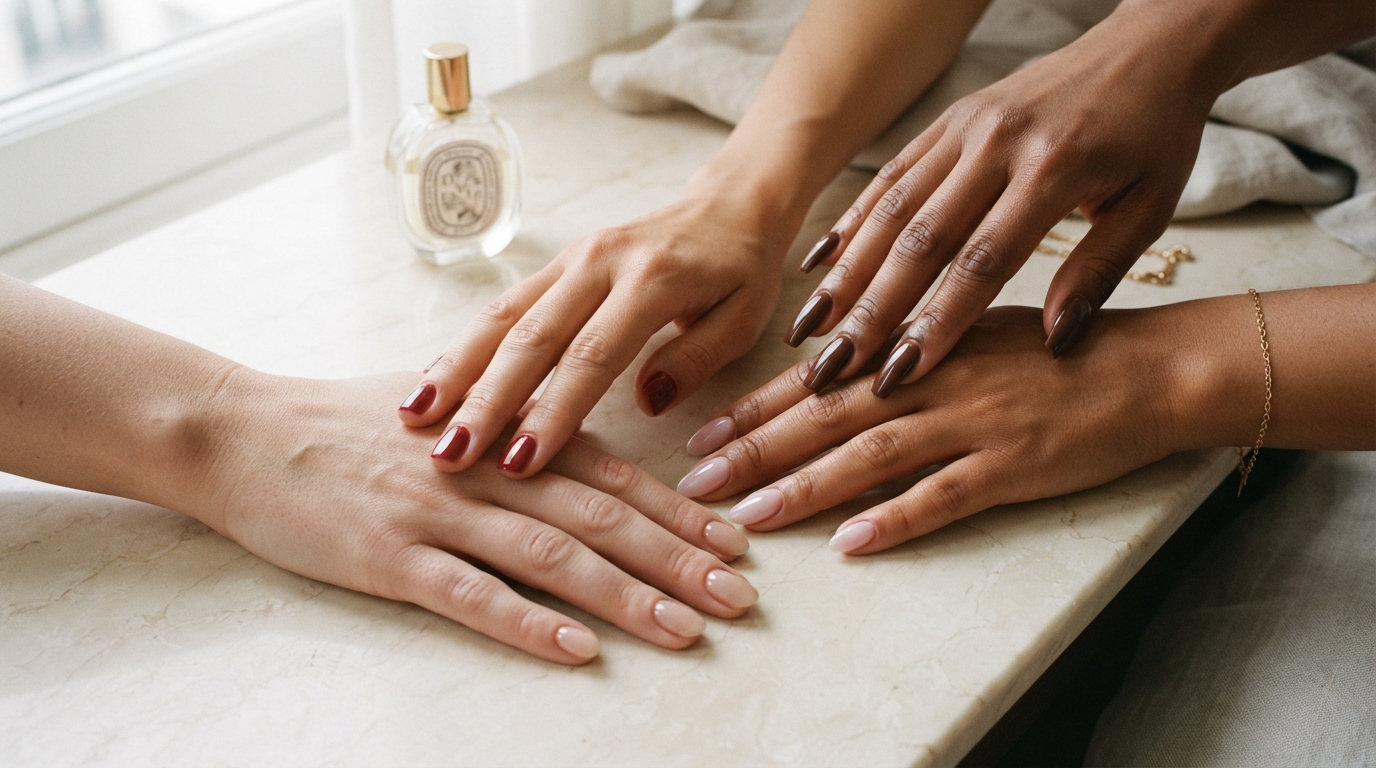
Almond nails taper toward a rounded point at the tip, resembling the silhouette of an almond, and they are one of the most elegant and elongating nail shapes available. The tapering sides draw the eye along the narrowing line of the nail toward the pointed tip, creating a strong visual impression of length and slimness regardless of the actual finger width. Almond nails suit wide nail beds and short fingers particularly well because the tapering effectively counteracts the visual width of a broad nail bed and adds the impression of length to a short finger. They require slightly more length to achieve the tapered shape effectively and are easier to maintain as gel or acrylic extensions than as natural nails.
Stiletto Nails
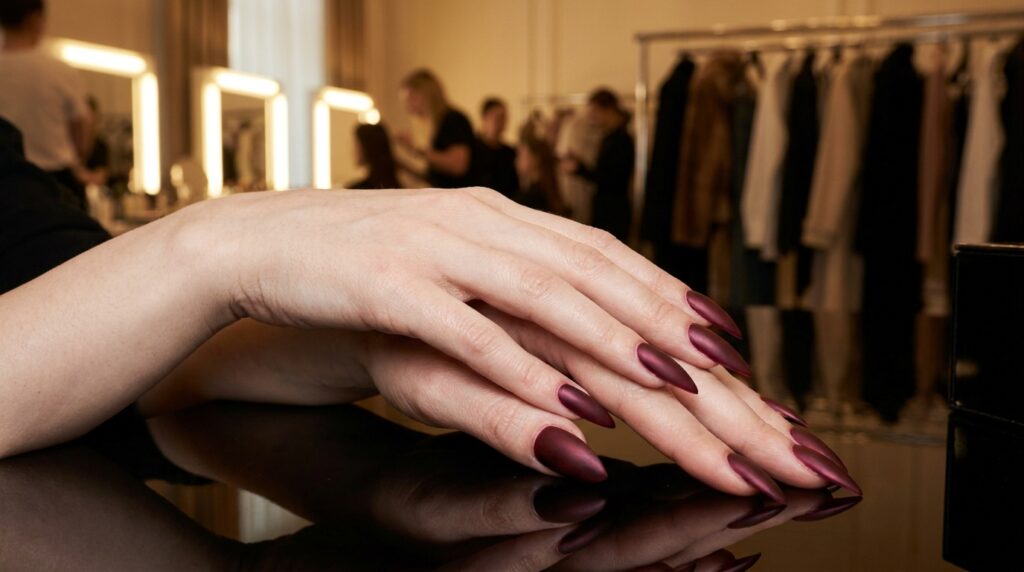
The most dramatic and extreme version of the tapered shape, filing to a sharp point at the tip rather than the rounded point of an almond. They create the most elongating effect of any nail shape because the strong taper and pointed tip draw the eye dramatically upward along the length of the finger. Stiletto nails suit wide nail beds and shorter fingers for the same reason as almond nails but with a more extreme visual effect. They are very difficult to maintain on natural nails because the very thin tip at the point is fragile and prone to breaking. Most women who wear stiletto nails opt for gel or acrylic extensions which provide the structural support the shape requires.
Coffin or Ballerina Nails
Coffin nails, also called ballerina nails, taper on the sides like stiletto nails but end in a flat, square tip rather than a point. This gives the shape the elongating effect of a tapered nail with the practicality of a flat tip that is less prone to breaking than a sharp point. Coffin nails suit long, slender fingers and medium to wide nail beds. On very short fingers the dramatic taper of the coffin shape can look disproportionate because it requires significant length to work effectively. Coffin nails are one of the most widely searched nail shapes on Pinterest and look particularly striking with bold nail art or solid deep shades.
Flare Nails
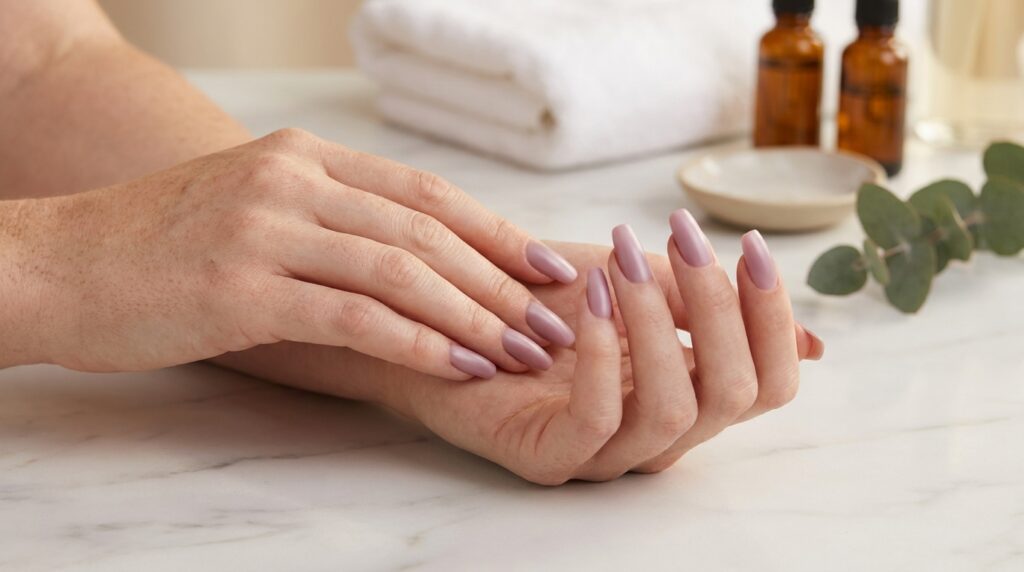
Also called duck nails, widen at the tip rather than tapering, creating an inverted trapezoid shape. This is one of the less commonly worn shapes in mainstream nail styling but it has a strong following in certain style communities because the widened tip creates a bold, distinctive silhouette. Flare nails suit long, slender fingers where the widening at the tip creates a flattering balance. On short or wide fingers the widening effect at the tip emphasizes the width of the finger further. Flare nails are almost exclusively worn as extensions because achieving the flared width on a natural nail is not practically achievable.
Short Wide Nail Beds
Women with short, wide nail beds benefit most from oval, almond, or any tapered shape because these shapes counteract the natural width and create the impression of a longer, more slender finger tip. A square or squoval on a wide short nail bed reinforces the width and makes the finger look stubbier. An oval or almond draws the eye along the tapering sides rather than across the width of the nail. Even at short lengths, oval is more flattering than square on a wide nail bed.
Long Slender Fingers
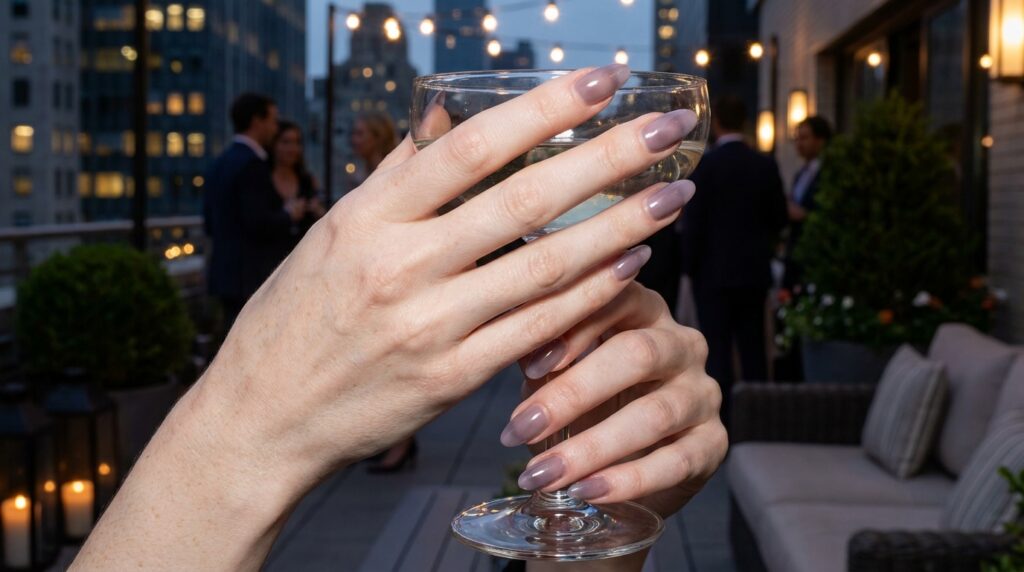
They are the most versatile hand type for nail shapes because most shapes look flattering on them. Square, squoval, coffin, and stiletto shapes all look striking on long slender fingers without creating proportion problems. Round and oval are slightly less impactful but still perfectly flattering. Women with long slender fingers can experiment freely with shapes that shorter or wider hand types need to approach more carefully.
Short Fingers
Short fingers benefit most from oval, almond, or stiletto shapes because the elongating quality of these shapes creates the visual impression of more length than the fingers actually have. The key principle for short fingers is choosing shapes that draw the eye along the length of the nail rather than across its width. Rounded and tapered tips achieve this. Square and flat tips do the opposite by creating a strong horizontal line at the tip that emphasizes the shortness of the finger. Keeping the nails at a medium rather than very short length amplifies the elongating effect of the shape on short fingers.
Wide Fingers
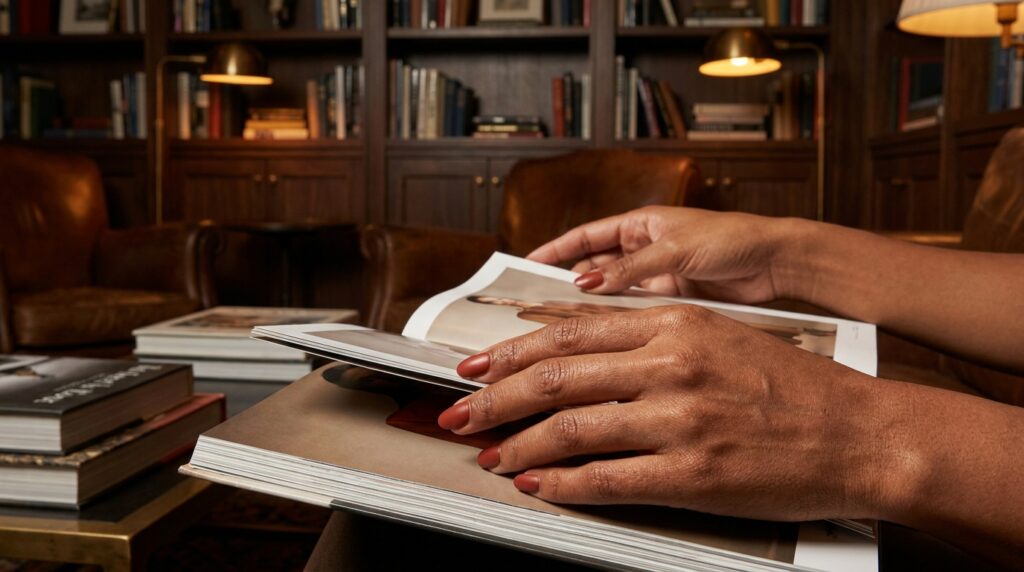
Wide fingers benefit from oval, almond, and tapered shapes that draw the eye along the finger rather than across it. Avoiding square and flat-topped shapes is the most important consideration because the straight horizontal tip line adds visual width to an already-wide finger. An oval or almond at medium length is the most consistently flattering combination for wide fingers. Keeping nails at a moderate length prevents the shape from looking disproportionate relative to the finger width.
Lipstick Nails
Lipstick nails are a lesser-known but genuinely flattering shape where one side of the nail is filed at a diagonal angle to create an asymmetric tip that resembles the slanted top of a lipstick. The diagonal creates an interesting, fashion-forward silhouette that suits long slender fingers particularly well. It is an avant-garde choice that suits women who want something distinctive without going to the extreme of a stiletto. Lipstick nails suit bold single-color manicures rather than detailed nail art, because the asymmetric shape is itself the statement.
Mountain Peak Nails
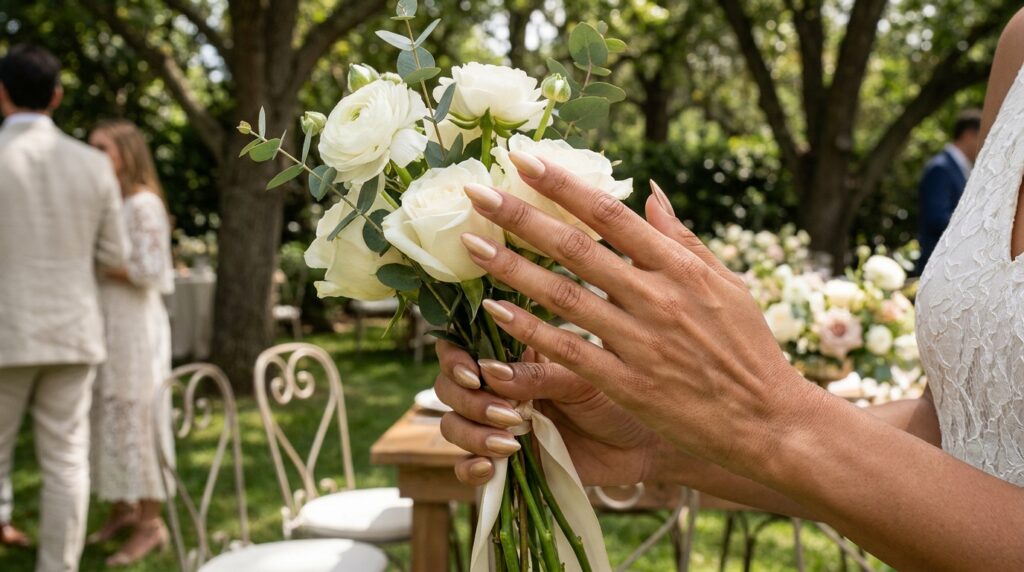
Mountain peak nails taper sharply to a central point like a stiletto but start the taper from closer to the nail bed, creating a broader based pointed shape. They are less extreme than a full stiletto because the wider base provides more structural support while still creating a strong tapering silhouette. Mountain peak nails suit wide nail beds where the broader base of the shape accommodates the natural width of the nail while the taper draws the eye upward. They are almost exclusively worn as extensions because the pointed tip is too fragile on natural nails.
Edge Nails
Edge nails, also called pointed square nails, have straight sides and a pointed center tip created by filing from each side inward to meet at a peak. The shape creates a strong, architectural silhouette that sits between a square and a stiletto. It suits long slender fingers where the geometric precision of the shape reads as intentional and fashion-forward. On shorter or wider fingers the pointed center can look disproportionate. Edge nails are a bold, distinctive choice that suits graphic nail art and solid deep shades most effectively.
How to Choose Between Natural Nails and Extensions

The nail shape you want may influence whether natural nails or extensions are the right choice, because some shapes are only practical with the added length and structure that extensions provide. Oval and round are easily achievable on natural nails. Square and squoval work well at medium to long natural length. Almond requires at least medium length. Coffin, stiletto, mountain peak, and edge shapes are most practical as gel or acrylic extensions because the thin tips required are fragile on natural nails.
Filing Technique for Each Shape
Filing technique is as important as shape choice because an incorrectly filed nail reduces the flattering effect of even the right shape. For oval and almond, file from each side toward the center in a sweeping motion. For square and squoval, file straight across the tip first, then soften the corners. For round nails, follow the natural curve of the fingertip in one smooth motion. Always file in one direction rather than back and forth to prevent splitting.
Maintaining Your Chosen Shape
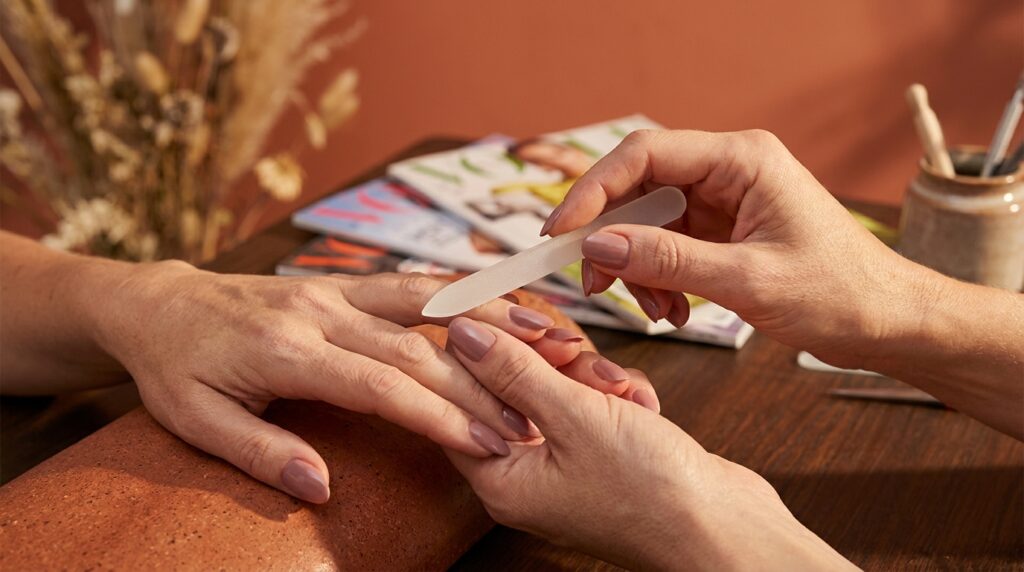
Consistent maintenance is the most important factor in keeping any nail shape looking intentional rather than grown-out and undefined. Most shapes need reshaping every one to two weeks as the nail grows. A glass or crystal nail file creates a smoother edge than a standard emery board and reduces micro-tears that cause splitting. Cuticle oil applied daily keeps the skin around the nail healthy, which frames the shape cleanly and makes any nail look more polished.
Nail Shape and Skin Tone
Nail shape interacts with skin tone in subtle ways because certain shapes create a frame around the fingertip that makes the skin color more or less prominent. On fair skin, narrow tapered shapes like almond suit light nail colors well. On medium skin tones, oval and squoval create a balanced frame with both light and bold colors. On deep skin tones, square and coffin shapes suit bold, rich colors beautifully. These are tendencies rather than rules, and hand type always takes priority.
Nail Shape and Nail Art
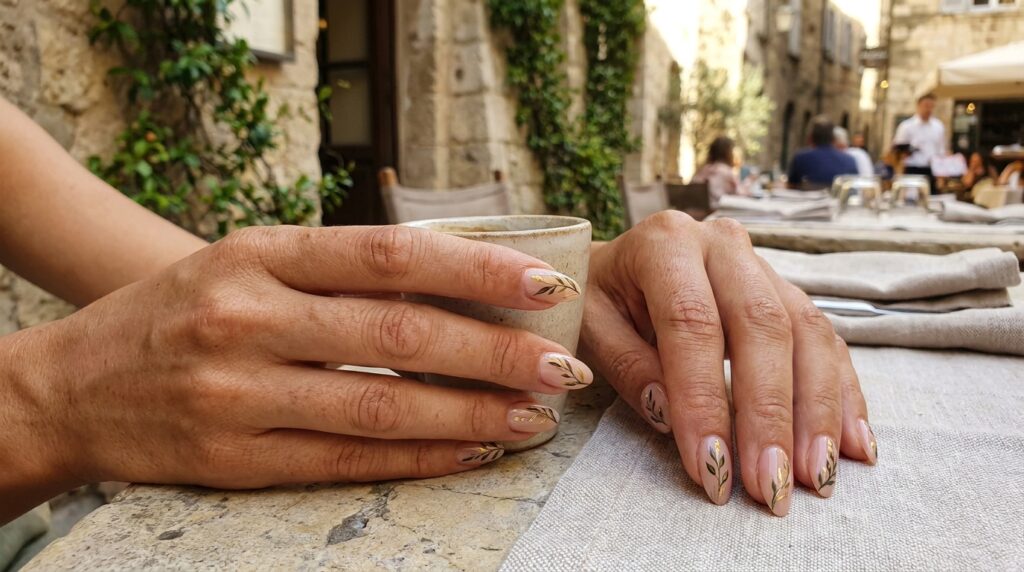
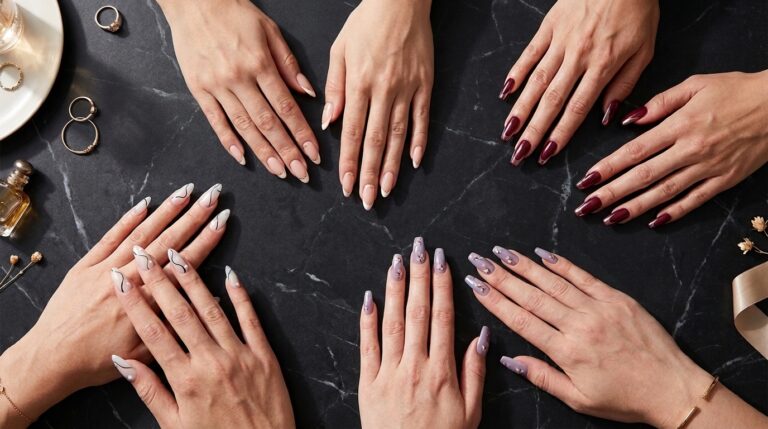
The nail shape you choose also determines which nail art styles look most effective. Square and coffin nails provide a flat canvas that suits geometric nail art, French tips, and bold graphic designs because the straight edges create natural borders. Oval and almond nails suit fluid, organic designs like florals, abstracts, and ombre gradients because the curved silhouette complements curved design elements. Round nails suit minimalist designs and solid colors because the compact shape reads as complete on its own.
Nail Shape and Nail Length
The same shape looks completely different depending on nail length, which is why choosing a shape that works at your preferred length is important. An oval at very short length is barely distinguishable from round. At medium length the oval silhouette is clearly visible. An almond at short length cannot achieve the full taper and reads more as oval. At medium to long length the taper is clear and the elongating effect is dramatic. Always choose shape and length together rather than separately.
Suffering from nail problems? You can find out the reasons and tips to solve those problems here.