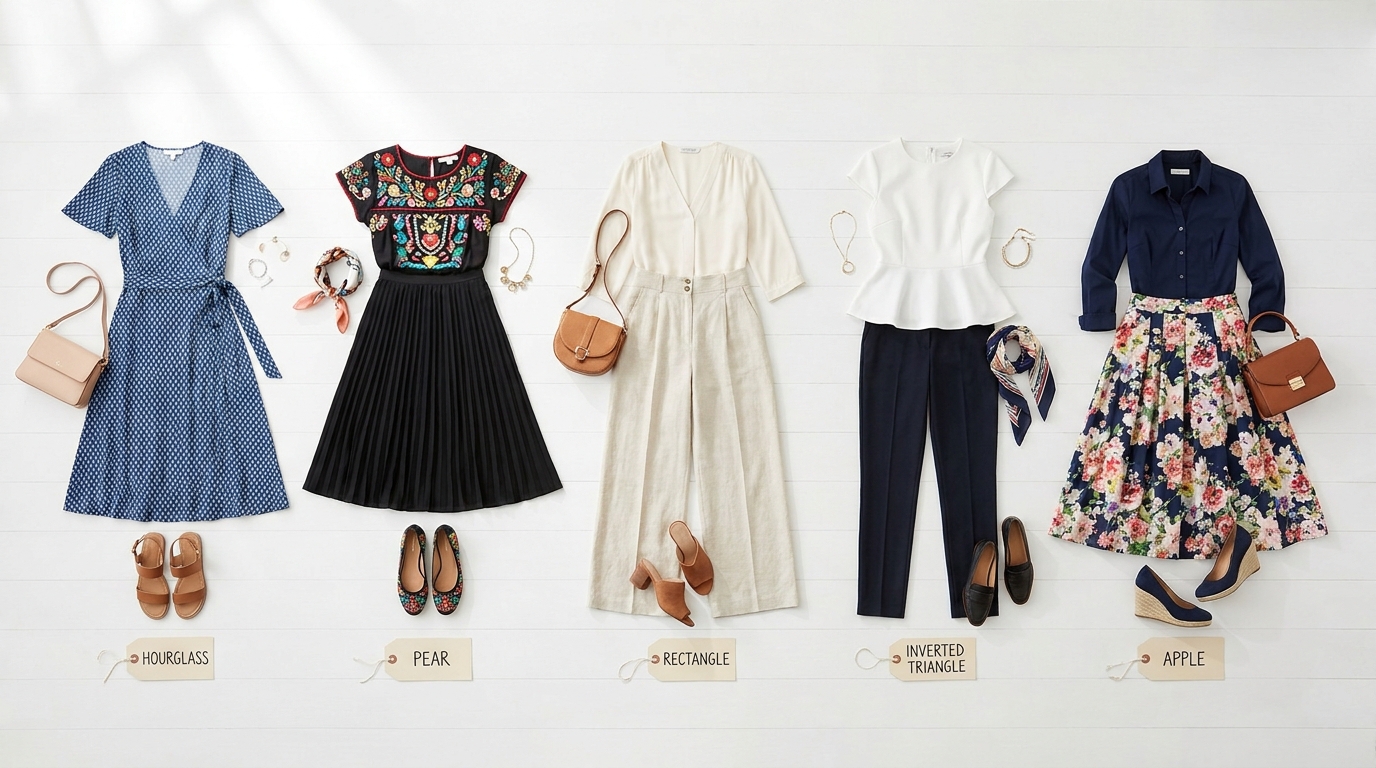
How to Dress for Your Body Shape
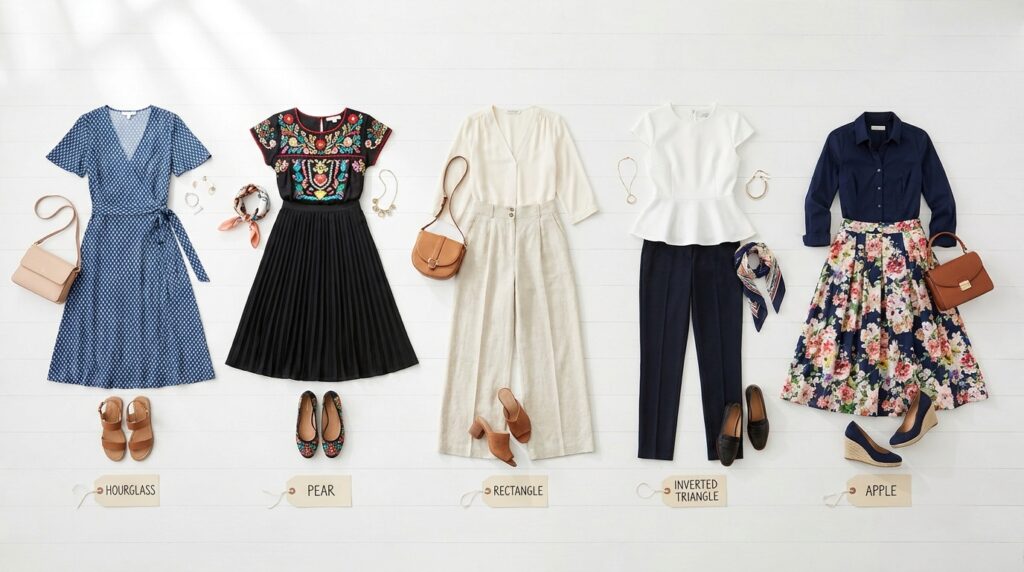
Fashion advice has a complicated relationship with body shapes. For decades, style guides told women to dress in ways that minimized certain features and maximized others, as if the goal of getting dressed was to approximate one specific silhouette regardless of what you actually looked like. That approach is both outdated and unhelpful, and it’s part of why so many people find body shape dressing advice more confusing and discouraging than useful.
The goal of understanding your body shape isn’t to change how you look or to hide parts of yourself. It’s to understand your proportions well enough to make deliberate choices about what you wear, so that you can dress in a way that feels intentional and confident rather than accidental. Clothes that work with your proportions tend to feel more comfortable, look more polished, and require less effort to style. That’s the practical benefit, and it has nothing to do with making one shape look like another.
This guide covers the most common body shapes, what tends to work well for each one, and how to think about dressing in a way that suits your proportions and your personal style. The most important thing to remember throughout is that these are starting points, not rules. The best outfit is always the one that makes you feel good, regardless of whether it follows any particular guideline.
How to Identify Your Body Shape
Body shape is determined by the relationship between your shoulders, waist, and hips rather than your size or weight. The same body shape can appear at any size, which is why these principles apply broadly rather than only to specific body types. Understanding your shape is about proportion and silhouette, not about how much space you take up.
The most common body shapes are hourglass, pear, apple, rectangle, and inverted triangle. Each is defined by where width and volume naturally sit on the body. An hourglass has roughly equal shoulder and hip width with a defined waist. A pear shape has narrower shoulders and wider hips. An apple shape carries more volume in the midsection with narrower hips. A rectangle has similar width at shoulders, waist, and hips with little waist definition. An inverted triangle has broader shoulders tapering to narrower hips.
A simple way to identify your shape is to measure or visually compare three points: your shoulders, your waist, and your hips. You don’t need precise measurements for this. Standing in front of a mirror in fitted clothing and honestly assessing where your body is widest, where it’s narrowest, and whether your waist is defined or more straight gives you enough information to identify your approximate shape and apply the relevant styling principles.
Dressing an Hourglass Shape
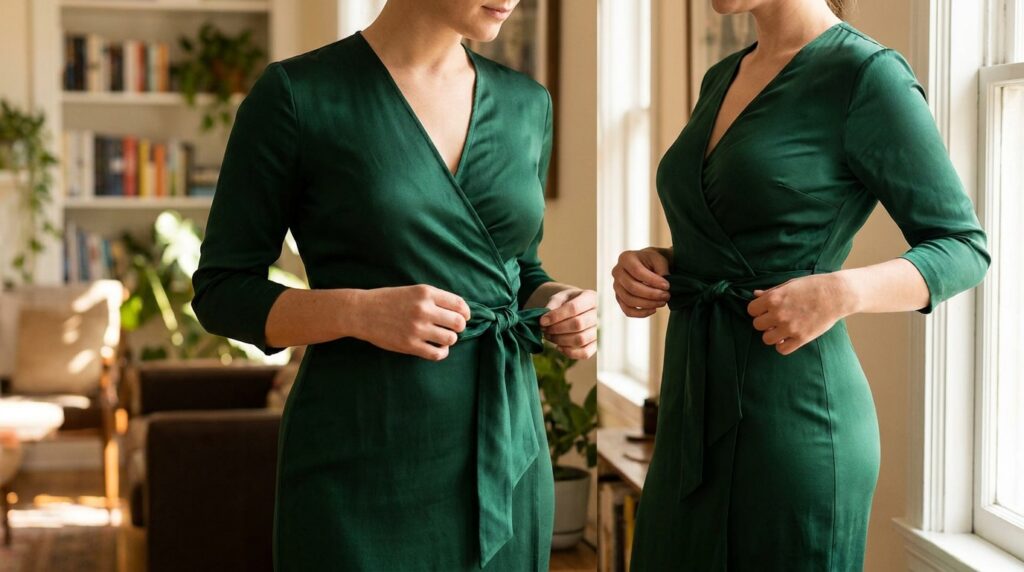
The hourglass shape is defined by balanced shoulder and hip width with a noticeably narrower waist, and the most flattering approach is simply to highlight that natural balance rather than obscure it. Clothes that define the waist and follow the body’s curves tend to look best, since they work with the shape’s natural proportions rather than adding volume where it isn’t needed or hiding definition that’s already there.
Wrap dresses and tops are particularly well-suited to hourglass proportions because they tie at the waist and naturally follow the body’s curves. They create a flattering silhouette on almost any size hourglass shape because the adjustable tie allows for a custom fit at the waist rather than relying on standard sizing.
Belted styles work extremely well for the same reason. Adding a belt to a dress, a blazer, or even a simple shirt at the natural waist highlights the narrowest point of the body and creates definition that reads as elegant and intentional. Wide belts, thin belts, and everything in between all work well when worn at the true natural waist rather than at the hip.
Fitted rather than oversized silhouettes tend to be more flattering for hourglass shapes, since very loose or boxy styles obscure the proportions that are most characteristic of the shape. This doesn’t mean everything needs to be skin-tight. It means choosing clothes that follow the body’s outline rather than hanging away from it at every point. A well-fitted blazer over a simple shirt, for example, defines the waist while remaining comfortable and professional.
Avoid very stiff, structured fabrics that don’t follow the body’s curves, since they tend to create a boxy silhouette that sits away from the waist rather than following it. Fabrics with some drape or stretch tend to work better for hourglass proportions, since they move with the body and maintain the shape’s natural definition.
Dressing a Pear Shape
A pear shape has narrower shoulders and a smaller upper body relative to wider hips and thighs, and the most effective styling approach focuses on balancing these proportions by drawing attention upward and adding visual interest to the upper half of the body.
Statement tops, structured shoulders, and bold necklines are all effective for adding visual weight to the upper body and creating more balance between top and bottom. A top with interesting detail, whether that’s a ruffled neckline, a bold print, or a structured shoulder, draws the eye upward and creates the impression of a more balanced silhouette overall.
Dark, simple bottoms paired with more interesting tops is one of the most reliable formulas for pear shapes. Dark colors visually recede, which minimizes the appearance of the hips and thighs, while a more interesting top creates a focal point higher up on the body. This doesn’t mean avoiding color or print on the bottom half entirely. It means being strategic about where visual interest and emphasis are placed.
A-line skirts and dresses are among the most universally flattering silhouettes for pear shapes because they skim over the hips and thighs without clinging to them, creating a smooth line from waist to hem that works with rather than against the shape’s proportions. Fitted at the waist and flaring gently outward, the A-line creates a balanced, elegant silhouette that suits a wide range of occasions.
Wide-leg trousers can work very well for pear shapes when they’re high-waisted and well-fitted through the hip, since the wide leg creates a long, continuous line from hip to ankle that balances out hip width without emphasizing it. The key is that they should fit smoothly through the hip and thigh rather than being tight across the widest point.
Avoid very tight bottoms paired with very loose tops, since this combination emphasizes the width of the hips without adding any balancing visual interest to the upper body. Equally, very voluminous skirts or trousers can add more visual weight to the lower half than is helpful for this shape.
Dressing an Apple Shape
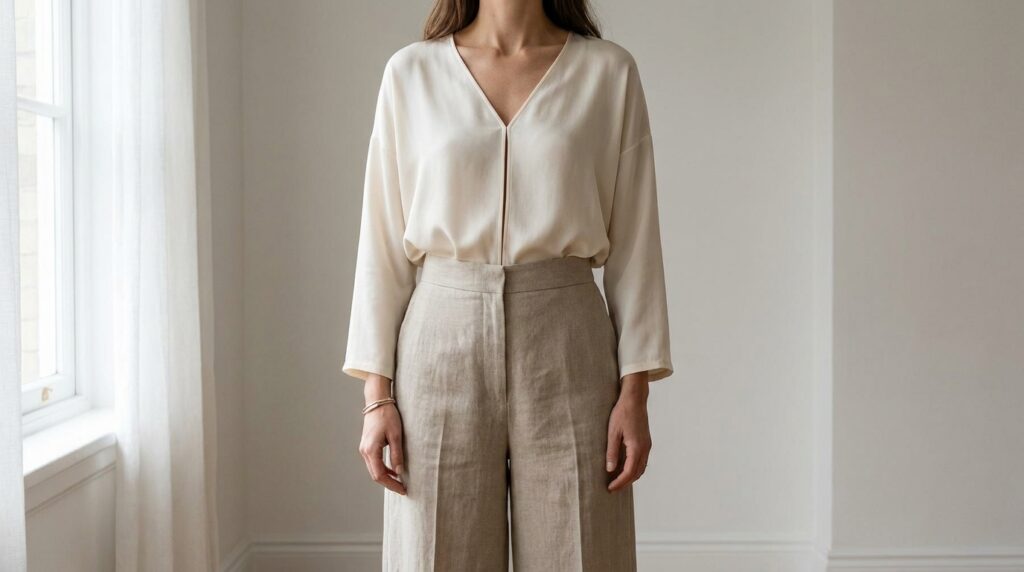
An apple shape carries more volume in the midsection, with a less defined waist and narrower hips relative to the upper body. The most flattering approach focuses on creating the impression of length through the midsection, drawing attention to the legs, and highlighting the shoulders, neckline, and face rather than the mid-section.
V-necklines are one of the most consistently flattering neckline choices for apple shapes because they create a vertical line through the chest and upper body that draws the eye downward and elongates the torso. A deep V-neck in particular creates visual length through the center of the body, which is the most flattering direction for this shape.
Empire waist styles, which sit just below the bust rather than at the natural waist, work well for apple shapes because they create definition at the narrowest point of the upper body and then flow loosely over the midsection rather than fitting through it. This creates a smooth, elongated silhouette without drawing attention to the midsection.
Straight-leg or bootcut trousers and jeans tend to be more flattering than very skinny styles for apple shapes, since they create a long, continuous line from hip to ankle rather than tapering to a narrow point that can make the upper body look proportionally larger by comparison.
Monochrome outfits or tonal dressing are particularly effective for apple shapes because a single, continuous color creates a long, unbroken vertical line through the body that is visually elongating. A head-to-toe outfit in one color or close tones creates a streamlined silhouette that is flattering regardless of where volume naturally sits.
Avoid styles that add bulk directly at the midsection, such as wide waistbands, gathered fabric at the tummy, or cropped tops that end at the widest point of the body. These details draw attention directly to the area that apple shapes typically prefer to minimize.
Dressing a Rectangle Shape
A rectangle shape has similar width at the shoulders, waist, and hips with little natural waist definition, creating a straight, relatively uniform silhouette. The most flattering approach focuses on creating the impression of curves and waist definition that the shape doesn’t naturally have.
Peplum tops and dresses are particularly effective for rectangle shapes because the flare of fabric at the hip creates the impression of hip definition where there isn’t naturally much. The volume added at the hip, combined with a fitted waist, creates the illusion of a more defined waist-to-hip ratio.
Belts at the natural waist are one of the most transformative styling tools for rectangle shapes, since they create a visual break that implies waist definition even when the actual waist measurement is similar to the hip and shoulder width. This works especially well over dresses, long shirts, and blazers that would otherwise hang straight through the body.
Layering and texture add visual interest and dimension to a silhouette that can otherwise look flat or uniform. A fitted inner layer with a more structured or textured outer layer, an open blazer over a fitted dress, or a textured knit over slim trousers all create visual depth that adds to the impression of a more defined figure.
Fit and flare dresses are ideal for rectangle shapes because they fit through the bodice and then flare at the skirt, creating both waist definition and hip volume in a single silhouette. They create curves where the body’s natural proportions are relatively straight, which is exactly what this shape tends to benefit from.
Avoid very straight, very boxy styles that reinforce the shape’s natural silhouette without adding any visual interest or definition. Sack dresses, very loose shift dresses, and boxy blazers worn open over slim trousers can make a rectangle shape look more uniform rather than more defined.
Dressing an Inverted Triangle Shape
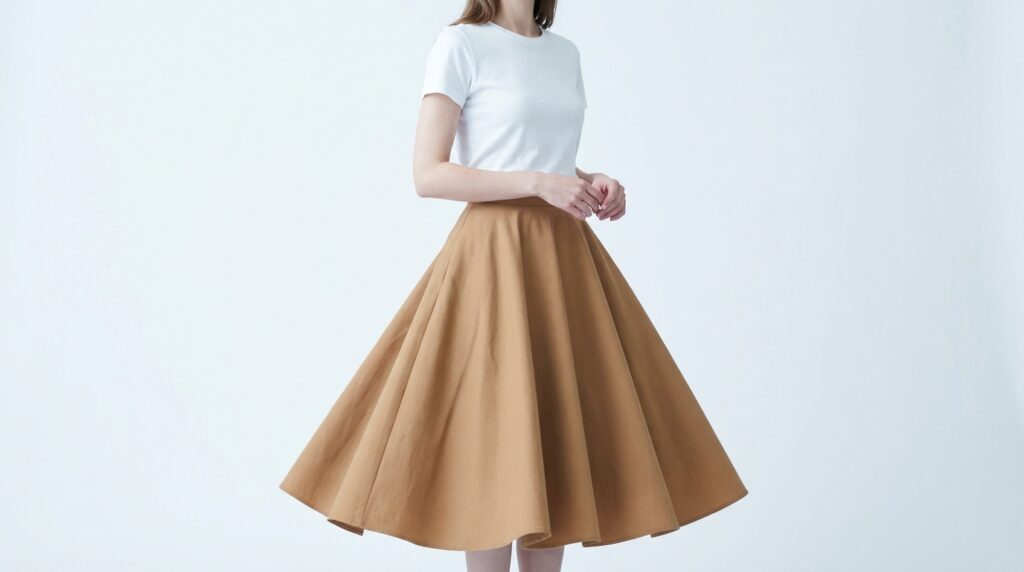
An inverted triangle shape has broader shoulders tapering to narrower hips, which gives the upper body more visual weight than the lower half. The most flattering approach focuses on adding volume and visual interest to the lower half of the body while keeping the upper half relatively simple and unembellished.
Wide-leg trousers, full skirts, and A-line silhouettes are all excellent for inverted triangle shapes because they add volume and visual weight at the hip and thigh, balancing out the broader shoulders. The goal is to create the impression of width at the lower half that matches or approaches the natural width of the shoulders.
Simple, minimal tops with clean lines tend to work better than busy, embellished, or structural ones, since they keep the focus on the lower half of the body rather than adding more visual interest to an upper half that already has natural emphasis. A simple fitted shirt or a plain V-neck top pairs better with a statement skirt or trouser than a ruffled blouse would.
Avoid shoulder pads, structured sleeves, or anything that adds visual width to the shoulder area, since the shoulders are already the widest point of this shape. Cap sleeves, off-shoulder styles, and boat necks that extend across the shoulder line also add visual width and are generally less flattering for inverted triangles than styles that draw attention to the neckline and collarbone in a narrower way.
Bootcut and flared jeans are particularly effective for inverted triangle shapes because the flare at the ankle adds width at the bottom of the leg, which balances out shoulder width from below. Skinny jeans and straight-leg styles provide no counterbalance to the shoulders and can make the upper body look proportionally even wider by comparison.
The Bigger Picture
Body shape guidelines are a tool, not a rulebook, and the most important thing is that you feel good in what you wear. Understanding your proportions helps you make more deliberate choices, but it should never make getting dressed feel more restricted or complicated than it already is. Plenty of people wear styles that supposedly don’t suit their shape and look wonderful in them, because confidence and personal style consistently override any proportion-based guideline.
Personal style, the occasion, your lifestyle, and how clothes make you feel are all factors that matter just as much as proportion when deciding what to wear. A style that’s theoretically flattering for your shape but that you feel uncomfortable or unlike yourself in will never look as good as something you wear with genuine ease and confidence.
Use these guidelines as a starting point when you’re not sure where to begin, and then let your own experience and preferences refine them. Pay attention to what consistently makes you feel good, notice what silhouettes and details you’re drawn to, and trust that instinct alongside the proportional principles. The goal is always an outfit that makes you feel like the best version of yourself, and that looks different for everyone.
Frequently Asked Questions
Do I have to stick to these guidelines strictly?
Not at all. These are principles to help you make more deliberate choices, not rules you have to follow. Many people find that understanding their proportions helps them shop and get dressed more confidently, but personal style and how clothes make you feel always matter more than any guideline.
What if I don’t fit neatly into one body shape category?
Most people don’t fit perfectly into a single category, and that’s completely normal. If you sit between two shapes, you can draw from the advice for both and see what resonates with your actual experience of what works for your body. The categories are simplified models of a much wider range of real proportions.
Can my body shape change over time?
Yes. Weight changes, pregnancy, aging, and changes in muscle mass can all shift where volume sits on the body and how proportions relate to each other. It’s worth revisiting your shape assessment periodically rather than assuming it stays fixed throughout your life.
Does body shape advice apply at every size?
Yes. The same proportional principles apply regardless of size because body shape is about the relationship between different points on the body rather than the overall size of those points. A pear shape at a size 8 and a pear shape at a size 18 have the same proportional relationship between shoulders and hips, even though the overall silhouette is different.
What if I want to wear something that supposedly doesn’t suit my shape?
Wear it. These guidelines exist to help, not to restrict. If something makes you feel good and confident, the proportional argument against it is irrelevant. Fashion is ultimately a form of self-expression, and the most important thing is that your clothes feel like a genuine reflection of who you are.
Is it worth getting clothes tailored for my specific proportions?
Absolutely, and it’s more affordable than most people expect. Off-the-rack clothing is made to fit a standardized set of proportions that may or may not match yours, and even minor tailoring adjustments can transform how a garment fits and flatters your specific shape. Getting key pieces tailored is one of the highest-return investments you can make in your wardrobe regardless of your shape or size.