The Best Hairstyles for Diamond Face Shapes
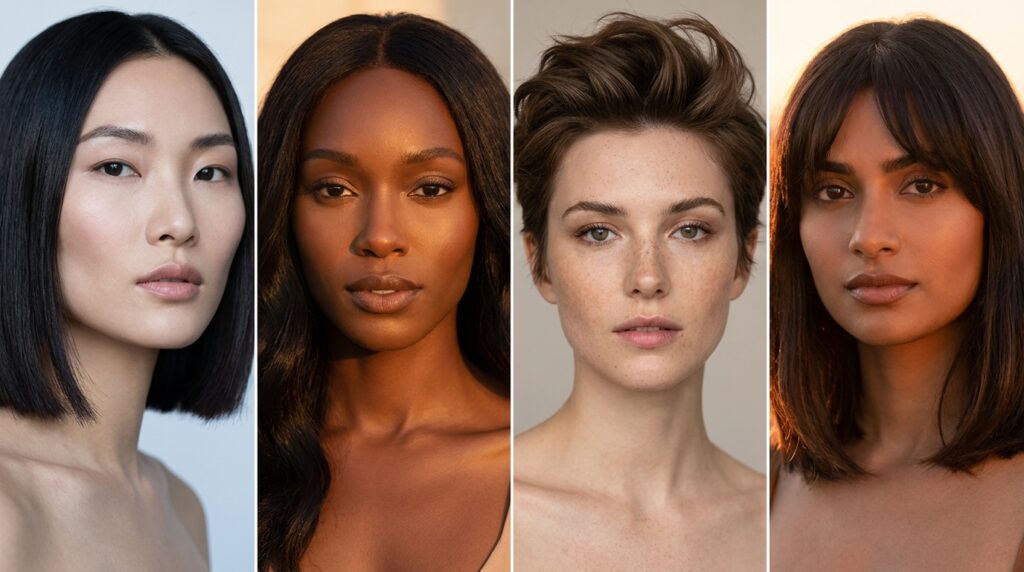
There is something genuinely striking about a diamond face shape. The angular cheekbones, the narrow forehead, the tapered chin — it is a combination of features that reads as sharp, defined, and inherently photogenic. And yet, despite having one of the most architecturally interesting face shapes out there, many people with diamond faces spend years wearing hairstyles that work against their features rather than with them.
The reason is usually that diamond face shape advice is either too vague to be useful or too focused on correction. You get told to add width at the forehead and chin, to soften the cheekbones, to balance the proportions. All of that is true in principle, but it leaves out the part where your face shape is genuinely beautiful and the goal of styling is to complement it, not disguise it. This guide covers what actually defines a diamond face shape, the hairstyles that consistently look best on it, the specific details that make those styles work, and the few things worth approaching more thoughtfully so your hair works with your features rather than against them. Whether your hair is long, short, straight, or curly, the principles here apply.
What Defines a Diamond Face Shape
A diamond face shape is widest at the cheekbones and narrows both upward toward the forehead and downward toward the chin. The forehead is noticeably narrower than the cheekbones, and the chin tends to come to a relatively sharp or pointed taper. The overall outline of the face resembles a diamond or rhombus, with the cheekbones as the widest and most prominent point. The key features that distinguish a diamond from other shapes are that narrow forehead paired with those prominent cheekbones.
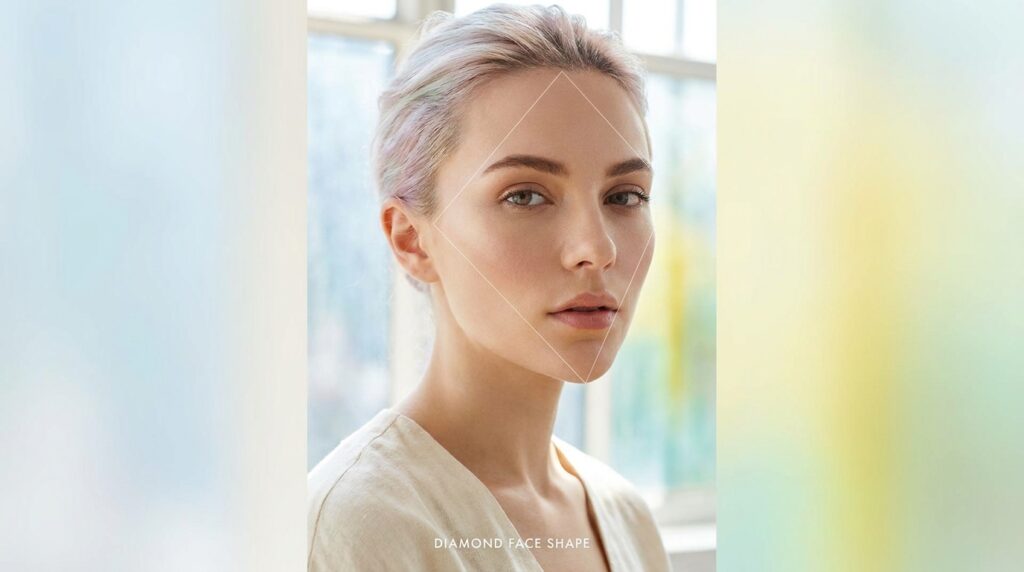
A heart shaped face shares the tapered chin but has a wider forehead. An oval face has similar proportions but with softer, less angular transitions between each section. A diamond shape has that distinctive combination of narrowness at both the top and bottom with significant width in the middle. Not all diamond faces look identical — some have very angular, dramatic cheekbones that create a sharp geometric outline, while others have softer cheekbones that create a subtler version of the shape. The principles below apply across these variations.
The Central Styling Goal
The styling goal for a diamond face shape is twofold: add visual width at the forehead and chin while softening the prominence of the cheekbones. In practice this means finding styles that create some volume or interest at the top and bottom of the face while avoiding anything that adds width or heaviness at the cheekbone level. This does not mean hiding your cheekbones. Strong cheekbones are one of the most universally admired facial features and a defining characteristic of the diamond shape. The goal is balance, not concealment. Styles that draw some attention to the forehead and chin bring the overall face into proportion without minimizing what makes the shape distinctive in the first place. Understanding this twofold goal makes it easy to evaluate any hairstyle — simply ask whether it adds something to the upper and lower face, and whether it avoids adding width at the cheekbone level. Most flattering choices for diamond faces pass both tests naturally.
Side-Swept Bangs
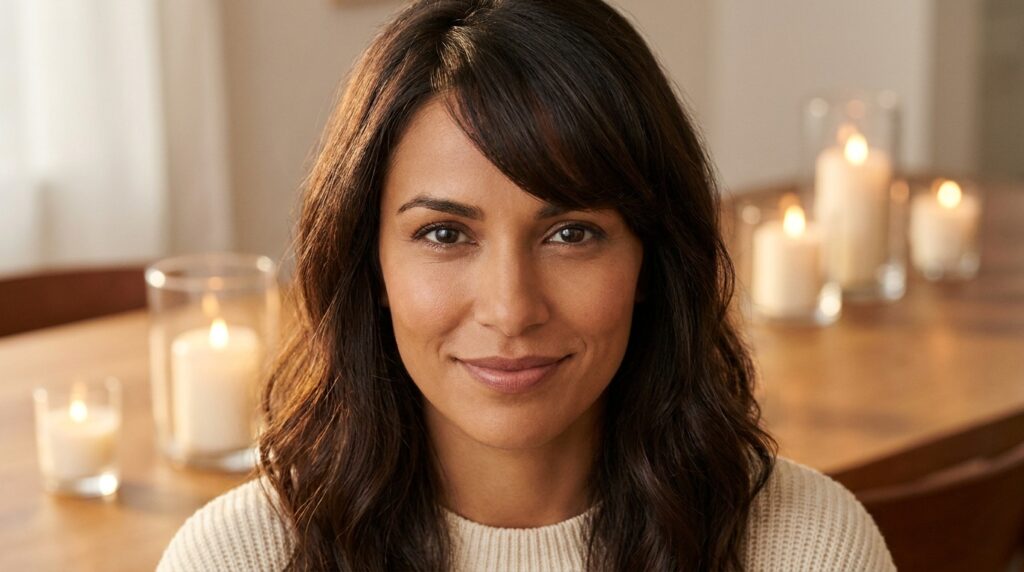
Side-swept bangs are the single most recommended styling detail for diamond face shapes, and they genuinely earn that recommendation. They add visual width to the narrow forehead directly and frame the upper face in a way that brings it into better proportion with the prominent cheekbones below. The key is keeping the sweep soft and natural rather than stiff or heavily styled. A soft side sweep that blends into the rest of the hair creates a gradual widening effect at the forehead that reads as natural rather than corrective. Side-swept bangs work with almost every hair length and most hair textures, making them one of the most universally applicable recommendations for this face shape.
Curtain Bangs
Curtain bangs are a softer, more modern alternative to a traditional side sweep and they work particularly well on diamond faces. The center parting and the way the bangs fall to each side creates width across the entire forehead rather than just one side, which is more effective for the diamond shape than a single-direction sweep. They also have the advantage of being extremely low maintenance compared to a traditional fringe. They grow out gracefully, they do not require precision trimming every few weeks, and they can be worn swept to one side on days when the center part feels too deliberate. Curtain bangs suit diamond faces of almost every proportion and work beautifully with long, medium, and even bob-length hair.
The Lob with Texture

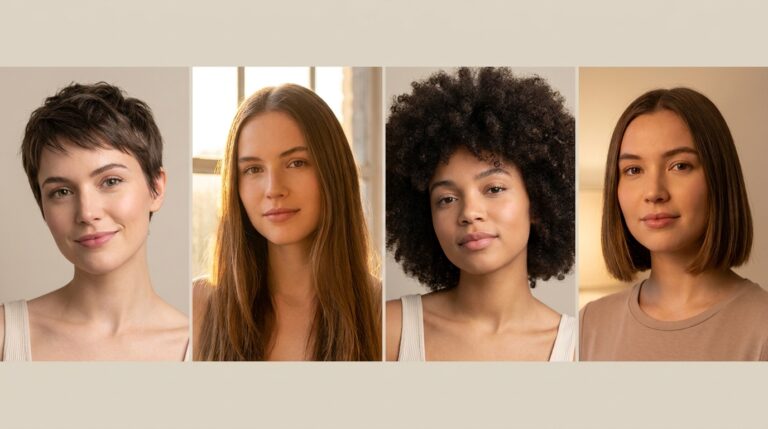
The lob, or long bob, falling between the chin and the collarbone, is one of the most flattering lengths for a diamond face shape. The ends of the hair sit at or just below the jaw level, which adds visual width exactly where the diamond face needs it most, around the chin and lower face area. The textured version of the lob is more flattering than a blunt cut for this face shape. Blunt ends draw a very clean horizontal line that can look geometric and harsh against already angular features. Textured, slightly undone ends create softness and movement that balance the angularity of the cheekbones without fighting them. A lob with face-framing layers addresses both parts of the diamond face styling goal at the same time.
The Classic Bob
A chin-length bob is a strong choice for diamond faces because it places the ends of the hair directly at the jaw, adding visual width at the chin level. The clean line of the bob creates a horizontal emphasis at the jaw that broadens the lower face and brings it into better proportion with the prominent cheekbones. The textured bob works better than a very blunt version for the same reasons as with the lob. Soft, slightly undone ends are more flattering than a precision-cut blunt line on angular features. An A-line bob, where the hair is slightly shorter at the back and longer at the front, is particularly effective because it directs the eye forward and downward toward the chin, adding visual interest to the lower face.
The Asymmetrical Bob
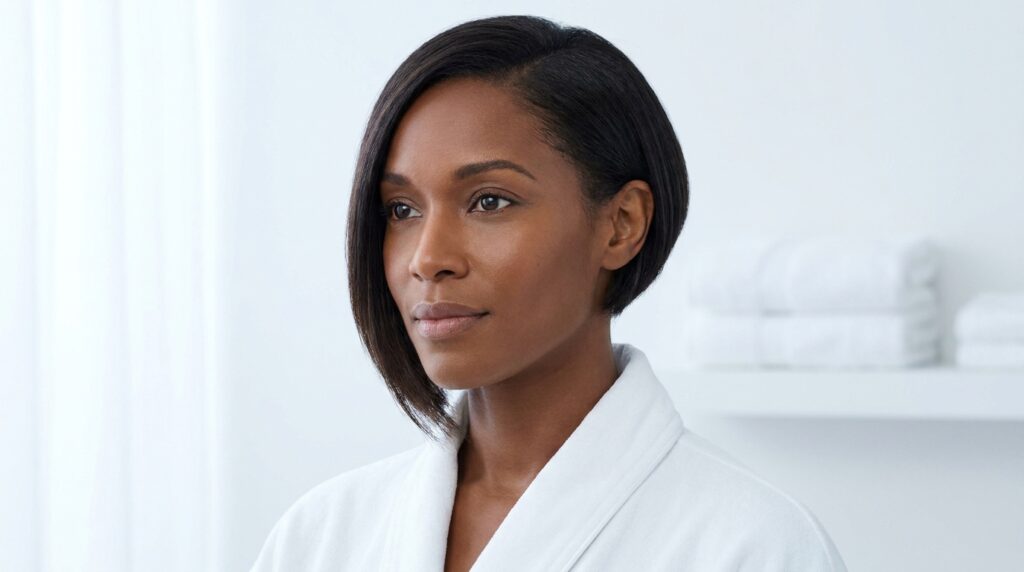
The asymmetrical bob is a particularly inspired choice for diamond faces because the diagonal line it creates draws the eye across the face rather than letting it settle on the cheekbones. One side longer than the other creates a dynamic, fashion-forward silhouette that suits the inherently striking quality of the diamond shape. It also creates visual width at the jaw on the longer side, which adds the lower-face balance the diamond shape benefits from. The asymmetrical bob works best when the longer side falls forward and frames the face rather than being tucked back behind the ear, since the face-framing effect is what delivers the proportional benefit. It is a bolder choice than a classic bob but one that rewards the confidence to wear it.
Soft Waves and Curls
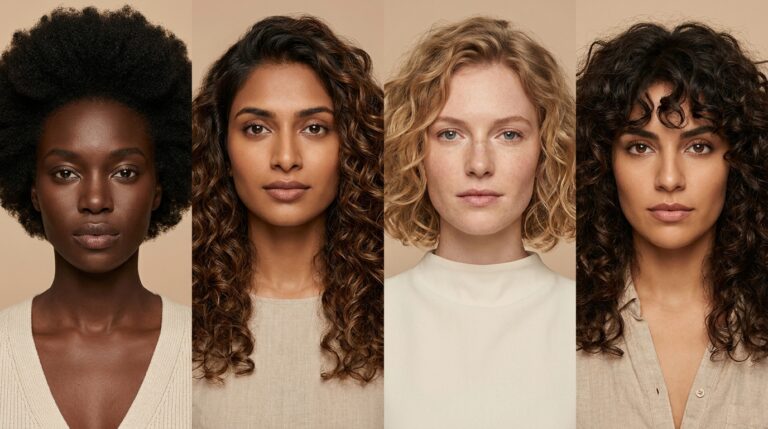
Soft waves and loose curls are among the most flattering styling choices for diamond faces because they add volume and softness that no straight style can replicate. The movement and texture of waves creates visual interest at every level of the face without concentrating width at any single point. Waves that start from the mid-lengths downward are particularly effective. They leave the hair relatively smooth around the cheekbone area, which avoids adding extra width there, while creating volume and movement from the jaw downward, which adds the visual width the chin area benefits from.
Very tight curls or ringlets can add significant volume at the cheekbone level if cut to that length, so longer curly hair that falls past the cheekbones before fully expanding works better for this face shape. If you have naturally curly hair, working with a stylist who specializes in curly cuts ensures the layers are placed where they add movement below the cheekbones rather than volume at them.
Long Layers
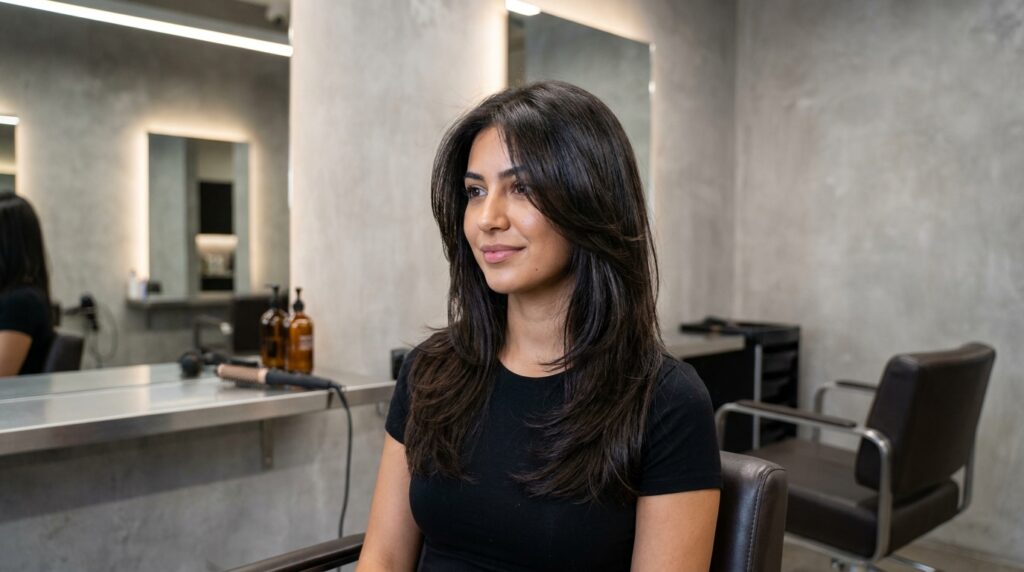
Long layered hair is a beautiful option for diamond faces because it creates volume and movement throughout the length that frames the face at multiple points simultaneously. Face-framing layers at the front add width at the forehead level, while the length falling past the jaw adds width at the lower face. The key with long layers on a diamond face is keeping them soft and graduated rather than choppy. Very heavy layering that creates significant volume at the cheekbone level can emphasize the width of the cheekbones rather than balancing them. Soft, graduated layers that build movement from the mid-lengths downward are more flattering. Long hair worn down with a side part and natural movement is one of the most effortlessly flattering options for diamond faces.
The Pixie Cut
The pixie cut is a strong option for diamond faces and one of the few face shapes that genuinely suits a very short cut without much qualification. The prominent cheekbones that define the diamond shape are exactly the kind of strong facial features that carry a pixie cut well. Short hair requires the face to do all the visual work, and a diamond face with defined cheekbones has more than enough structure to do that confidently. The most flattering version of the pixie for a diamond face has some volume and texture at the crown, which adds width to the narrow forehead and creates the visual impression of a more balanced upper face. A very flat, close-cropped pixie with no volume at the top emphasizes the narrowness of the forehead rather than softening it.
The Shag Cut
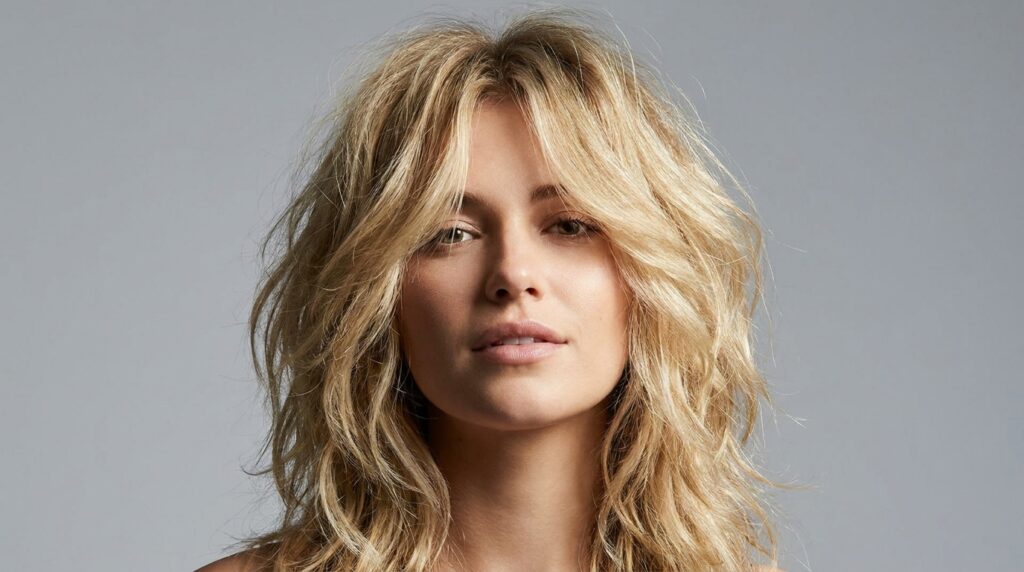
The shag cut is particularly well-suited to diamond faces because everything that defines the shag works in favor of the diamond shape’s styling goals. Heavy layering throughout the length creates movement rather than weight. Face-framing pieces add width and interest around the forehead. Textured ends add volume at the lower face. All three characteristics address the diamond face’s proportional needs without any additional styling effort. The modern shag sits between the very choppy 1970s version and a polished layered cut. It has a naturally undone quality that softens angular features beautifully, and for diamond faces with very sharp, prominent cheekbones the inherent softness of the shag is a particular asset worth leaning into.
Half-Up Styles
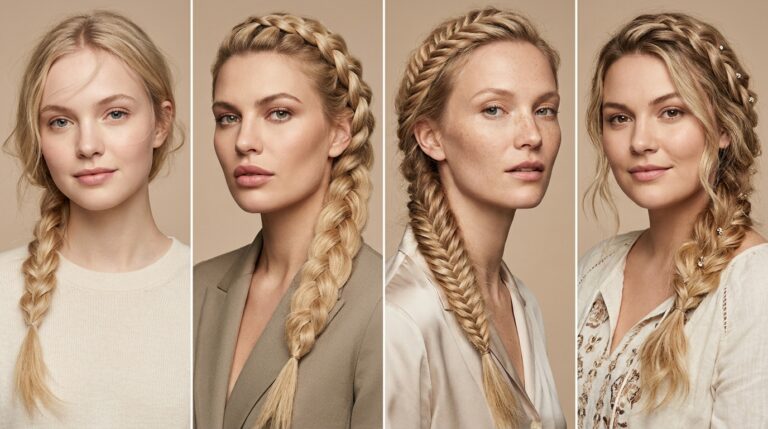
Half-up styles are a flattering option for diamond faces because they expose the forehead slightly while keeping length and volume at the jaw and below. This combination adds visual width at both ends of the face simultaneously, which is exactly the balancing effect the diamond shape benefits from. A half-up style with a little volume or lift at the crown is more flattering than a very flat, slicked-back version. The volume at the crown adds width to the upper face and softens the transition from the narrow forehead to the prominent cheekbones. Loose, softly pulled-back half-up styles with a few pieces left out to frame the face work particularly well since the framing pieces add width at the forehead while the loose sections below maintain volume at the jaw.
Updos and Ponytails
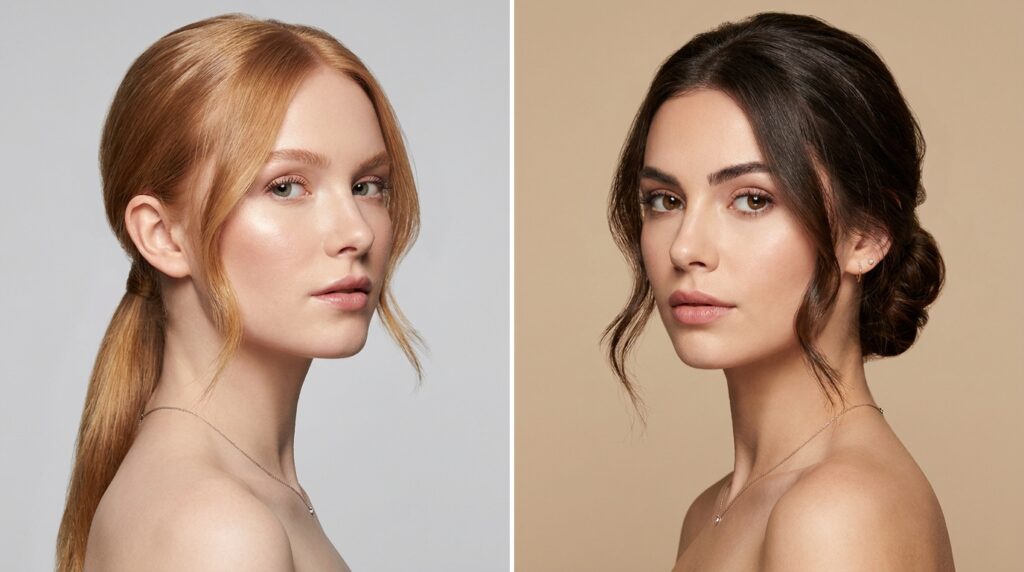
Updos and ponytails look beautiful on diamond faces when done with some deliberate attention to framing. Leaving soft pieces out around the forehead and temples adds width to the narrow upper face and prevents the prominent cheekbones from dominating the overall look without any other visual balance. A low bun or low ponytail is more flattering than a high one for diamond faces because it adds visual weight at the nape level rather than at the crown, which avoids adding height that emphasizes the length of the face. A low bun with loose, romantic pieces framing the face is one of the most elegant options for this face shape. Avoid very slicked-back, tight styles with no face-framing detail since they expose the full outline of the face without adding any width at the forehead or chin.
What to Approach With Care
Very sleek, straight hair pulled back tightly from the face without any framing pieces is the styling approach most worth reconsidering for diamond faces. It exposes the full outline of the face without adding any width at the forehead or chin, which allows the cheekbones to dominate the visual entirely. This does not mean sleek straight hair is off-limits. It means that adding some face-framing detail, even just a couple of pieces left out around the forehead, makes a significant difference. Very voluminous styles that expand significantly at the cheekbone level are also worth approaching thoughtfully since they add visual width to the already-prominent widest point of the face.
A heavy blunt fringe cut straight across the forehead can make the narrow forehead look even more constrained and a softer alternative is always more flattering. The good news is that none of these are absolute rules. Most can be worn successfully with small adjustments, like adding face-framing pieces to a sleek updo or choosing a lighter fringe rather than abandoning the idea of bangs altogether. The diamond face shape is genuinely versatile and the goal is always to understand the principles well enough to apply them with flexibility rather than treating them as a rigid list of permissions and prohibitions.
Frequently Asked Questions
What is the best bang style for a diamond face shape?
Side-swept bangs and curtain bangs are both excellent choices for diamond faces. Side-swept bangs add width to one side of the narrow forehead and create a face-framing effect. Curtain bangs add width across the entire forehead simultaneously. Both are considerably more flattering than a heavy blunt fringe, which can make the narrow forehead look more constrained rather than more balanced.
Can diamond face shapes wear short hair?
Yes, and very well. The strong, defined cheekbones that characterize the diamond shape are exactly the kind of features that carry short hair beautifully. A pixie cut with some volume at the crown is particularly flattering. The key is ensuring there is some width added to the narrow forehead through volume at the crown or a side-swept detail at the front.
What length is most flattering for a diamond face shape?
The lob and the chin-length bob are consistently the most flattering lengths because the ends sit at or just below the jaw, adding the visual width the narrow lower face benefits from. Long layered hair is also very flattering. Mid-length hair that ends right at the cheekbone level is the least flattering because it adds width exactly where the diamond face is already widest.
Should diamond face shapes avoid updos?
No. Updos look beautiful on diamond faces when done with some attention to framing. Leaving soft pieces out around the forehead and temples adds width to the narrow upper face and prevents the prominent cheekbones from dominating. A low bun or low ponytail with loose face-framing pieces is one of the most elegant options for this face shape.
How do I know if I have a diamond face shape?
The key indicator is that your cheekbones are clearly the widest point of your face and both your forehead and your chin are noticeably narrower than your cheekbones. If your forehead is wide and your chin is narrow you are more likely a heart shape. If your face is roughly equal in width at the forehead, cheekbones, and jaw you are more likely oval or round. A diamond shape has that distinctive narrowing at both the top and the bottom with significant prominence in the middle.
What hairstyles should diamond face shapes avoid?
Very sleek styles with no face-framing pieces that expose the full outline of the face without adding any width at the forehead or chin. Very voluminous styles that expand significantly at the cheekbone level. Heavy blunt fringes that make the narrow forehead look more constrained. Beyond these specific situations, diamond face shapes are genuinely versatile and suit a wide range of styles well.