First Date Outfit Ideas for Women From Casual to Dressy
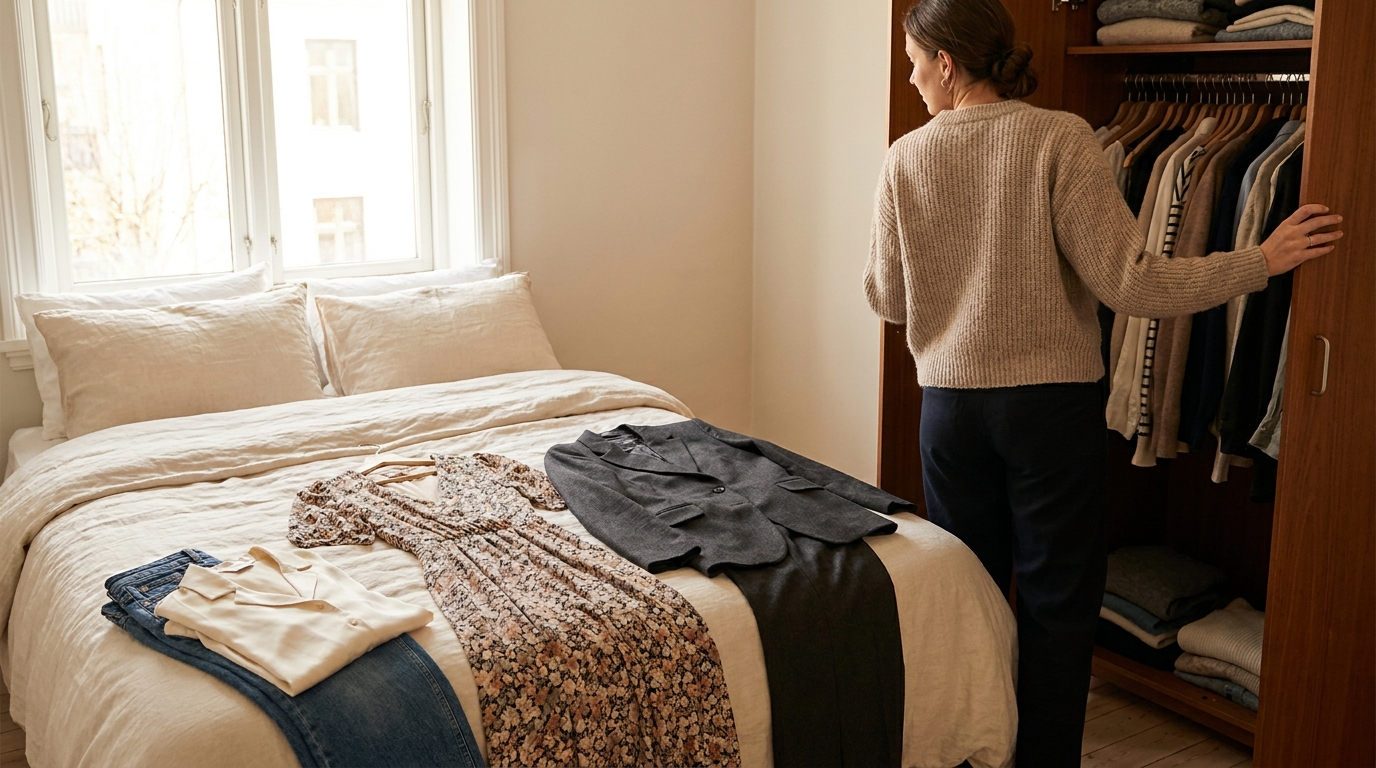
First date outfit panic is real. You’ve got plans in two hours, your wardrobe is spread across the bed, you’ve tried on six different things, and somehow none of them feel right. Too casual, too formal, too try-hard, not try-hard enough. You change again. You’re now running late and you’ve talked yourself out of everything you own.
Here’s the thing: most people overthink first date outfits not because they have nothing to wear, but because they’re trying to solve the wrong problem. They’re trying to figure out what will make the best impression rather than what will make them feel most like themselves. And those two things are often very different. The outfit that makes you feel confident and comfortable will almost always read better than the outfit you forced yourself into because you thought it was what you were supposed to wear.
This guide is about cutting through that spiral and giving you a clear, practical framework for choosing a first date outfit that works, without spending the two hours before you leave staring into your wardrobe in mild panic.
Start With the Venue and the Vibe
The most important first step in choosing a first date outfit is understanding what the occasion actually calls for, and this means thinking about where you’re going before you think about what you’re wearing. A first date at a casual wine bar calls for something completely different than a first date at a nice restaurant, a picnic in the park, a gallery opening, or a morning coffee. Getting the formality level right is more important than any other single decision you’ll make about the outfit. An outfit that would be perfect in one setting can feel completely wrong in another, even if the individual pieces are exactly the same.
Underdressing and overdressing both create the same problem: they make you feel out of place, and feeling out of place is the enemy of feeling confident. Walking into a casual coffee shop in a full evening look is uncomfortable. Showing up to a nice restaurant in your most relaxed weekend outfit feels equally awkward. Neither extreme lets you relax and be present, which is the actual goal of the evening.
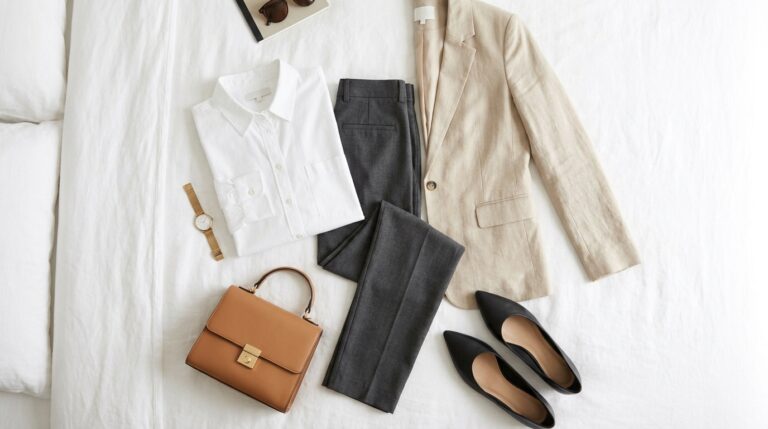
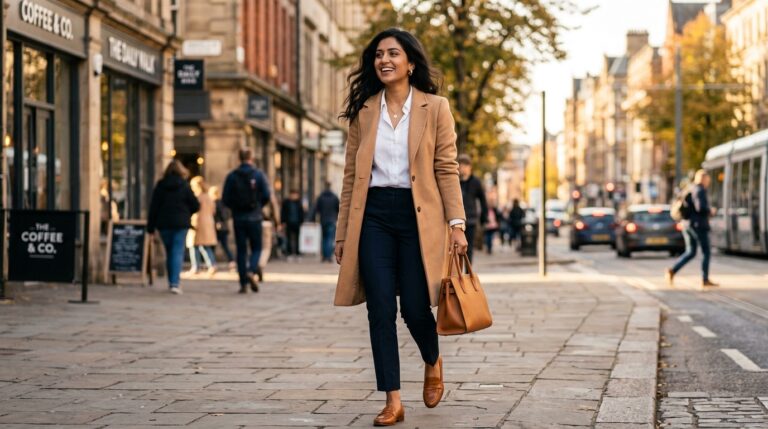
If you’re not sure what the venue calls for, a smart casual approach almost always works. Smart casual sits comfortably in the middle ground between formal and casual, looking put together and intentional without being overdressed for most situations. A well-fitted pair of trousers or jeans with a nice top and a clean pair of shoes covers most first date scenarios without tipping too far in either direction.
When genuinely unsure, it’s better to be slightly overdressed than significantly underdressed. Making an effort reads as caring, which is generally a positive signal on a first date. Turning up in your most casual weekend clothes can sometimes read as not having made much effort, regardless of whether that was the intention. If you find out afterward that the venue was more casual than you dressed for, being slightly overdressed is a far more comfortable position to be in than the reverse.
Wear Something You’ve Worn Before
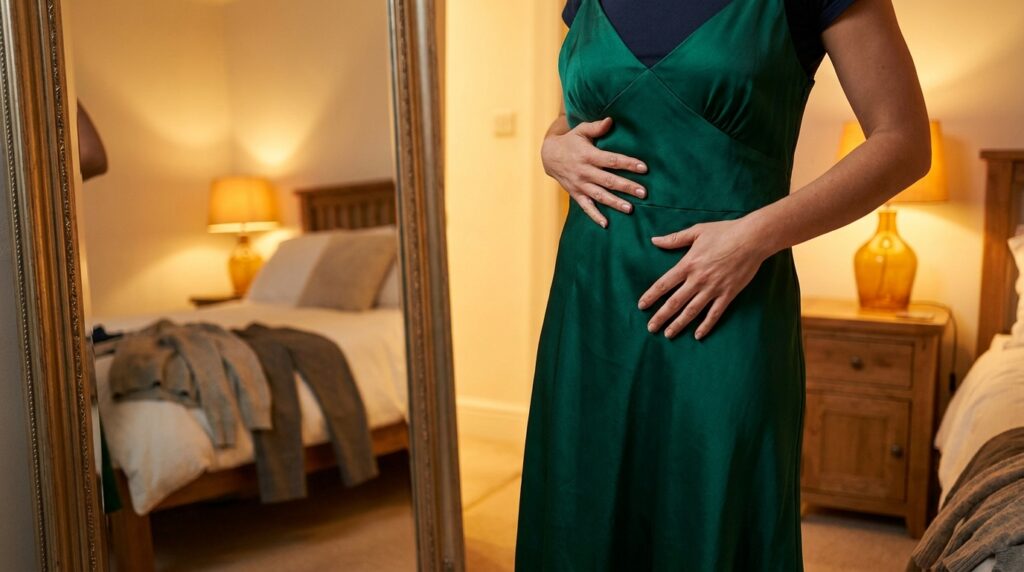
This sounds obvious but it’s one of the most consistently useful pieces of advice for first date dressing: do not debut a new outfit on a first date. A new outfit that you haven’t worn before comes with unknowns. You don’t know how it fits when you sit down. You don’t know if it rides up, gaps open, itches, or loses its shape after a few hours. You don’t know if you’ll spend the evening pulling at it or readjusting it. These are distractions you don’t need when you’re trying to focus on the person in front of you.
Wear something you already know you look good in and feel comfortable in. The confidence that comes from wearing something familiar and trusted is genuinely visible, and it means you’re not spending any mental energy on your clothes during the date itself. When you know your outfit is working, you can forget about it entirely and just be present.
That said, familiar doesn’t mean sloppy. Choosing something you’ve worn before doesn’t mean reaching for the outfit you wear to run errands or hang out at home. It means choosing from the pieces in your wardrobe that you already know make you feel great, fit well, and feel appropriate for the occasion.
Fit Matters More Than Anything Else
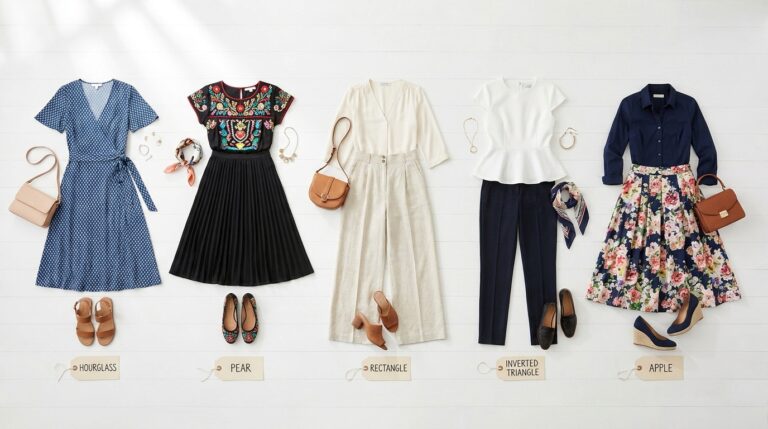
A well-fitting outfit in a simple, classic style will always outperform an expensive or trendy outfit that doesn’t fit properly. This is true for all fashion but it matters especially on a first date, where you want to feel physically comfortable and look your best simultaneously. Clothes that fit well make you stand taller, move more naturally, and generally look more put together than clothes that are too big, too tight, or just slightly off in their proportions.
The most common fit mistake for dates is going too tight or too loose in an attempt to look a certain way. Wearing something tighter than you’re comfortable in because you think it looks more attractive usually backfires because discomfort shows. You’ll be adjusting, pulling, or thinking about the clothing rather than focusing on the conversation. Similarly, wearing something very loose and baggy to hide or downplay your body tends to look less polished and intentional than something that simply fits your actual shape.
If a piece you love doesn’t quite fit right, a simple tailoring adjustment is worth doing before the date. Getting a waistband taken in, a hem shortened, or a pair of trousers adjusted to the right length takes little time and transforms how a garment looks and feels. A perfectly fitting outfit in a simple style is always more impressive than an expensive piece in the wrong size.
Choose Comfort Over Everything
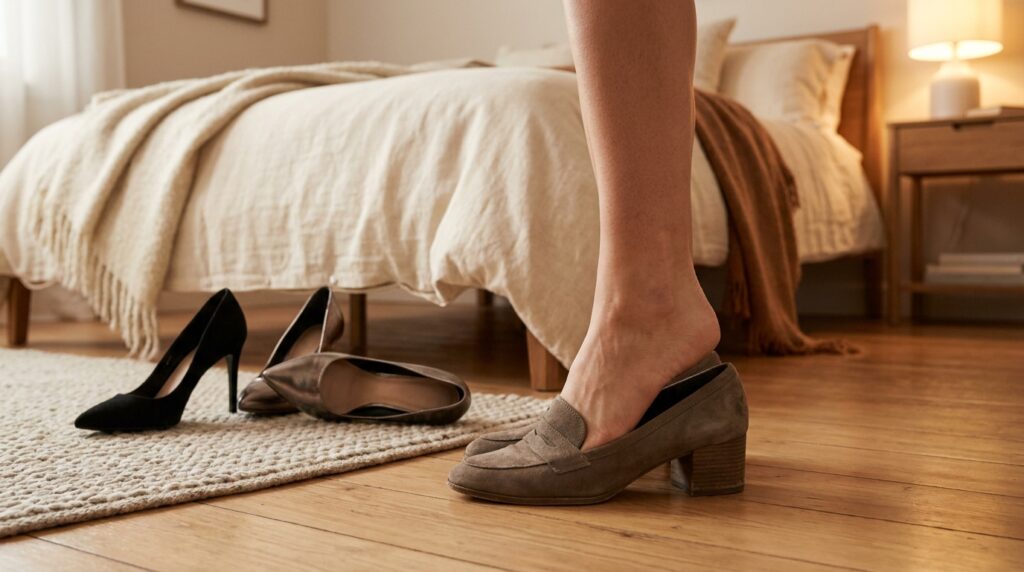
You will not feel confident if you are physically uncomfortable, and not feeling confident is immediately visible regardless of how good the outfit looks. This means avoiding shoes you can’t walk in confidently, waistbands that dig in after an hour, fabrics that itch or restrict movement, and anything that requires constant adjustment throughout the evening.
First dates often involve more physical activity than you might anticipate. Walking between venues, sitting for extended periods, navigating different environments. An outfit that works beautifully when you’re standing in your bedroom mirror might behave completely differently when you’re walking several blocks, sitting on a barstool, or navigating a crowded venue. Thinking through how the outfit will actually function during the date rather than just how it looks statically is part of choosing well.
Shoes deserve particular attention. First dates sometimes involve more walking than planned, venue changes, or standing for longer than expected. Wearing shoes you can walk comfortably in for an extended period matters more than wearing the most impressive pair you own. A heel height you’re genuinely comfortable in will always look better than a heel you’re wobbling on, regardless of how the shoe looks in isolation.
Color and What It Communicates
Color is worth thinking about briefly, not because there are strict rules but because different colors do communicate different things and being aware of this helps you make a deliberate choice rather than a random one.
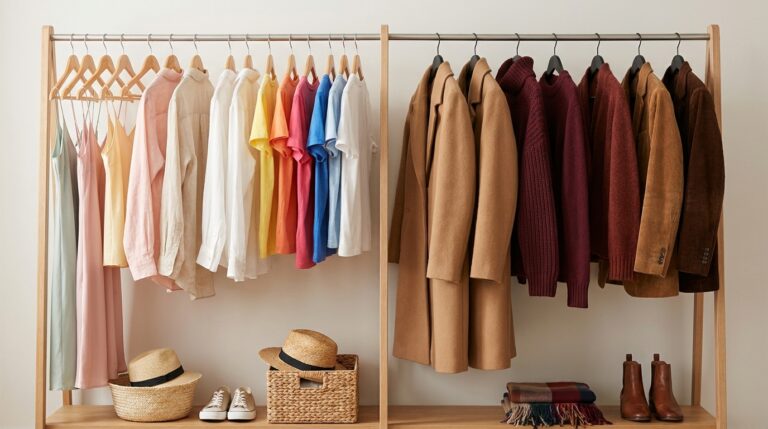
Classic, neutral colors like black, navy, camel, and white tend to read as polished and put together without making a strong statement in either direction. They’re safe in the sense that they rarely feel out of place, and they have the practical advantage of working well with most other elements of an outfit. If you’re not sure what to wear and you reach for something neutral, you’re probably making a solid choice.
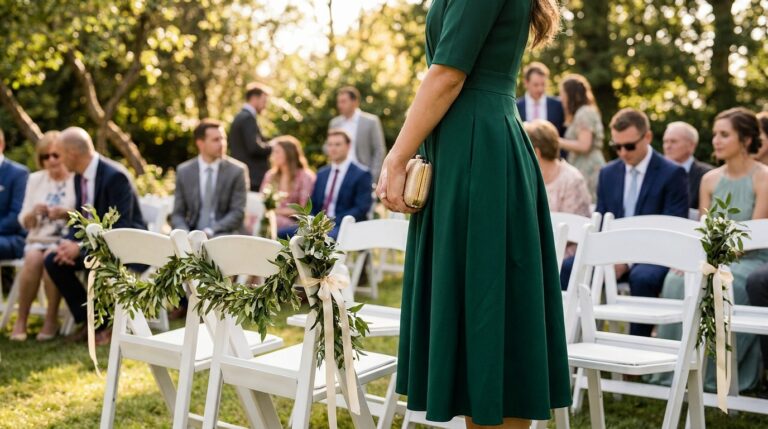
A single statement color worn as the main piece of an outfit, a deep red dress, a cobalt blue top, a rich emerald green jacket, tends to be memorable in a positive way. It suggests confidence and intentionality, and it gives the other person something to comment on if conversation needs a little help getting started. Just as with accessories, one statement color tends to work better than several competing ones.
Wearing a color you genuinely love and feel good in will almost always look better than wearing a color you think you should wear but don’t really feel yourself in. If you feel great in a particular shade and it suits your complexion, that confidence will show regardless of what any color theory guide suggests.
Accessories: Less Is More
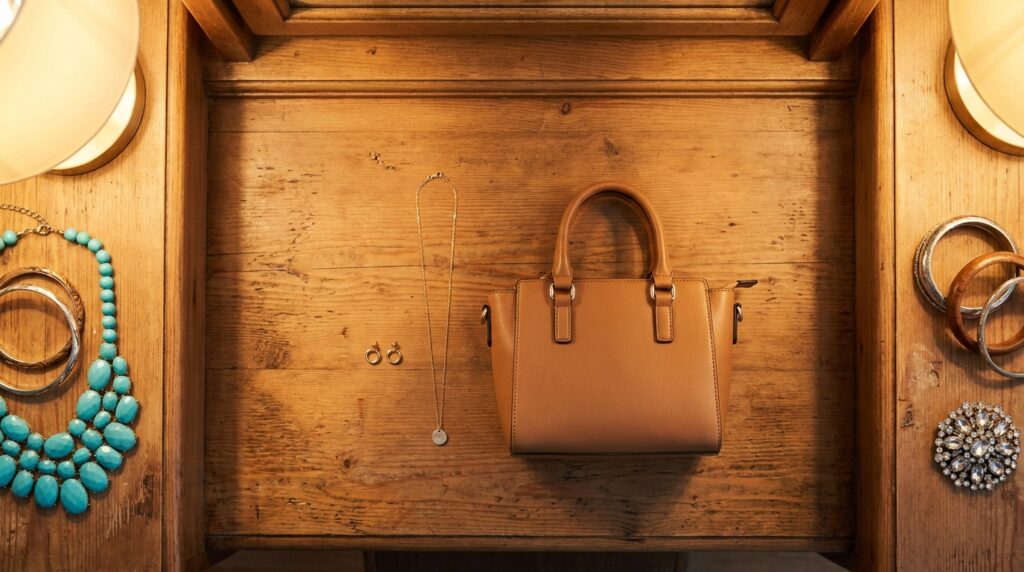
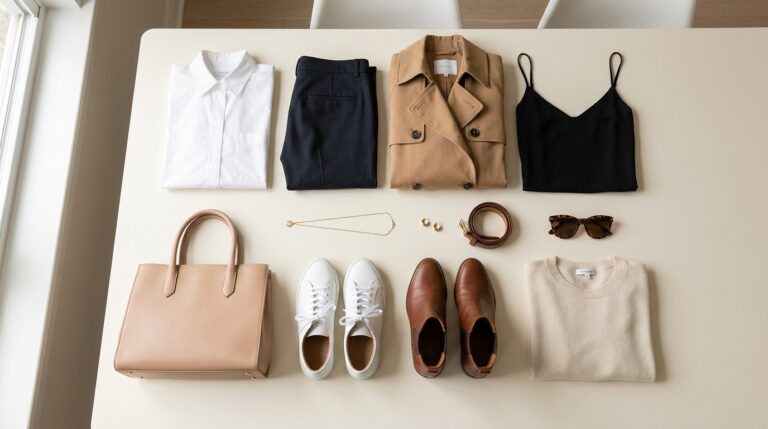
Accessories on a first date should feel like finishing touches rather than the focal point of the outfit. A few well-chosen pieces, a simple necklace, a pair of earrings, a clean watch, a structured bag, are all you need to look complete and considered. Overloading on accessories, particularly on a first date when you might already feel slightly nervous, can feel fussy and distracting rather than stylish.
One statement accessory paired with simpler pieces works better than several competing ones. If you’re wearing a bold pair of earrings, keep the necklace minimal or skip it entirely. If your bag is a statement piece, keep the jewelry simple. The restraint actually makes each individual piece more noticeable and more elegant than everything competing for attention simultaneously.
Your bag deserves a specific thought. A structured, clean bag in a neutral color works for almost any first date setting and tends to look more put together than a very casual tote or a very elaborate evening bag. Whatever bag you choose, make sure it’s functional enough to carry everything you actually need without being so large it becomes unwieldy.
Hair and Grooming Complete the Picture
The outfit is only part of what people perceive when they first meet you, and hair and overall grooming contribute significantly to the impression you make. A polished, well-maintained appearance doesn’t mean elaborate styling. It means showing up looking like you’ve made a genuine effort, and that effort extends beyond the clothes to the overall presentation.
Wearing your hair in a style you’re comfortable with and confident in matters more than doing something elaborate you’re not used to. A first date is not the occasion to try a complicated updo you’ve never attempted before or to use a styling technique you haven’t practiced. Your hair should be clean, styled in a way you know works for you, and something you can forget about for the rest of the evening rather than something you’re constantly monitoring or touching.
A fresh manicure makes a surprisingly noticeable difference to the overall impression of an outfit and a first meeting. Hands are visible throughout a date, and well-maintained nails, whether that’s a clean natural look, a simple gel color, or anything in between, contribute to the polished overall impression. Chipped or very neglected nails can undermine an otherwise put-together look in a way that’s small but noticeable.
A light, fresh fragrance applied before leaving is a finishing touch that contributes to the overall impression without being something the other person can necessarily identify or articulate. The key is light. An overwhelming amount of fragrance in a close setting is the opposite of what you want, but a subtle, pleasant scent that comes through naturally is a genuinely nice detail.
What to Avoid
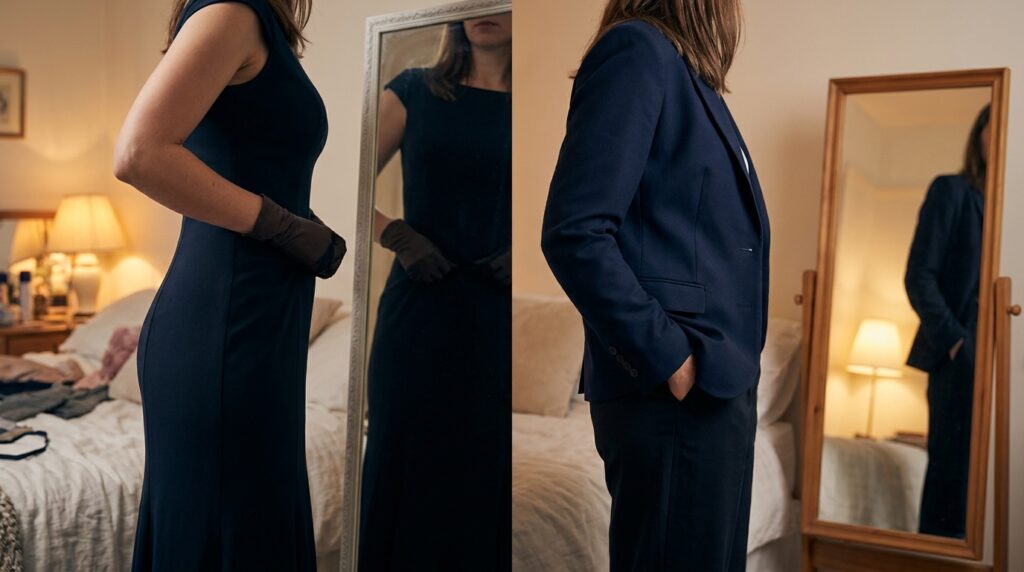
Avoid wearing anything that makes you feel self-conscious, regardless of how good it looks objectively. If you’re going to spend the evening worried about whether something is working rather than focusing on the conversation, it’s not the right choice for tonight. Save it for an occasion where you feel more settled and confident. No outfit is worth sacrificing your ability to be present and engaged during what should be an enjoyable evening.
Avoid very revealing or provocative clothing if it doesn’t genuinely reflect your personal style. Dressing in a way that feels unlike you, either much more conservative or much more revealing than you normally would, creates a disconnect that’s difficult to sustain and can feel uncomfortable over the course of an evening. Dressing authentically tends to produce better first impressions than dressing strategically. People are generally quite good at sensing when someone isn’t quite comfortable in what they’re wearing, even if they can’t articulate why.
Avoid outfit experimentation on a first date. New trends you haven’t tried before, unusual silhouettes you’re not sure about, bold style experiments that feel like a departure from how you normally dress. Save the experiments for lower stakes occasions where it doesn’t matter as much if something doesn’t quite work. A first date is not the time to take style risks that might not pay off. There will be plenty of other occasions to be adventurous with your wardrobe once you’re in a more relaxed and established situation with someone.
The Night Before Makes the Morning Easier
Choosing and preparing your outfit the night before rather than the day of is one of the most practical things you can do to reduce first date stress. Lay out everything including shoes, bag, and accessories so there are no last minute decisions to make when you’re already getting ready. Check that everything is clean, pressed, and ready to go. If anything needs steaming or ironing, do it the night before rather than rushed and slightly panicked on the day. Taking ten minutes the evening before saves you thirty minutes of stress on the day itself.
This simple habit eliminates most of the outfit-related anxiety that tends to spiral on the day of a first date. When you wake up already knowing what you’re wearing and knowing that it’s ready, one significant source of stress is simply removed from the equation. You can focus your energy on feeling calm and looking forward to the evening rather than on logistics. And if you lay it all out and suddenly feel uncertain about the choice, you have the time and the clear head to make a different decision without the pressure of a clock counting down.
Frequently Asked Questions
Should I dress up more than usual for a first date?
Making more effort than your average Tuesday is appropriate and shows you care about the occasion. But dressing significantly outside your normal style or comfort zone tends to backfire because it can feel inauthentic and uncomfortable. Elevate your everyday style rather than abandoning it entirely.
Is it okay to wear jeans on a first date?
Absolutely, depending on the venue. A well-fitted pair of dark jeans styled with a nice top, good shoes, and a few considered accessories can look very put together and appropriate for most casual to smart casual settings. The key is that the jeans fit well and the rest of the outfit is elevated enough to make the overall look feel intentional.
How much skin is appropriate to show on a first date?
This is entirely a personal choice based on your own comfort and style rather than any rule. The most important consideration is whether you feel comfortable and confident in what you’re wearing. Dressing in a way that genuinely reflects your personal style and makes you feel good will always be more appropriate than following an arbitrary guideline.
What if I don’t know the dress code for the venue?
Smart casual is your safest default. It works across most settings without being too formal or too casual for either end of the spectrum. If you can find out more about the venue before the date, a quick look at their website or social media pages usually gives a clear sense of the expected dress code.
Should I coordinate my outfit with what my date might be wearing?
No. You have no way of knowing what they’ll wear, and trying to guess or coordinate creates unnecessary stress. Focus entirely on choosing something that makes you feel good and is appropriate for the venue. That’s the only variable you can actually control.
What’s the biggest first date outfit mistake?
Prioritizing how you think you should look over how you actually feel. An outfit that looks impressive but makes you feel uncomfortable, self-conscious, or unlike yourself will undermine your confidence throughout the evening in a way that’s visible regardless of how good the clothes are. The best first date outfit is the one that lets you forget about what you’re wearing and focus entirely on the person in front of you.