Nail Problems That Can Affect Your Nails and How to Care for Them
Nobody thinks much about their nails until something goes wrong. And then suddenly they’re all you can think about. The peeling that won’t stop no matter what you put on them. The ridge that appeared out of nowhere and seems to be getting worse. The white spots you’ve been told mean you’re calcium deficient, the yellowing that started after a long gel manicure, the nail that keeps splitting right at the tip no matter how carefully you file it. These things are annoying, sometimes embarrassing, and often confusing because the internet gives you seventeen different explanations for the same symptom.
The good news is that most common nail problems have straightforward causes and equally straightforward fixes. The less good news is that nails grow slowly, which means even once you’ve identified and addressed the cause, you’re often waiting several weeks or months to see the full improvement grow in. Understanding that timeline upfront saves a lot of frustration in the process.
This guide covers the most common nail problems people deal with, what’s actually causing them, and what you can realistically do to fix them and prevent them from coming back.
Peeling and Flaking Nails
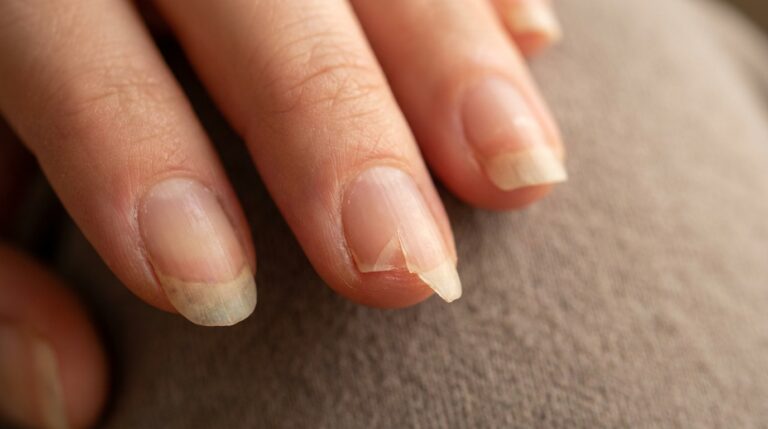
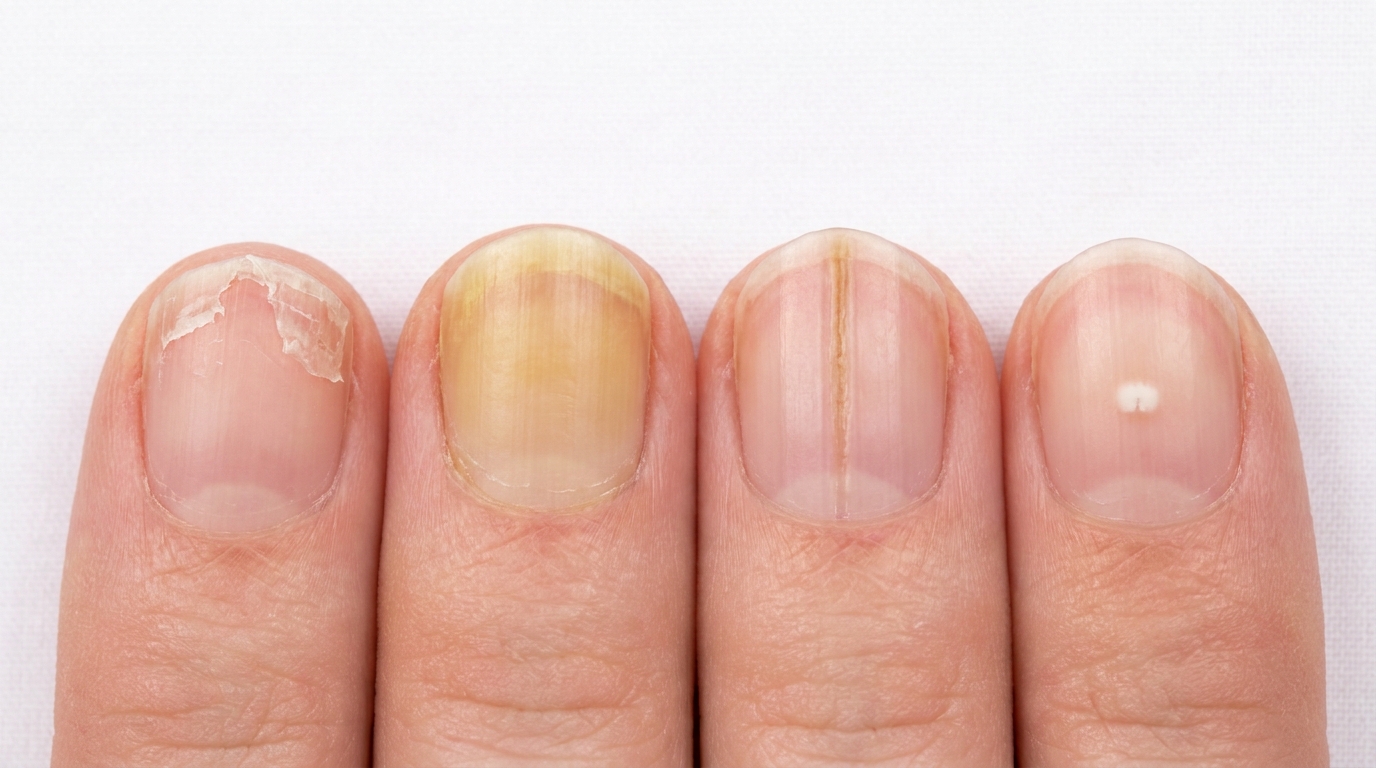
Peeling nails are one of the most common nail complaints, and they’re almost always a moisture and hydration problem. The nail plate is made up of layers of keratin cells stacked together, and when those layers lose moisture, they start to separate at the free edge rather than staying bonded together. The result is that characteristic layered peeling that makes nails look and feel like they’re falling apart even when they haven’t broken.
The most common causes of peeling nails are frequent exposure to water, harsh soaps and cleaning products, and overuse of acetone for nail polish removal. Each of these strips moisture from the nail plate repeatedly, and if that moisture isn’t being replaced consistently, the layers start to separate. People who wash their hands frequently for work, swim regularly, or do a lot of cleaning and dishwashing without gloves are particularly prone to this problem.
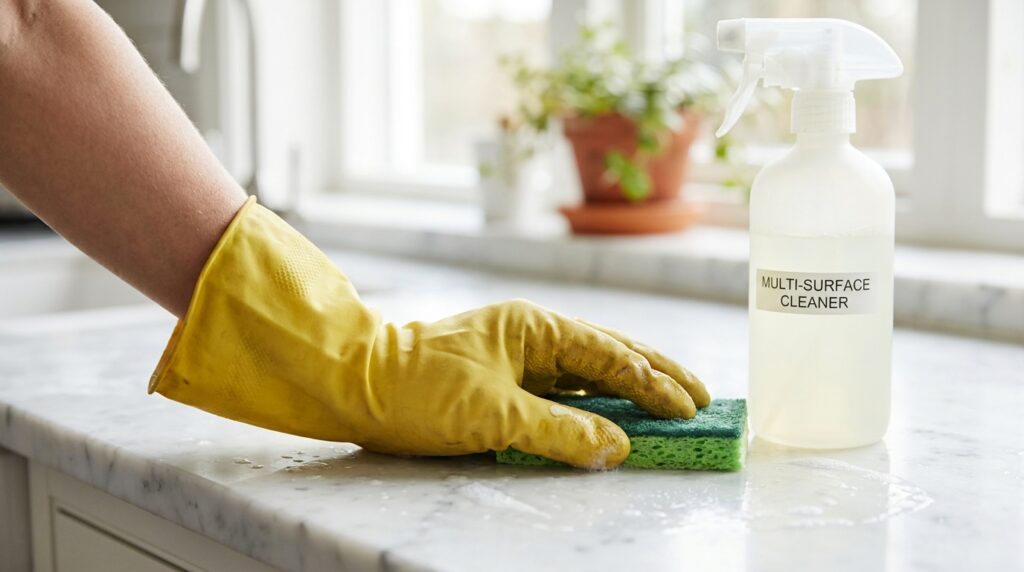
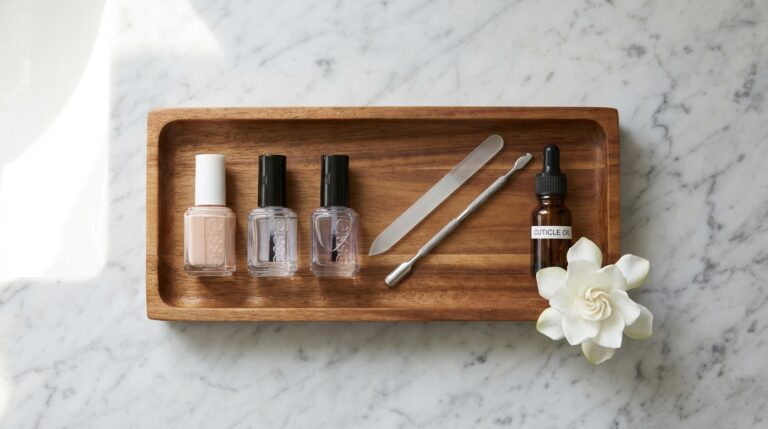
Fixing peeling nails requires addressing both the stripping and the replenishment side of the equation. Wearing gloves for cleaning and dishwashing reduces ongoing moisture loss. Using a gentle, moisturizing hand wash rather than harsh soaps helps. And applying cuticle oil to the nails and surrounding skin at least once a day, more if possible, replenishes the moisture that’s being lost and helps the nail layers stay bonded rather than separating.
A nail strengthener used as a base coat can also help while the nails are recovering, since it provides a surface layer that holds the nail together while the underlying moisture levels improve. Look for strengtheners containing hydrolyzed keratin or calcium rather than formaldehyde-based formulas, which can make peeling worse with overuse by making the nail too rigid.
The timeline for recovery is typically four to six weeks of consistent moisture replacement before the peeling noticeably reduces, since the improvement grows in from the base of the nail rather than appearing immediately throughout the length.
Brittle Nails That Break Easily
Brittle nails that snap or break with minimal force are frustrating precisely because they seem to break at the worst possible moments, just when you’ve finally grown them to a length you like. Brittle nails are different from peeling nails in that the breakage is structural rather than layered, the nail snaps across rather than peeling apart, which points to a different underlying cause.
There are two types of brittle nails: dry brittle and soft brittle, and they need different approaches. Dry brittle nails are hard and rigid but snap easily, lack any flexibility, and often feel rough or dull. They’re caused by insufficient moisture, either from external stripping or from internal dehydration. Soft brittle nails are flexible but weak, bending easily and tearing rather than holding a clean break. Soft brittle nails are more commonly related to nutritional deficiencies or internal health factors rather than external moisture loss.
For dry brittle nails, the fix is moisture. Cuticle oil applied daily, a rich hand cream used consistently, gloves during water exposure, and a gentle filing technique that doesn’t further stress the nail edge all contribute to improvement. Biotin supplementation is often recommended for brittle nails, and while the evidence is mixed, some people do notice improvement with consistent biotin intake over several months.
For soft brittle nails, it’s worth looking inward. Iron deficiency, thyroid issues, and poor nutrition are all associated with soft, weak nails. If soft brittle nails persist despite good external nail care, a visit to a doctor and some basic blood work to check iron levels and thyroid function is a more productive next step than buying more nail products.
Ridges on the Nails
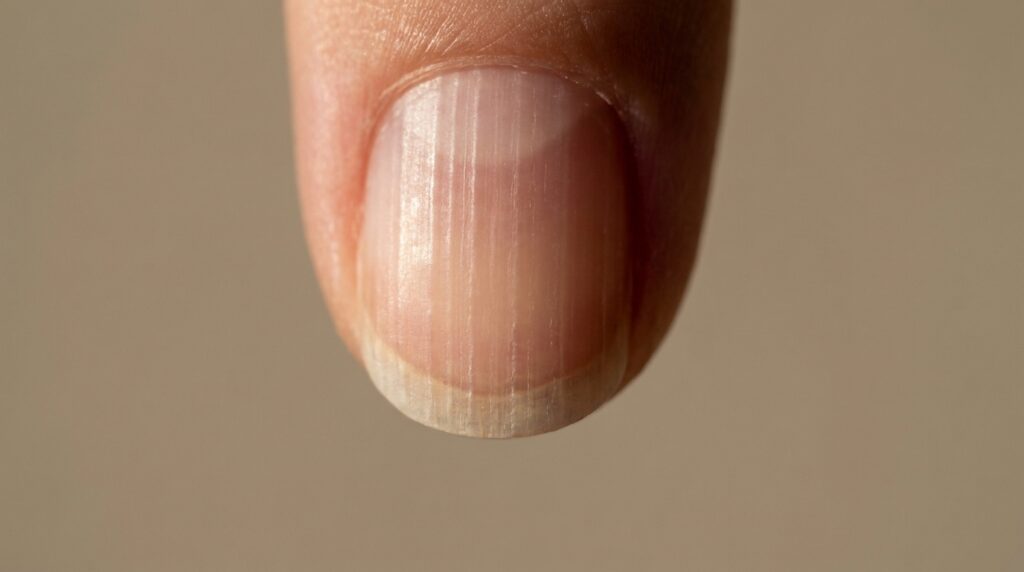
Vertical ridges running from the cuticle to the tip of the nail are incredibly common and almost always completely harmless. They tend to become more noticeable with age as the nail’s natural moisture content decreases and the surface becomes less uniformly smooth. Think of them as the nail equivalent of fine lines. Not a sign that something is wrong, just a natural part of how nails change over time.
Horizontal ridges, sometimes called Beau’s lines, are a different matter entirely and worth paying more attention to. A single deep horizontal groove running across the nail indicates that nail growth was temporarily interrupted or significantly disrupted at a specific point in time. This can happen after a serious illness, a high fever, major surgery, significant physical or emotional stress, or a nutritional deficiency that was severe enough to affect the body’s normal functioning. The line essentially marks the point in time when something significant happened to the body.
For vertical ridges, the practical solution is a ridge-filling base coat applied before nail polish, which fills in the surface unevenness and creates a smoother finish underneath the color. Buffing the nail surface lightly with a fine-grit buffer can also temporarily smooth the appearance of ridges, though this should be done gently and infrequently since over-buffing thins the nail plate. Consistent cuticle oil use helps maintain nail flexibility and moisture, which can subtly reduce the visibility of ridges over time.
For Beau’s lines, the line itself will grow out over time as the nail grows from the base. The more important question is what caused the growth interruption in the first place. If the cause was a known event like an illness or surgery, and you’re otherwise healthy, it’s simply a matter of waiting for the line to grow out. If horizontal ridges appear without an obvious cause or appear repeatedly, it’s worth mentioning to a doctor.
White Spots on the Nails

White spots on the nails, medically known as leukonychia, are probably the most misunderstood common nail issue because of the persistent myth that they indicate calcium deficiency. They don’t. White spots on nails are almost always caused by minor trauma to the nail matrix, the area at the base of the nail where new nail cells are produced, and they grow out completely on their own over several weeks as the nail grows.
The trauma that causes white spots is often so minor that you don’t remember it happening. Catching a nail against something, pressing too hard on the cuticle area, an overly enthusiastic manicure, or even just bumping your finger can cause a small disturbance in the nail matrix that shows up as a white spot weeks later when that section of the nail has grown far enough to be visible. The delay between the trauma and the appearance of the spot is why people often can’t identify what caused them.
There’s nothing that needs to be done for white spots caused by minor trauma beyond waiting for them to grow out. They’re not a sign of anything wrong nutritionally or medically in most cases, and no product or supplement will make them disappear faster. If white spots cover a large portion of multiple nails simultaneously, appear in bands or unusual patterns, or are accompanied by other changes in nail texture or color, that’s worth discussing with a doctor, but isolated small white spots that come and go are generally harmless.
Yellow Nails
Yellow nails after removing nail polish, particularly dark or deeply pigmented colors, are one of the most common and easily explained nail problems. Highly pigmented polishes can stain the surface of the nail over time, particularly when worn for extended periods without a base coat to protect the natural nail surface. The staining sits in the outer layers of the nail and looks alarming but is generally harmless.
The fix for polish-induced yellow staining is patience and protection going forward. The staining will gradually grow out over several weeks. Buffing the nail surface very gently can remove some of the surface staining but shouldn’t be done aggressively. Using a base coat consistently before every polish application prevents the staining from recurring, since the base coat creates a protective barrier between the pigment and the natural nail surface.
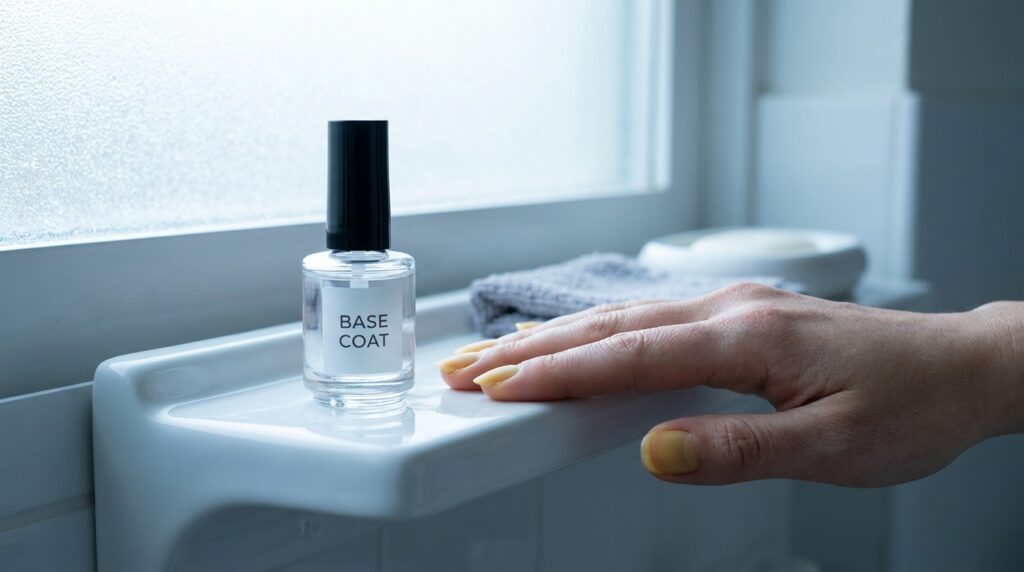
Yellow nails that aren’t related to polish staining can have other causes worth looking into. Fungal nail infections are one of the most common causes of yellowing that appears without an obvious relationship to nail polish, and they’re usually accompanied by thickening of the nail, a change in texture, and sometimes a slightly unpleasant smell. Nail fungus requires treatment with antifungal medication rather than cosmetic solutions, and a doctor can confirm the diagnosis and recommend the appropriate treatment.
Smoking is another common cause of yellowed nails due to the tar and nicotine that contact the nail surface over time. Certain medical conditions including thyroid disorders and psoriasis can also affect nail color, which is why persistent unexplained yellowing across multiple nails without an obvious cosmetic cause is worth discussing with a doctor.
Hangnails
Hangnails are those small, painful pieces of torn skin at the side of the nail that seem to appear at the worst possible moments and have an irresistible but deeply unwise temptation to be torn off rather than dealt with properly. Tearing a hangnail instead of cutting it cleanly almost always makes the situation worse, creating a larger wound, increasing the risk of infection, and causing pain that far exceeds what a simple snip would have produced.
Hangnails are caused by dry skin around the nail, which becomes rigid and prone to tearing rather than remaining soft and flexible. They’re more common in cold, dry weather, after prolonged water exposure that then dries out the skin, and in people who don’t moisturize the skin around their nails regularly.
The correct way to deal with a hangnail is to soften the skin first with warm water or a cuticle oil, and then use clean, sharp cuticle nippers to cut the hangnail cleanly at the base without pulling or tearing. A clean cut heals much faster and more comfortably than a torn one. Applying a small amount of antiseptic afterward and keeping the area moisturized while it heals prevents infection and speeds recovery.
Preventing hangnails is simpler than dealing with them. Consistent cuticle oil application keeps the skin around the nail soft and flexible rather than dry and prone to tearing. Pushing cuticles back gently rather than cutting them aggressively maintains the protective seal at the base of the nail without creating the micro-tears that become hangnails. And wearing gloves during prolonged water exposure prevents the wet-dry cycle that dries out the skin around the nails and leads to cracking and tearing.
Nail Fungus

Nail fungus thrives in warm, moist environments which is why it’s commonly picked up in public swimming pools, locker rooms, and nail salons where equipment isn’t properly sterilized between clients. Wearing flip-flops in communal wet areas, ensuring nail salons properly sterilize their tools, and keeping nails clean and dry reduces the risk of picking up a fungal infection.
Treatment requires persistence and patience. Over-the-counter antifungal treatments can be effective for mild cases but need to be applied consistently for several months to produce results. More significant infections typically require prescription antifungal medication, either topical or oral, from a doctor. Because nails grow slowly, even successful treatment takes months to show full results since the healthy nail needs time to grow in and replace the infected portion.
Never try to cover nail fungus with nail polish as a cosmetic solution. The warm, dark, moist environment created under nail polish makes the fungal infection worse rather than better. Getting a proper diagnosis and following the appropriate treatment plan, however long it takes, is the only effective approach.
Ingrown Nails
Ingrown nails happen when the edge of the nail grows into the surrounding skin rather than over it, causing pain, redness, swelling, and sometimes infection. They most commonly affect the big toenail but can occur on fingernails as well, usually as a result of cutting the nail too short, cutting it with rounded corners rather than straight across, or wearing shoes that press tightly against the nail.
For mild ingrown nails, soaking the affected finger or toe in warm water for fifteen to twenty minutes several times a day softens the skin and makes the nail easier to work with. Gently lifting the ingrown edge away from the skin with a clean tool and placing a small piece of clean cotton underneath to keep it lifted can encourage the nail to grow over rather than into the skin.
Cutting the nail straight across rather than rounding the corners is the most important preventive measure for ingrown nails. Rounded corners encourage the edges of the nail to curve downward into the surrounding skin as they grow. A straight, slightly squared-off edge grows forward rather than downward.
If an ingrown nail is significantly painful, shows signs of infection such as pus or significant swelling, or keeps recurring despite proper nail care, it’s worth seeing a doctor or podiatrist. Persistent or infected ingrown nails sometimes require minor treatment to resolve properly and prevent recurrence.
Frequently Asked Questions
Are nail problems a sign of vitamin deficiency?
Sometimes, but less often than people assume. Brittle nails can be related to iron or biotin deficiency, and horizontal ridges can indicate past nutritional deficiencies severe enough to interrupt nail growth. However, most common nail problems like peeling, white spots, and ridges are caused by external factors rather than nutritional ones. If you suspect a deficiency, blood work from a doctor is far more reliable than self-diagnosing based on nail appearance alone.
How long does it take for nail problems to resolve? Nails grow approximately three to four millimeters per month, which means a full nail replacement takes roughly six months. Most nail problems that grow in from the base, like white spots and ridges, take several weeks to months to grow out fully. Problems caused by ongoing habits, like peeling from moisture loss, improve faster once the cause is addressed but still require consistent treatment over several weeks to show significant change.
Can nail polish cause nail problems?
Yes, in certain circumstances. Highly pigmented polish worn without a base coat can cause staining. Very frequent use of acetone for removal can cause dryness and peeling. Gel polish worn for extended periods without breaks can affect nail hydration. Using a good base coat, alternating with periods of bare nails, and using acetone in moderation reduces the risk of polish-related nail problems significantly.
When should I see a doctor about a nail problem?
See a doctor if you suspect nail fungus, if a nail problem is accompanied by pain, swelling, or signs of infection, if horizontal ridges appear without an obvious cause, if yellowing or other color changes affect multiple nails without an obvious cosmetic explanation, or if any nail change is persistent and doesn’t respond to basic nail care over several weeks. A dermatologist or general practitioner can diagnose most nail conditions accurately and recommend appropriate treatment.
Is it safe to push back cuticles?
Gently pushing back softened cuticles is generally safe and helps maintain a clean nail edge. The key words are gently and softened. Working on dry, unsoftened cuticles or pushing back aggressively can damage the nail matrix, which sits just beneath the cuticle area, and lead to nail irregularities. Never cut the living cuticle itself, only loose, dead skin or hangnails.
Do nails need to breathe between manicures?
Nails don’t technically breathe since they receive their oxygen and nutrients from the blood supply beneath the nail rather than through the nail surface. However, giving nails periods without polish does allow you to monitor their condition, apply treatments more effectively, and prevent the moisture changes that come from constant polish application and removal. A week or two of bare, well-moisturized nails between manicures is beneficial for overall nail health even if not strictly necessary for oxygen reasons.