How to Stop Hair Breakage for Good

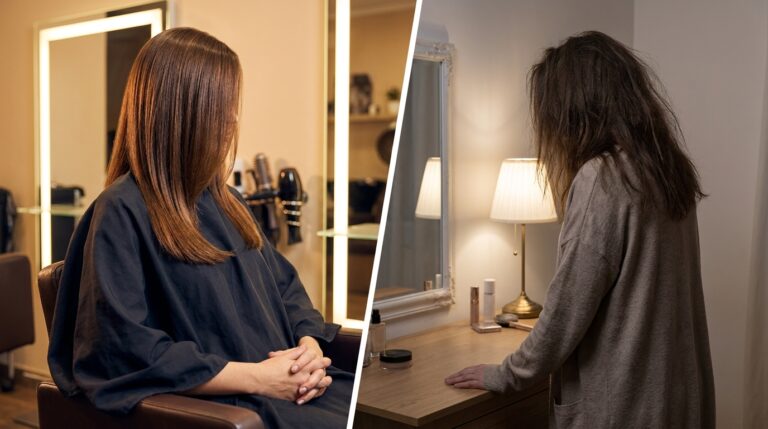
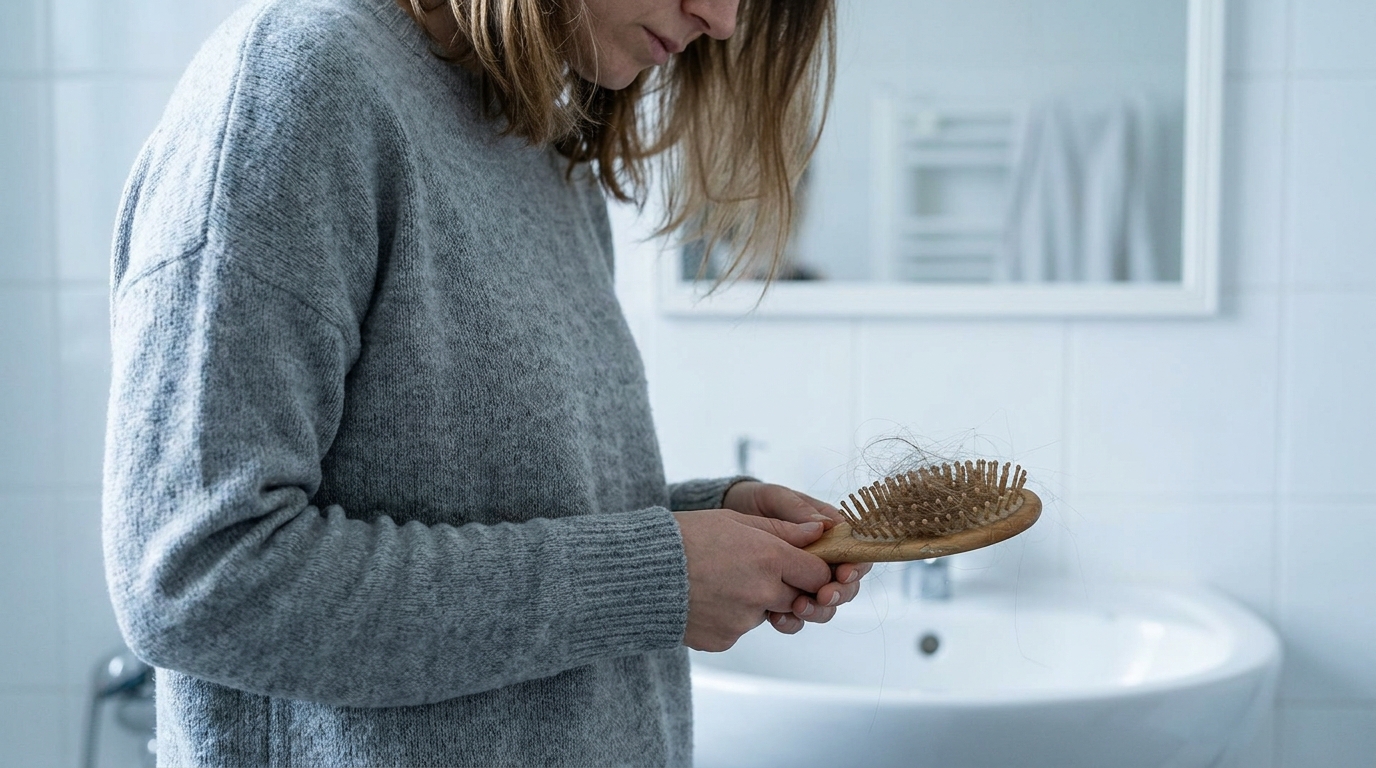
Hair breakage is one of those problems that feels impossible to escape once it starts. You notice it first in the shower drain, then on your pillowcase, then on your shoulders throughout the day. You try a new conditioner, maybe a hair mask, and things seem to improve briefly before going right back to the same frustrating pattern. The ends keep snapping, the length stays stubbornly the same no matter how long you wait to cut it, and your hair feels like it’s going nowhere.
The reason most attempts to fix breakage don’t work is that they address the symptom rather than the cause. Slapping a deep conditioner on hair that’s breaking because of a protein deficiency, or adding more protein to hair that’s breaking because it’s over-dry, produces temporary improvement at best and makes things worse at worst. And both of those approaches completely miss breakage that’s caused by mechanical damage, which is one of the most common and most overlooked sources of the problem.
Stopping hair breakage for good requires understanding why your specific hair is breaking in the first place, and then addressing those causes directly and consistently. This guide covers every major cause of hair breakage, how to identify which ones apply to your hair, and exactly what to do about each one.
Understanding Why Hair Breaks
Hair breaks when the stress applied to it exceeds its ability to withstand that stress. That sounds simple, but it means that breakage can come from many different directions simultaneously, which is why it can be so persistent even when you feel like you’re doing everything right. The hair might be structurally weakened from the inside by protein or moisture deficiency, or it might be physically stressed from the outside by rough handling, heat, tight styles, or friction. Often it’s a combination of both, which is why addressing only one dimension of the problem rarely produces lasting results.
The hair fiber is made primarily of a protein called keratin, arranged in a structure that gives hair its strength, flexibility, and elasticity. When that structure is intact and well-hydrated, hair can withstand a significant amount of everyday stress without breaking. When that structure is compromised, whether from chemical damage, heat damage, nutritional deficiencies, or simply the accumulated wear of daily styling, the hair’s tolerance for stress drops dramatically. Breakage becomes more frequent because the hair can no longer handle the same level of everyday handling it previously could.
Identifying the source of your breakage is the most important first step because it determines everything that comes after. Breakage from mechanical damage needs different solutions than breakage from protein deficiency, which needs different solutions than breakage from heat damage. Treating all breakage the same way regardless of its cause is why so many people spend months trying products and techniques that don’t move the needle.
Mechanical Damage: The Most Common and Most Overlooked Cause
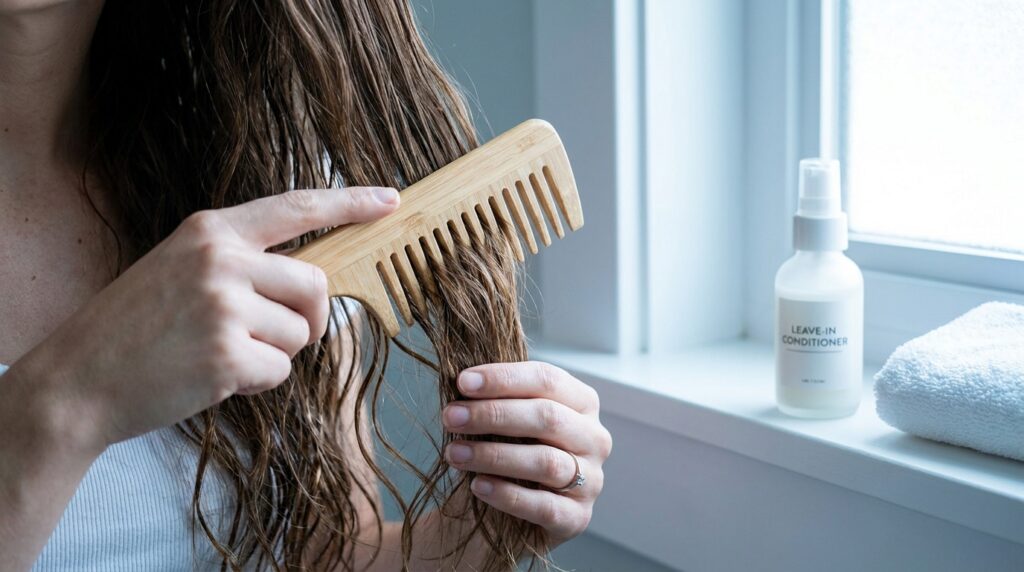
Mechanical damage is breakage caused by physical force applied to the hair, and it’s responsible for more breakage than most people realize. Every time you detangle roughly, sleep on a cotton pillowcase, put your hair in a tight ponytail, or pull a brush through dry, tangled hair, you’re applying mechanical stress that can snap individual hair fibers. When this happens repeatedly over time, the cumulative effect is significant breakage that’s often mistaken for a product or nutrition problem. It’s also one of the easiest causes to address since it doesn’t require any products at all, just a change in habits.
Rough detangling is one of the single biggest sources of mechanical breakage for most people. The instinct to work a brush or comb through tangled hair from root to tip with significant force causes strands to snap rather than release from the tangle. The correct approach is to detangle from the ends upward, working through small sections of hair at a time and using a wide-tooth comb or a detangling brush rather than a fine-tooth comb or paddle brush on dry hair. Starting from the ends and gradually working upward removes knots without forcing them through the length of the hair, which is where most of the snapping happens. Applying a leave-in conditioner or a detangling spray before starting provides slip that makes the whole process significantly easier and less damaging.
Sleeping on a cotton pillowcase creates friction against the hair throughout the night that roughens the cuticle, causes tangling, and leads to breakage that accumulates invisibly over weeks and months. Switching to a satin or silk pillowcase reduces this friction dramatically and is one of the easiest and most impactful changes anyone dealing with breakage can make. Alternatively, sleeping with the hair loosely braided or wrapped in a satin scarf achieves the same friction-reducing effect.
Tight hairstyles that pull consistently at the hairline and roots cause a specific type of breakage and hair loss known as traction damage. Tight ponytails, buns worn in exactly the same position every day, and styles that create constant tension on the same sections of hair gradually weaken the hair fiber at the point of tension and can eventually damage the follicle itself. Varying the position of ponytails and buns, using fabric-covered hair ties rather than elastic ones, and giving the hair regular breaks from tight styles all reduce traction damage significantly.
Hair ties and accessories with metal clasps or rough textures catch on the hair and cause breakage at the point where the accessory contacts the shaft. Fabric-covered hair ties, spiral hair ties, and accessories without sharp edges or metal parts cause significantly less mechanical damage than traditional elastic bands or metal-clasped accessories.
Heat Damage and How It Causes Breakage
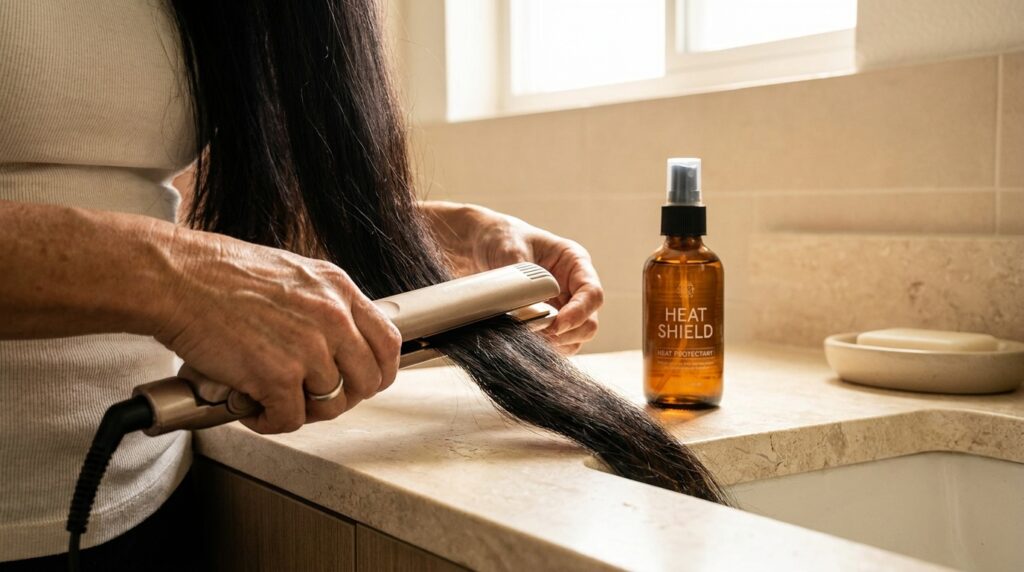
Heat damage weakens the hair fiber from within by breaking down the protein bonds that give hair its structural integrity, and it’s one of the most significant and most common causes of persistent breakage. When heat tools are used frequently at high temperatures without adequate protection, the cumulative damage to the hair’s internal structure eventually reaches a point where the fiber simply cannot withstand everyday stress without snapping.
The solution to heat-related breakage starts with reducing heat exposure, which means either reducing the frequency of heat styling, reducing the temperature at which tools are used, or both. Most hair types don’t require the highest heat settings on flat irons and curling wands to achieve a style. Fine and previously damaged hair should stay below 300 degrees Fahrenheit. Medium hair can handle up to around 350 degrees. Using the lowest effective temperature rather than defaulting to maximum heat is one of the most straightforward ways to reduce ongoing heat damage.
Heat protectant applied before every heat styling session is non-negotiable for anyone whose breakage has a heat component. A good heat protectant creates a barrier between the tool and the hair fiber that reduces the direct impact of heat on the hair’s protein structure. Applied evenly to damp or dry hair before any hot tool, it significantly reduces the cumulative damage that leads to breakage over time.
Giving heat-damaged hair a genuine rest from heat tools while actively treating it with protein and moisture is the most effective way to stop breakage that has already been caused by heat. New growth coming in from the root will be undamaged, and the damaged lengths will gradually be managed and trimmed away as the hair grows, but only if the ongoing heat damage stops allowing recovery to happen.
Protein and Moisture Imbalance
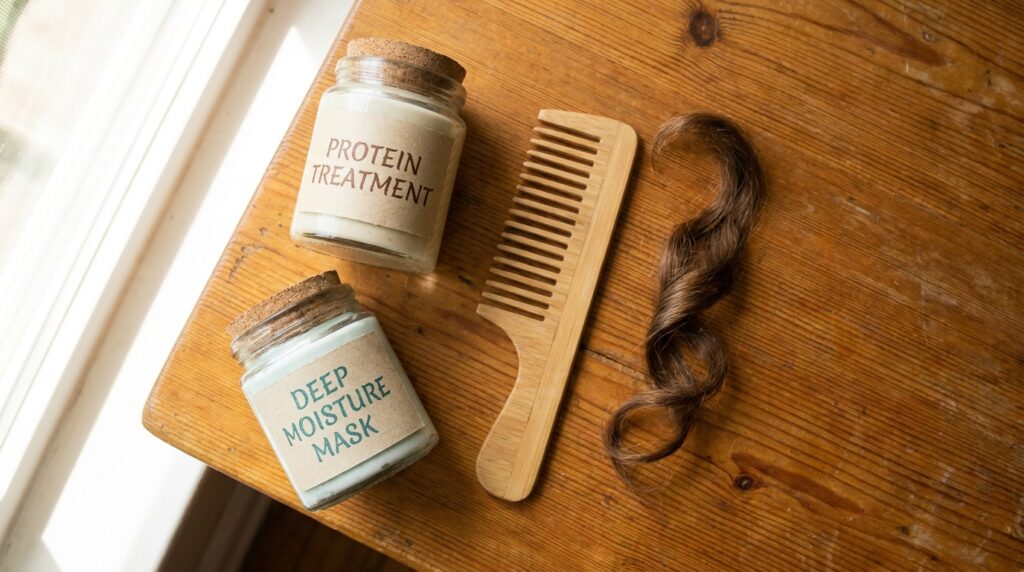
The balance between protein and moisture within the hair fiber directly affects how resistant it is to breakage. Hair that is deficient in protein lacks the internal structural support to hold itself together under stress, even when it feels adequately moisturized. Hair that is deficient in moisture becomes rigid and brittle, snapping under tension rather than stretching and recovering. Getting this balance right is one of the most impactful things you can do for breakage-prone hair.
Protein-deficient hair that breaks tends to feel soft and sometimes gummy when wet, stretching more than it should before breaking rather than snapping quickly. This type of breakage responds to protein treatments containing ingredients like keratin, hydrolyzed wheat protein, or rice protein, which temporarily reinforce the hair fiber from the outside. Following a protein treatment with a moisture-focused conditioner prevents the hair from feeling stiff or brittle from the protein alone.
Moisture-deficient hair that breaks tends to feel dry and rough, snapping quickly under even light tension rather than stretching first. This type of breakage responds to moisture-focused deep conditioning treatments containing ingredients like shea butter, aloe vera, glycerin, and hyaluronic acid. Used consistently once a week, moisture treatments rebuild the hair’s flexibility and reduce the brittleness that causes this type of breakage.
Alternating protein and moisture treatments rather than using only one type is the most effective long-term approach for most people dealing with breakage, since the two deficiencies can coexist and treating only one while ignoring the other produces limited results. Paying attention to how the hair responds after each treatment, whether it feels stronger and more resilient after protein or softer and more flexible after moisture, helps guide the frequency and ratio of each type of treatment.
Chemical Damage
Chemically processed hair is inherently more vulnerable to breakage because the chemical processes involved in coloring, bleaching, relaxing, and perming alter the hair’s protein bonds as part of how they work. This leaves the hair fiber more porous, more fragile, and less able to withstand everyday stress than unprocessed hair.
Bleached hair is the most breakage-prone of all chemically processed hair because the bleaching process significantly disrupts the hair’s protein structure to lift color. Hair that has been bleached, particularly hair that has been bleached multiple times or to a very light shade, needs consistent protein support to maintain enough structural integrity to resist breakage. Bond-building treatments containing ingredients like bis-aminopropyl diglycol dimaleate or maleic acid, which work specifically on the hair’s internal bonds, have become popular for this reason and can make a significant difference to the breakage levels of bleached hair.
Overlapping chemical services before the hair has recovered from a previous one is one of the most common causes of severe breakage in chemically treated hair. Giving the hair adequate time to stabilize between services, using protein and bond-building treatments between appointments, and being honest with your stylist about the condition of your hair before agreeing to additional chemical work are all important for managing breakage in the context of ongoing chemical services.
Nutritional Deficiencies and Internal Health

Hair breakage is sometimes a reflection of what’s happening inside the body rather than what’s being applied to the outside, and this is one of the most commonly missed causes. The hair follicle is one of the most metabolically active structures in the body and requires adequate nutrition to produce strong, healthy hair. When the body is deficient in key nutrients, the hair is often one of the first places the deficiency shows up.
Iron deficiency is one of the most common nutritional causes of hair breakage and shedding, particularly in women, and it’s worth having checked through a blood test if breakage is persistent despite addressing all external factors. Low iron affects the hair at the follicle level, producing hair that is thinner and weaker from the root, which means it breaks more easily along the length.
Biotin, zinc, vitamin D, and adequate protein intake are among the other nutritional factors that affect hair strength and growth. A balanced diet that includes adequate protein, iron-rich foods, and a range of vitamins and minerals generally supports healthy hair growth and strength. Supplementing specific deficiencies that have been identified through testing, rather than taking a broad range of supplements without knowing what’s actually deficient, is the more targeted and effective approach.
Building a Breakage Prevention Routine
Stopping breakage for good requires addressing all relevant causes simultaneously rather than fixing one while leaving others in place. A routine that covers the main bases looks like this in practice.
Wash with a sulfate-free shampoo two to three times a week, focusing shampoo at the scalp and allowing it to rinse through the lengths rather than scrubbing it through the ends directly. Follow with a rinse-out conditioner focused on the mid-lengths and ends, leaving it on for at least two to three minutes before rinsing. On wash days, apply a leave-in conditioner to damp hair before styling to provide an extra layer of moisture and protection throughout the day.
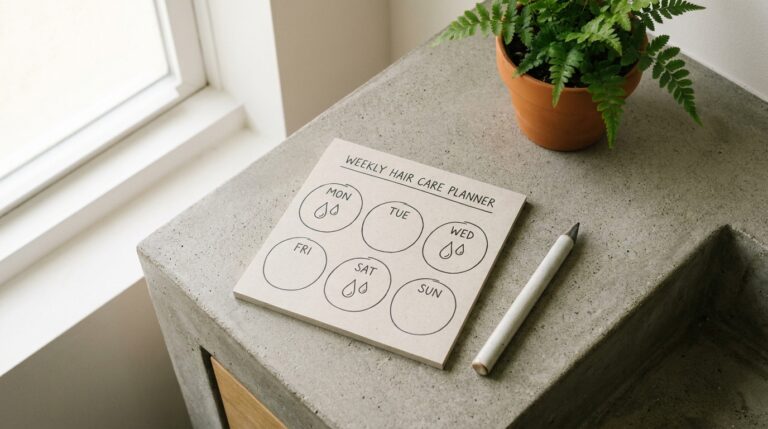
Deep condition once a week, alternating between a protein-focused treatment and a moisture-focused one based on how the hair responds after each one. Cover with a shower cap and allow the treatment to sit for at least 20 to 30 minutes for maximum penetration. The consistency of weekly deep conditioning matters more than the specific product used, so choosing something you’ll actually use every week is more important than chasing the most expensive or highly reviewed option on the market.

Detangle gently on every wash day using a wide-tooth comb or detangling brush on damp, conditioned hair, starting from the ends and working upward. Never detangle dry hair without a leave-in conditioner or detangling spray to provide slip. On non-wash days, handle the hair as minimally as possible and avoid brushing or combing dry hair unnecessarily.
Use heat tools at the lowest effective temperature, always with a heat protectant applied beforehand, and limit heat styling to no more than two to three times per week if breakage is significant. On days when heat is used, give the hair a break from any additional manipulation afterward rather than restyling multiple times throughout the day.
Sleep on a satin or silk pillowcase or wrap hair in a satin scarf before bed every night without exception. This is one of those habits that seems small but compounds significantly over weeks and months of consistent practice.
Trim regularly to remove split ends before they travel up the hair shaft and cause breakage in sections that would otherwise be healthy. Every six to eight weeks for most hair types, more frequently if the ends are visibly damaged. Regular trims don’t slow hair growth, they simply remove the portions that would eventually break off anyway, leaving healthier, stronger lengths behind.
Frequently Asked Questions
How long does it take to stop hair breakage once I address the causes?
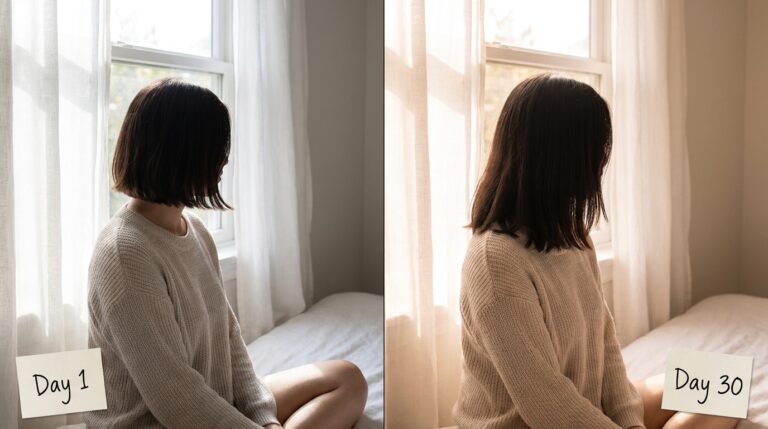
Most people notice a meaningful reduction in breakage within four to six weeks of consistently addressing the relevant causes. Full recovery, where new healthy growth has replaced damaged sections, takes longer and depends on how fast the hair grows and how much damage existed to begin with. Patience and consistency are the most important factors.
How do I know if my breakage is from the ends or from mid-shaft? End breakage typically produces very short pieces of hair and is often related to split ends traveling up the shaft. Mid-shaft breakage produces longer pieces and is more often related to structural weakness from heat damage, chemical damage, or protein deficiency. Both can occur simultaneously.
Is it normal to lose hair while detangling?
Losing some hair during detangling is normal, particularly if you’ve gone several days between detangling sessions and loose hairs have accumulated. The hair that comes out on the comb should have a small white bulb at the root end if it’s shed hair rather than broken hair. Hair without a bulb that snaps during detangling is breakage rather than shedding.
Can diet changes alone stop hair breakage?
If a nutritional deficiency is the primary cause, addressing it through diet or supplementation can make a significant difference. However, most hair breakage has multiple causes, and dietary changes alone rarely produce dramatic results without also addressing the external factors like mechanical damage, heat exposure, and moisture-protein balance.
Should I cut my hair to stop breakage?
Trimming the most damaged ends removes the sections most prone to further splitting and breakage, which reduces overall breakage levels and allows the healthier sections to grow out without being undermined by split ends traveling upward. A significant cut isn’t always necessary, but regular small trims as part of a breakage prevention routine make a meaningful difference to how the hair behaves over time.
Why does my hair break more in winter?
Cold, dry air pulls moisture from the hair, making it more brittle and prone to breakage. Indoor heating reduces humidity further, compounding the dryness. Wearing hats and scarves creates friction and static. Switching to richer, more moisturizing products in winter, protecting the hair from friction with satin-lined hats, and deep conditioning more frequently during cold months all help manage the increased breakage that many people experience seasonally.