What to Wear to a Wedding as a Guest
Wedding guest dressing is one of those situations that sounds simple until you’re actually standing in front of your wardrobe trying to figure it out. You want to look great, obviously. You want to be appropriate for the occasion without being boring. You want to avoid accidentally upstaging the bride, wearing the same color as the bridesmaids, or showing up dramatically under or overdressed for a venue you’ve never been to. And you want to do all of this while working within whatever budget you have and ideally wearing something you can get some mileage out of afterward.
The good news is that wedding guest dressing becomes significantly less stressful once you have a clear framework for thinking through it. The decisions aren’t random. They follow a logical sequence that starts with the dress code, moves through the venue and season, considers a few specific rules worth knowing, and ends with the practical details that make the difference between an outfit that works all day and one that falls apart by the third course.
This guide walks through everything you need to know to choose a wedding guest outfit confidently, whether you’re attending a black tie ceremony at a grand venue, a relaxed garden party, a beach wedding, or anything in between.
Start With the Dress Code
The dress code on the invitation is the single most important piece of information for choosing a wedding guest outfit, and it should be your starting point before anything else. Most couples put genuine thought into the dress code they specify, and attending in something that clearly ignores it is one of the easiest ways to stand out for the wrong reasons. If the invitation specifies a dress code, treat it as a genuine guide rather than a suggestion.
Black tie is the most formal dress code and calls for floor-length gowns, elegant midi dresses, or very formal jumpsuits. This is not the occasion for a cocktail dress that works for most parties. Black tie means genuinely formal, and the outfit should reflect that with luxurious fabrics, elegant silhouettes, and restrained, sophisticated styling. Think velvet, silk, satin, and heavy crepe rather than casual fabrics like linen or jersey.
Black tie optional gives you more flexibility while still calling for significant formality. A floor-length gown is still appropriate and welcome, but a very elegant cocktail dress or a formal midi in a luxurious fabric also works. The key word is optional rather than casual, and the overall impression should still read as genuinely dressy rather than simply smart.
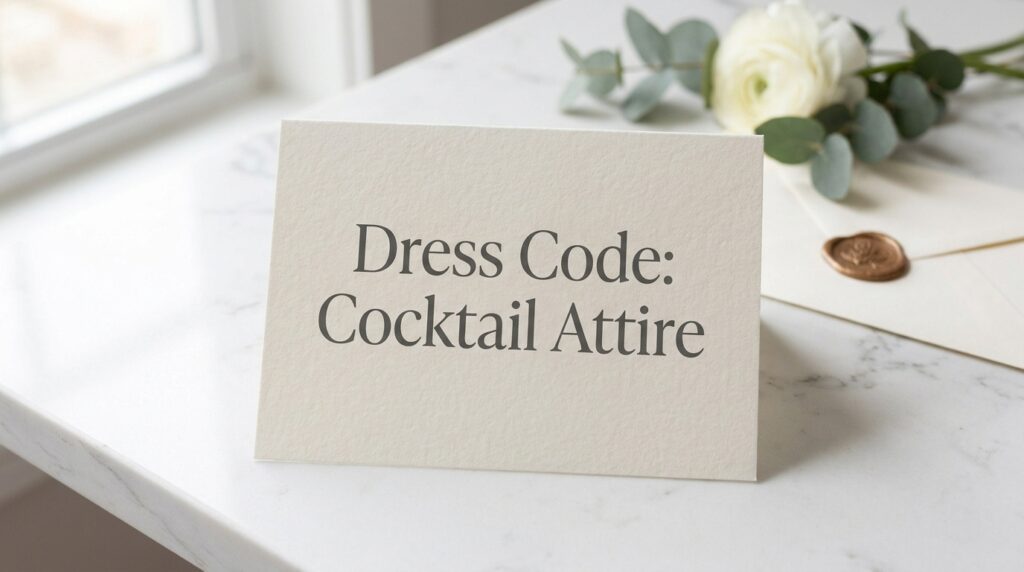
Cocktail attire is one of the most common wedding dress codes and calls for knee-length or midi dresses, elegant jumpsuits, or tailored separates. This is the sweet spot between formal and casual where most wedding guest outfits naturally live, and there’s a wide range of options that work beautifully within this code. A well-chosen cocktail outfit strikes the balance between looking genuinely special and not being so formal it feels out of place.
Garden party, casual, or beach casual dress codes call for lighter, more relaxed options while still requiring effort and intentionality. Flowy midi dresses, elegant sundresses, linen separates, and light fabrics in softer colors all work well for more relaxed dress codes. Casual doesn’t mean jeans and a t-shirt. It means smart casual at minimum, and the overall look should still feel like you’ve made an effort for the occasion.
If no dress code is specified, look for clues in the invitation’s design, the venue, and the time of day. A formal venue and an evening ceremony generally call for cocktail attire at minimum. A daytime ceremony at a relaxed venue typically calls for something more casual. When genuinely unsure, cocktail attire is almost always a safe and appropriate choice that works across most wedding settings.
Consider the Venue and Season
The venue and season significantly affect what will actually work for a wedding guest outfit, beyond just what the dress code permits. A formal dress code at an outdoor summer wedding in direct sun calls for very different fabric choices than the same dress code at an indoor winter ceremony. Practical considerations like heat, cold, walking on grass, and the length of the day all affect which options will keep you comfortable and looking good throughout the event.
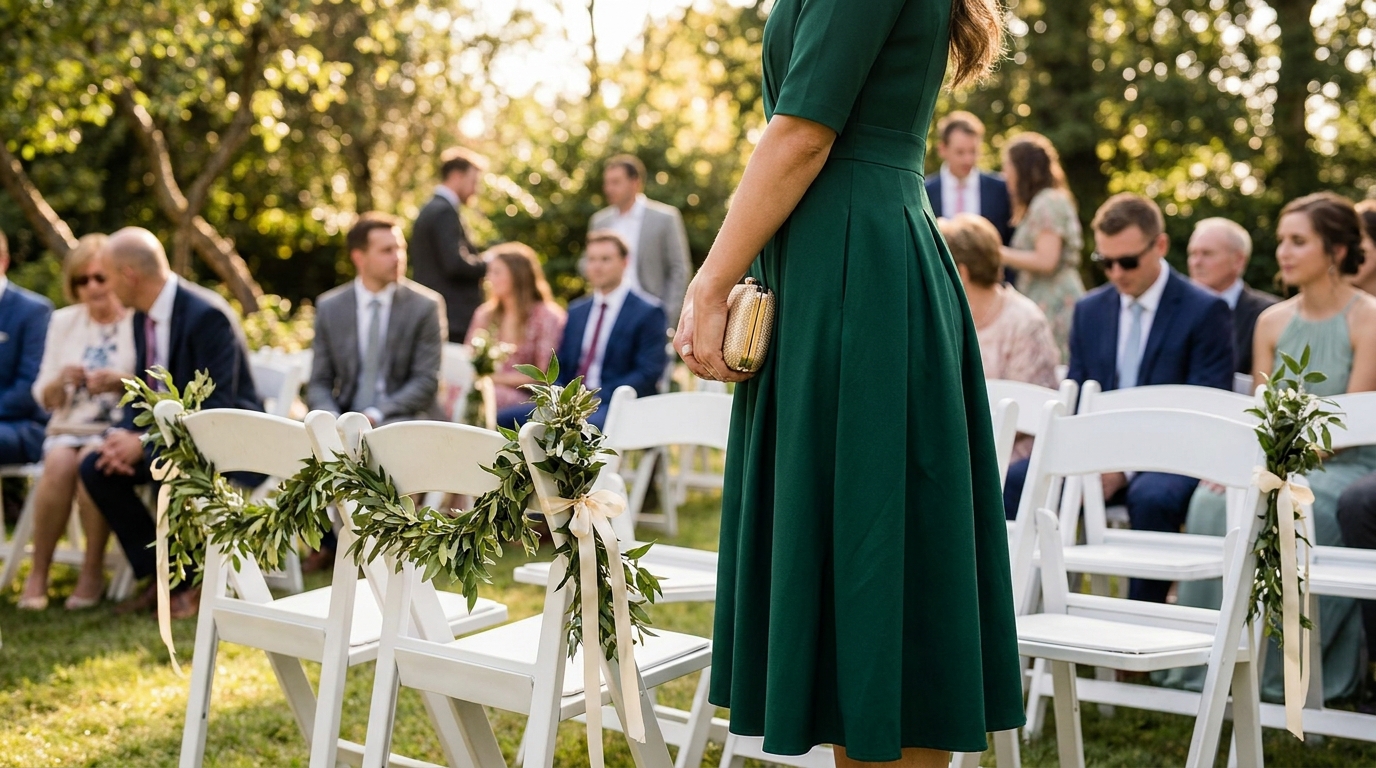
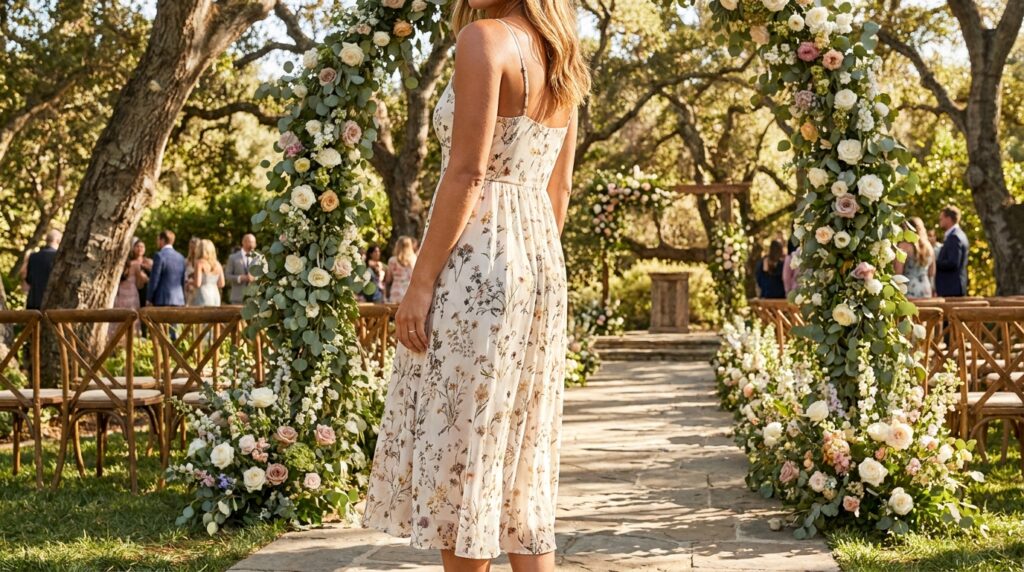
For outdoor summer weddings, lightweight natural fabrics like chiffon, silk, linen, and cotton are far more comfortable than heavier synthetic options that trap heat. Light, breathable fabrics also tend to look better as the day progresses in warm weather, since they don’t wrinkle and crease as dramatically as stiffer options. Heels on grass are a specific practical challenge worth thinking about. A block heel, wedge, or flat tends to work significantly better than a stiletto that sinks into soft ground.
For winter weddings, warmth becomes a practical consideration that often gets overlooked in the excitement of choosing a beautiful dress. A stunning floor-length gown in a lightweight fabric worn in a cold church or an outdoor winter venue will leave you miserable regardless of how good it looks. Consider fabrics with more body and warmth, think about an elegant wrap, tailored jacket, or long coat as part of the overall look, and choose shoes that work both indoors and for any outdoor transitions.
For beach weddings, practicality is everything. Sand, wind, and salt air create specific challenges that most formal outfits aren’t designed for. A flowy, relaxed midi or maxi dress in a lightweight fabric, flat sandals or wedges that can handle sand, and minimal fussy accessories that won’t be affected by wind all serve beach weddings far better than more structured, formal options.
For indoor venue weddings in controlled environments, you have the most flexibility since weather and terrain aren’t factors. Focus on the dress code and the formality of the venue itself, and choose fabrics and silhouettes that photograph well under indoor lighting, which tends to favor richer colors and more structured silhouettes than very pale or very flowing options.
The Rules Worth Knowing
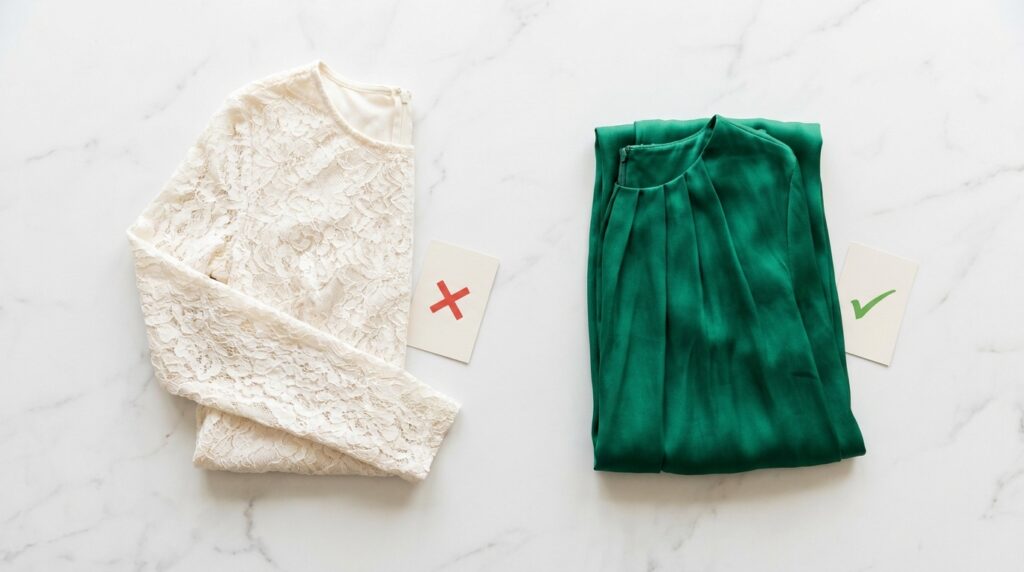
Wearing white, ivory, or cream to a wedding is the most universally known rule for a reason. These are bridal colors, and wearing them as a guest risks appearing as though you’re trying to compete with or upstage the bride, regardless of your actual intention. This rule has extended in recent years to include very pale blush and champagne shades that read as almost-white in photographs. When in doubt about whether a shade is too light and bridal, choose something else. It’s simply not worth the risk of making a bride uncomfortable on her wedding day over a color choice.
Wearing black to a wedding is now almost universally accepted and has been for many years in most Western contexts. A well-chosen black outfit worn with elegant accessories and beautiful shoes looks genuinely sophisticated and appropriate at most weddings. The only exceptions are very traditional or culturally specific weddings where black may carry different connotations, and very casual outdoor weddings where black can feel too heavy and formal for the setting.
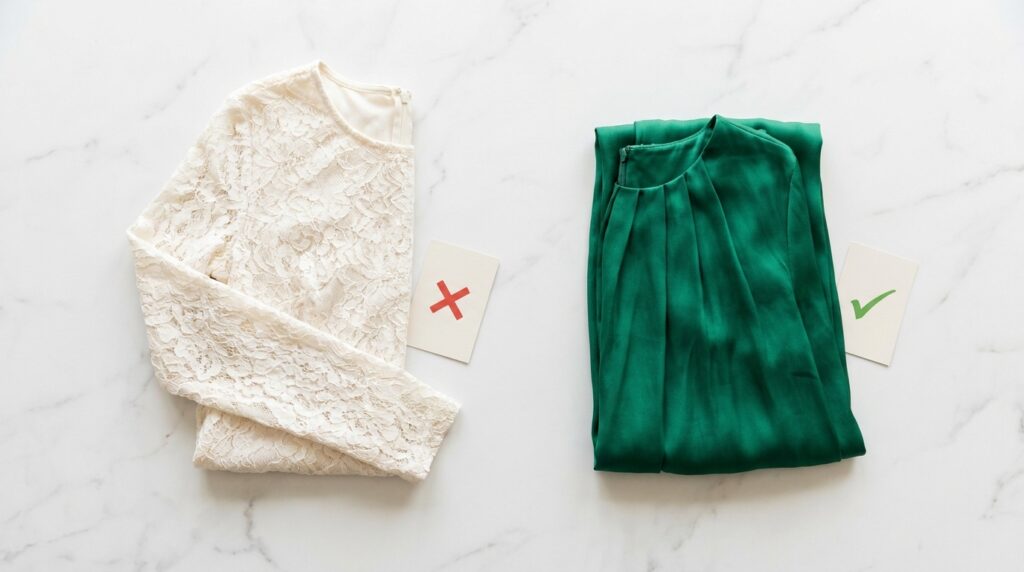
Matching the bridesmaids’ colors is worth avoiding where possible, and it’s worth finding out the color scheme if you can. Arriving in the same color as the bridal party creates visual confusion in photographs and can feel inadvertently presumptuous. Most couples are happy to share the bridesmaid color scheme when asked, and many invitations or wedding websites now include this information.
Very revealing or extremely casual outfits are worth avoiding regardless of what the dress code says. A wedding is a formal occasion in the sense that it marks a significant life event for the couple, and dressing in a way that’s clearly not appropriate to the occasion reads as disrespectful rather than just casual. This doesn’t mean you need to be conservative. It means that the overall impression of the outfit should reflect that you’ve made a genuine effort for the people getting married.
What Actually Works
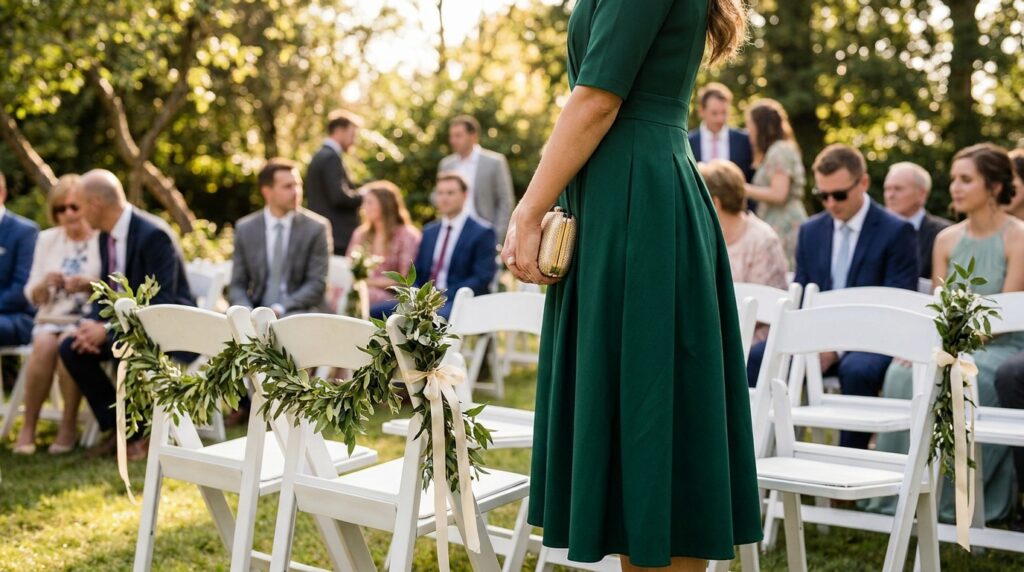
A midi dress in a rich, saturated color or a sophisticated print is one of the most reliable and versatile wedding guest options across a wide range of dress codes and venues. Knee to mid-calf length works for almost every formality level from garden party to cocktail, photographs well in groups, and allows for comfortable movement throughout a long day. A midi in a quality fabric with some structure, think crepe, satin, or linen depending on the season, tends to look appropriately formal without being over the top. It’s also one of the easiest options to accessorize since the length works with both heels and elegant flats.
A tailored jumpsuit is an increasingly popular and genuinely strong choice for wedding guests who want something different from a dress. A wide-leg or tailored cut in a luxurious fabric like silk, satin, or crepe reads as elegant and intentional. The key is that the cut and fabric need to feel formal enough for the occasion. A linen jumpsuit works for a garden party. A silk one works for cocktail or even black tie optional. A well-fitted jumpsuit can also be more comfortable to wear for a long day than a dress, which is a practical advantage worth considering.
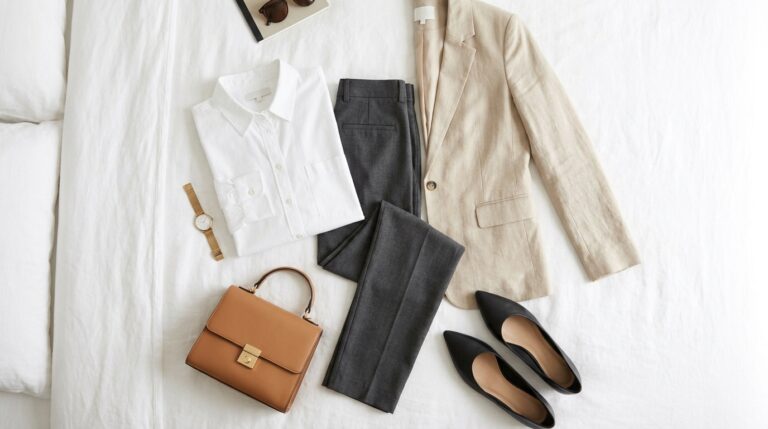
A two-piece set of matching tailored separates, a cropped blazer with wide-leg trousers or a matching skirt, offers both elegance and flexibility. Separates can be dressed up or down more easily than a dress, and they tend to be more wearable after the wedding since the pieces can be worn separately with other items. A coordinated set in a rich fabric like satin or crepe looks as polished as a dress while giving you the versatility of separates.
For more formal weddings, a floor-length gown or an elegant formal midi in a rich fabric like velvet, silk, or heavy crepe tends to be the strongest choice. Prints work at this formality level if they’re sophisticated rather than casual, but a rich solid color in a beautiful fabric rarely goes wrong. When in doubt at a formal wedding, a classic, well-executed solid color in a luxurious fabric is almost always the safest and most consistently flattering choice.
Accessories and Finishing Details
Accessories for a wedding guest outfit should feel considered and complete without being excessive. A wedding is a dressier occasion than most, which means accessories that might feel over the top for everyday wear are appropriate and welcome here. An elegant clutch, statement earrings, or a delicate necklace all contribute to the overall impression of an outfit that’s been thoughtfully put together. The key is choosing accessories that complement the outfit rather than competing with it.
Shoes deserve particular thought because weddings involve a lot more standing, walking, and dancing than most people anticipate. A heel you can actually be on your feet in for several hours makes a far better choice than the most beautiful pair you own if those two things are different shoes. A block heel, kitten heel, or elegant flat tends to get you through a full wedding day more comfortably than a high stiletto, particularly if any part of the event involves outdoor terrain. If you’re torn between comfort and style, remember that no one will remember your shoes but you will remember how your feet felt by the end of the night.
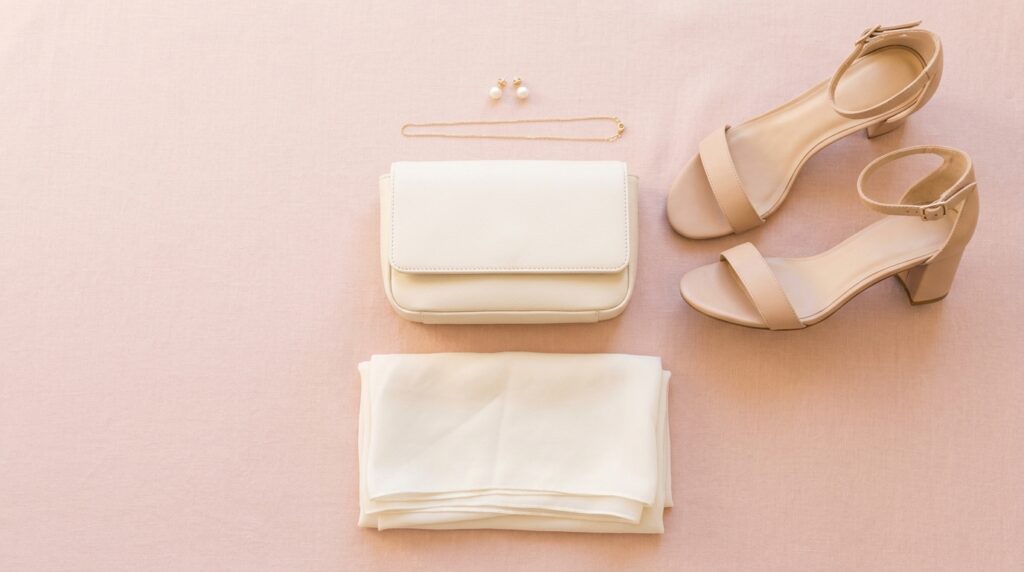
A wrap, shawl, or elegant jacket serves both practical and stylistic purposes at many weddings. For religious ceremonies that require covered shoulders, it’s a necessity. For outdoor or evening events that get cool, it’s a practical essential. And for the overall outfit, a beautiful wrap or tailored jacket adds a layer of polish and intentionality that a dress worn alone sometimes lacks. Choose a wrap or jacket that works with the outfit’s color and formality level rather than as an afterthought.
Hair and grooming matter at a wedding in the same way they matter for any occasion where effort is expected, but perhaps more so since weddings involve a lot of photographs. A polished, considered hair style, whether that’s an updo, a blowout, or clean, well-styled natural hair, completes the overall look and contributes to looking put-together in the group photographs that will exist long after the day itself.
Planning Ahead
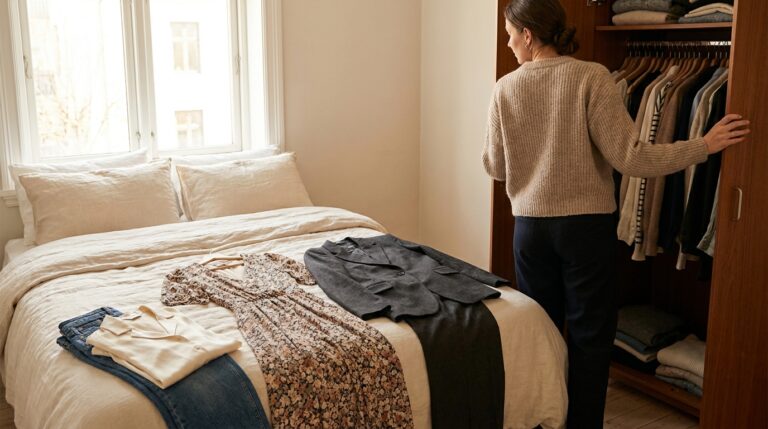
Leaving the outfit decision to the last minute is the single most common source of wedding guest outfit stress, and it’s entirely avoidable. Ideally, have your outfit planned and ready at least two weeks before the wedding. This gives you time to make alterations if something doesn’t fit quite right, to find shoes or accessories that work with the outfit rather than grabbing whatever’s available, and to identify any problems, a missing button, a hem that needs taking up, a stain you hadn’t noticed, before the morning of the wedding. The two weeks of buffer time is what separates a stress-free wedding morning from a chaotic one.
Try the complete outfit on, including shoes and accessories, well before the day. This is the step most people skip and later regret. An outfit that looks great on its own can behave completely differently once you add the shoes and bag you’re planning to wear with it. The neckline might not work with the necklace you had in mind. The shoes might make the hem length look awkward. The bag might be too small to carry everything you need. Identifying these things two weeks out gives you options. Identifying them the morning of leaves you with very few.
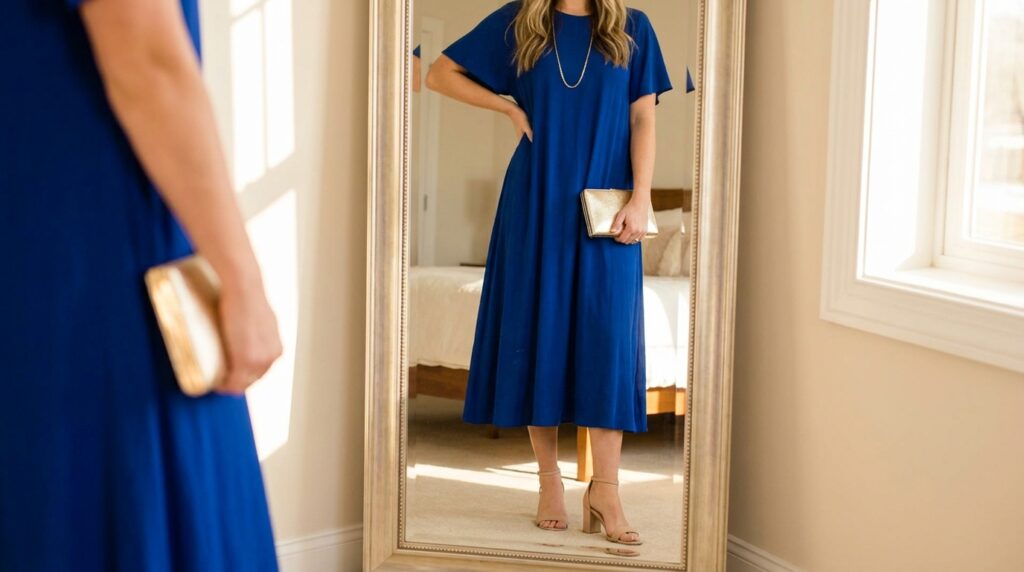
Have a plan for the outfit’s practicalities, specifically how you’ll get through a ceremony, a reception, and often a long day of photographs, meals, dancing, and transitions between venues. Think about whether you’ll need to carry a bag or if a clutch is sufficient, whether you have somewhere to store a wrap during dancing, whether your shoes will allow you to be on your feet for extended periods comfortably, and whether the outfit will still look presentable after several hours of wear. The best wedding guest outfit is one that looks great at the start of the day and still looks put together at the end of it.
Frequently Asked Questions
Can I wear a short dress to a wedding?
Yes, for most dress codes. A knee-length cocktail dress is perfectly appropriate for cocktail, garden party, and casual wedding dress codes. For black tie or very formal weddings, a longer length tends to be more appropriate. The venue and formality level are the main factors rather than a universal rule about length.
Is it okay to wear trousers to a wedding?
Absolutely, as long as they’re tailored and styled appropriately for the dress code. Wide-leg trousers in a luxurious fabric with an elegant top or as part of a matching set can look genuinely beautiful and appropriate at weddings from garden party to cocktail level formality.
What shoes work best for a wedding?
A heel you can comfortably wear for several hours is almost always the better choice over a more impressive heel you’ll struggle in. Block heels, kitten heels, wedges, and elegant flats all work beautifully at weddings. If the wedding involves any outdoor terrain, a stiletto is worth avoiding.
Can I repeat an outfit I’ve worn to a previous wedding?
Yes, always. There is no rule against wearing the same outfit to multiple weddings, particularly if they involve different guest lists. Updating the accessories and styling the hair differently can make the same outfit feel fresh even if you’ve worn it before.
What should I avoid wearing to a wedding?
White, ivory, cream, and very pale shades that could read as bridal. The bridesmaids’ colors if you know them. Anything very revealing or very casual that doesn’t reflect the formality of the occasion. Very uncomfortable shoes that will leave you miserable by the end of the evening.
How far in advance should I plan my wedding guest outfit?
At least two to three weeks before the wedding is ideal, giving you enough time for alterations, to find accessories, and to do a full trial run of the complete outfit including shoes and bag. For destination weddings or weddings requiring very specific dress codes, starting even earlier gives you more options and less stress.