The Best Nail Colors for Every Skin Tone
Choosing a nail color sounds like one of the simpler decisions in beauty, until you’re standing in front of a wall of hundreds of polishes trying to figure out which one will actually look good on your hands rather than just beautiful in the bottle. Because nail colors in the bottle and nail colors on your actual nails can look surprisingly different, and what works beautifully on someone else’s hands can look completely wrong on yours, not because of anything you did wrong, but simply because of the undertones in your skin.
Understanding which nail colors work with your skin tone is one of those pieces of knowledge that quietly improves every single nail decision you make from that point forward. It doesn’t mean you can only wear certain colors. It means you know which shades within any given color family will actually flatter your hands rather than making them look washed out, sallow, or at odds with your complexion. And once you know that, choosing a nail color becomes genuinely enjoyable rather than a gamble every time.
This guide covers how to identify your skin tone and undertone, which colors tend to be universally flattering, and then breaks down the most flattering shades for each skin tone so you can make confident, informed choices next time you’re at the salon or standing in the polish aisle.
Understanding Skin Tone and Undertone
Before diving into specific color recommendations, it’s worth understanding the difference between skin tone and undertone, because these are two different things and both affect how nail colors look against your hands.
Skin tone refers to the surface color of your skin, which is typically described as fair, light, medium, olive, tan, or deep. This is what most people think of when they think about their skin color, and it’s the most visible characteristic from a distance. Skin tone can change with sun exposure, seasons, and age.
Undertone is different and doesn’t change regardless of how much sun you get. It’s the subtle color that sits beneath the surface of the skin and affects the overall warmth or coolness of your complexion. Undertones are generally categorized as warm, cool, or neutral. Warm undertones have a yellow, peachy, or golden quality. Cool undertones have a pink, red, or bluish quality. Neutral undertones have a mix of both without either one dominating.
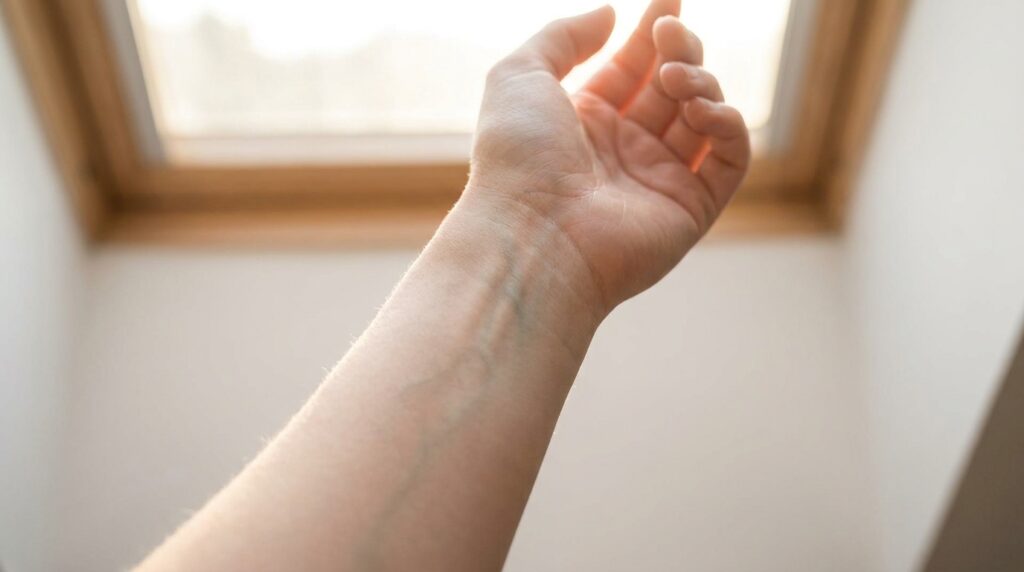
A simple way to identify your undertone is to look at the veins on the inside of your wrist in natural daylight. Veins that appear greenish suggest warm undertones. Veins that appear blue or purple suggest cool undertones. Veins that appear to be a mix of both, or that you genuinely can’t categorize as either, suggest neutral undertones. Another quick test is to hold a piece of gold jewelry and a piece of silver jewelry next to your face. If gold looks more flattering, you likely have warm undertones. If silver looks better, cool undertones. If both look equally good, neutral undertones.
Why does this matter for nail color? Because nail colors have undertones too. A red can be warm and orange-leaning or cool and blue-leaning. A pink can be peachy and warm or frosty and cool. Choosing nail colors whose undertones complement rather than clash with your skin’s undertones produces a more harmonious, flattering result.
Colors That Work for Everyone
Before getting into skin-tone-specific recommendations, it’s worth noting that certain colors are genuinely flattering across a wide range of skin tones and are worth knowing as reliable choices when you want something that simply works without requiring much analysis. These are the shades worth having in your collection regardless of your specific skin tone.
True red is one of the most universally flattering nail colors that exists, and it’s earned that reputation. A classic, balanced red that sits neither too orange nor too blue tends to look striking and polished on most skin tones because the vibrancy of red creates contrast against the skin rather than blending with it. The key is finding a red that leans slightly more toward your undertone, warmer reds for warm undertones and cooler, blue-leaning reds for cool undertones, but even a neutral red tends to work well across the board.
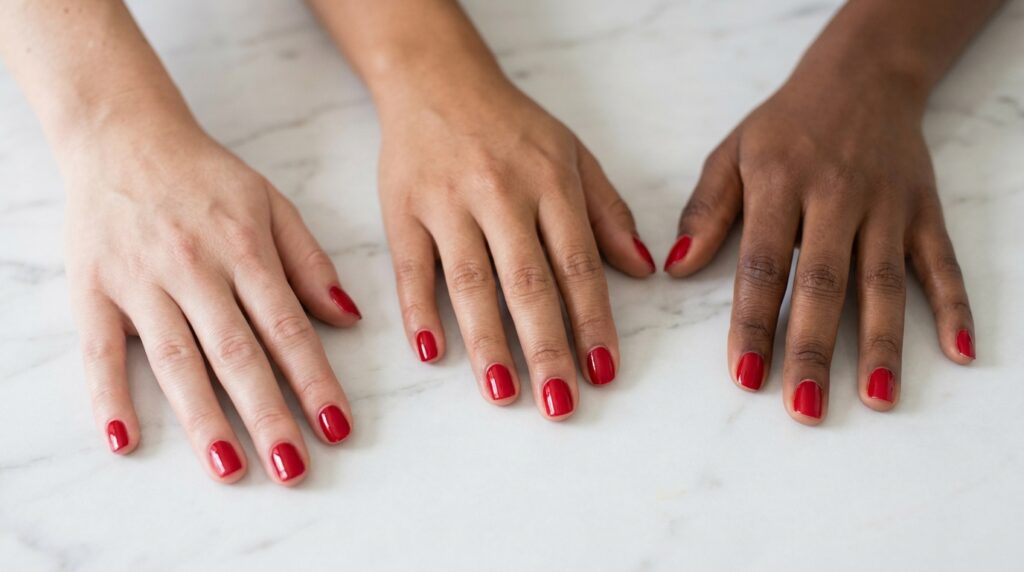
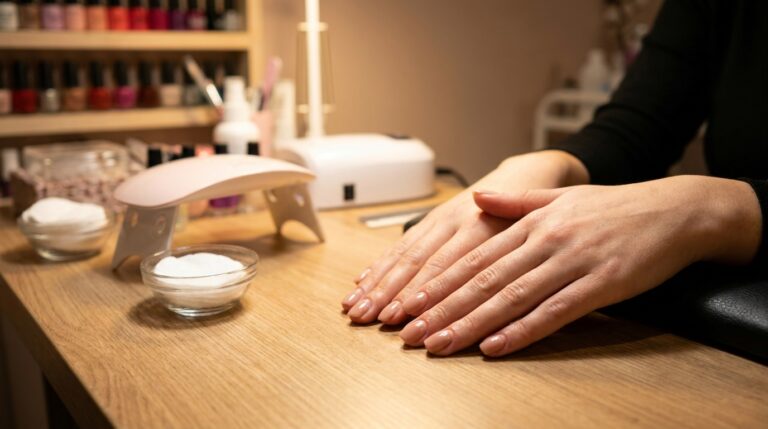
Nude shades in the right undertone are another near-universal option. A nude that matches your skin tone closely elongates the fingers and creates a clean, polished look that works in almost any situation. The important caveat here is that there’s no single nude that works for everyone. The right nude for fair skin looks completely different from the right nude for deep skin, which is why finding your personal nude is worth the effort of trying a few options. Once you find it, it becomes one of the most reliable and versatile colors in your collection.
Deep, rich jewel tones like burgundy, plum, and forest green tend to look striking and flattering across a wide range of skin tones because they’re saturated enough to create beautiful contrast against both lighter and deeper complexions. These shades photograph well, look luxurious in person, and tend to age gracefully on the nail without looking dated the way some trendier colors do.
Clear or sheer glossy finishes are flattering on virtually everyone because they enhance rather than alter the natural appearance of the nails, adding shine and a polished look without introducing a color that needs to work with the skin tone.
Fair and Light Skin Tones
Fair and light skin tones with cool undertones tend to look most striking with colors that have a similar cool quality rather than warm shades that can make the skin look sallow or yellowish by contrast. This doesn’t mean avoiding warm colors entirely, it means knowing which warm shades work and which don’t. The general principle is that colors sharing the same cool or warm quality as the skin’s undertone tend to be more harmonious than those that contrast with it.
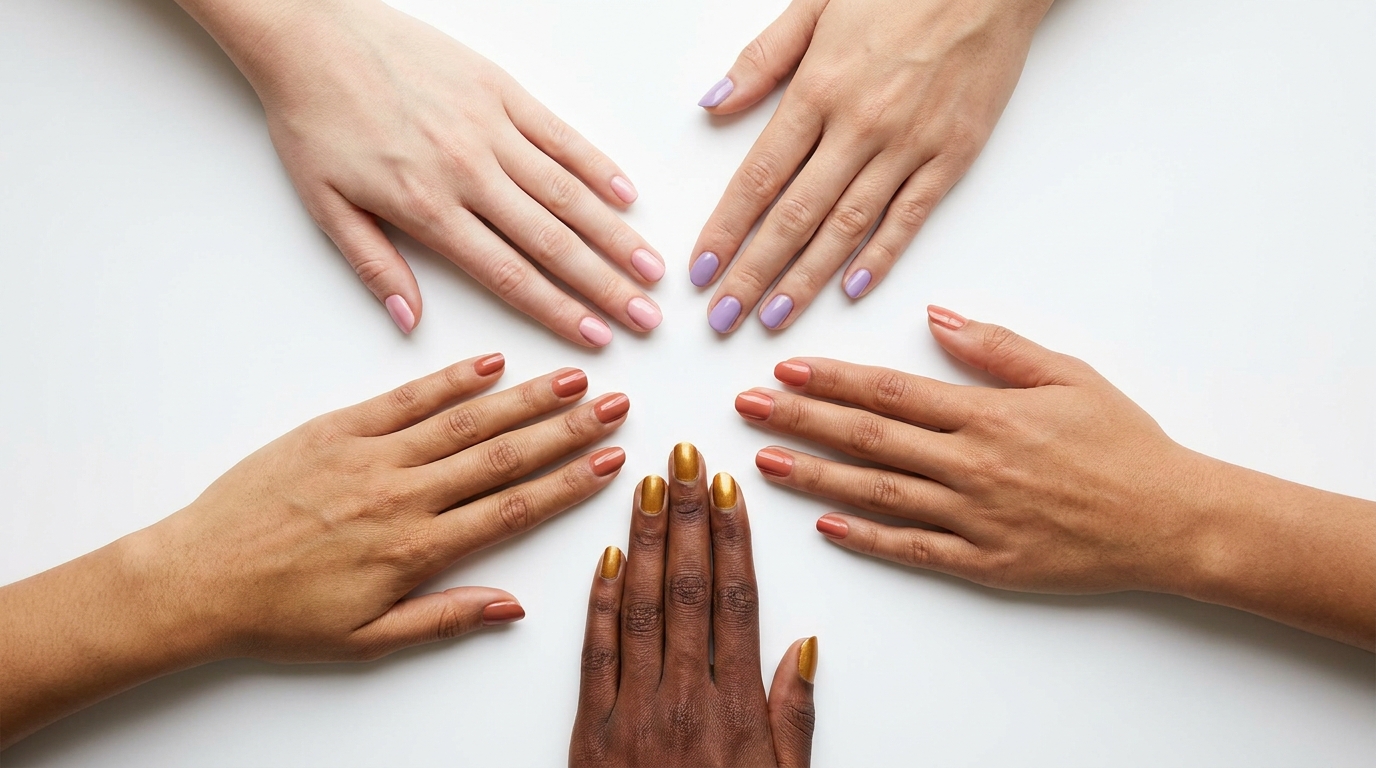
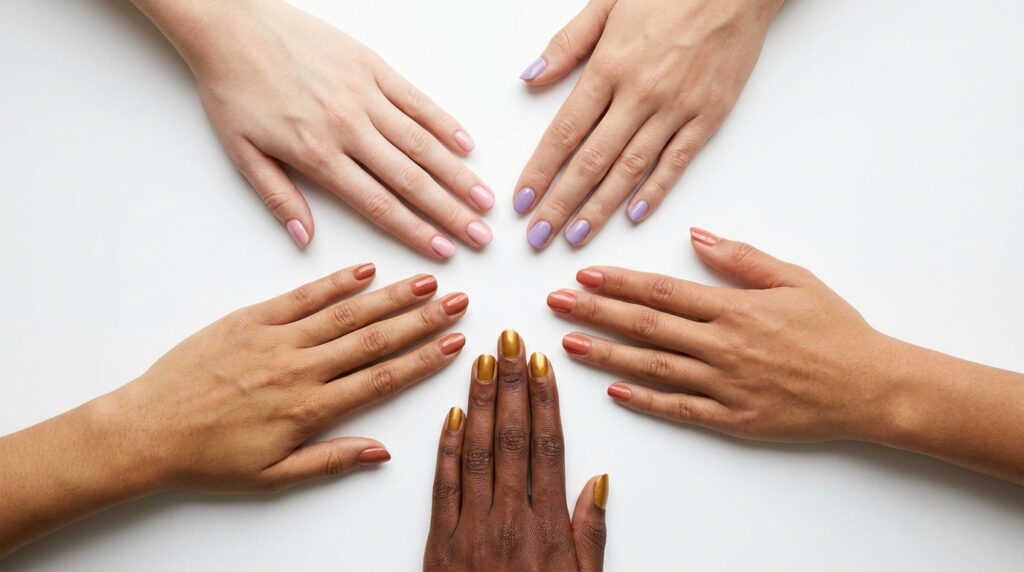
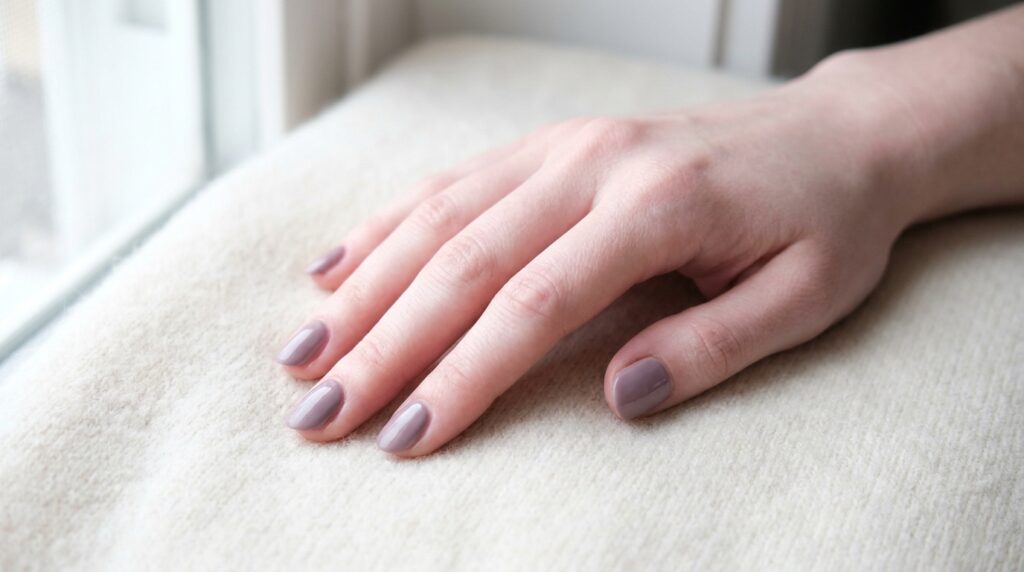
Soft pinks and mauves are among the most consistently flattering shades for fair, cool-toned skin. A cool-leaning pink, one that has a slightly blue or lilac quality rather than a peachy one, complements the skin’s natural coolness and creates a harmonious, pretty effect. Sheer baby pinks look delicate and feminine. Deeper mauves look sophisticated and elegant. Both tend to work well on fair skin with cool undertones.
Lavender and lilac shades are another strong choice for fair cool-toned skin, since the purple-blue quality of these shades echoes the cool undertones in the skin and creates a cohesive, flattering result. These are particularly popular in spring and summer when lighter, more playful colors feel most appropriate. A soft lavender on fair cool-toned skin looks effortlessly pretty in a way that it sometimes doesn’t quite achieve on warmer or deeper complexions.
Navy, deep burgundy, and wine shades look striking against fair skin because the deep contrast between a very dark color and a very light complexion is visually dramatic and elegant. These shades particularly suit fair skin with cool undertones in autumn and winter, and they photograph beautifully in group settings where the contrast between nail color and skin reads clearly.
For fair skin with warm undertones, peachy pinks, warm corals, and golden nudes tend to be the most flattering since they complement rather than clash with the warmth in the skin. A coral that leans peach rather than orange, a warm pink that has a hint of yellow, or a nude with golden undertones all work beautifully on fair warm-toned skin. These shades create a sun-kissed, glowing effect rather than the washed-out look that cool shades sometimes produce on warm-toned fair complexions.
Shades to approach carefully on fair skin include very orange-based corals and bronzes, which can make fair skin look washed out or sallow, and very pale, almost white shades that can make the hands look ashy rather than clean and polished.
Medium Skin Tones
Medium skin tones have the advantage of being able to pull off a very wide range of nail colors since the depth of color in medium skin provides enough contrast to make both lighter and darker shades look interesting rather than disappearing or clashing.
For medium skin with cool undertones, berries, cool mauves, and dusty roses tend to be the most harmonious choices. A deep berry that has a blue-pink quality rather than a red-orange one, or a dusty rose that leans more pink than peach, complements cool undertones in medium skin beautifully.
Rich corals and warm pinks are another strong category for medium warm-toned skin. A coral that sits between pink and orange, or a warm pink with peachy undertones, looks vibrant and flattering without overwhelming a medium complexion the way it sometimes can on fairer skin.
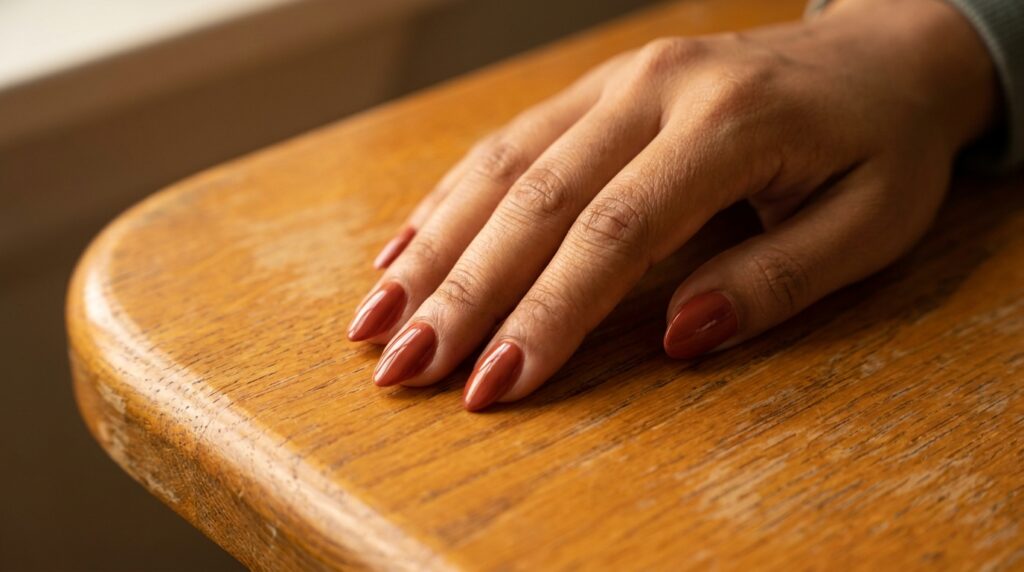
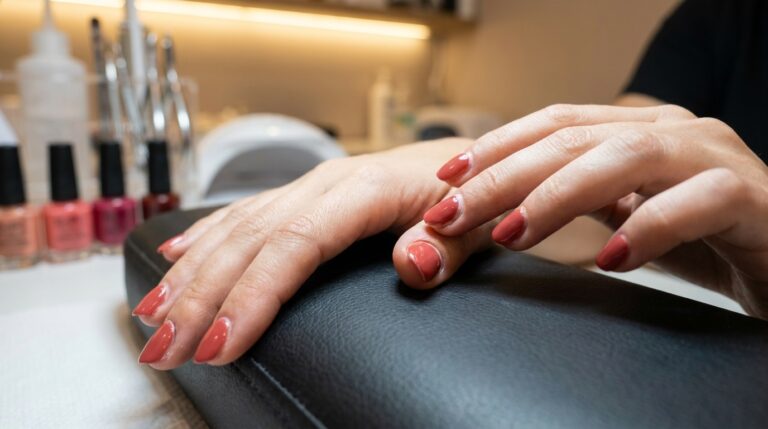
Warm terracotta, burnt orange, and rust shades look particularly beautiful on medium skin with warm undertones, since these earthy, sun-warmed tones harmonize naturally with the warmth in the complexion. These shades have been trending for good reason and they look especially rich and flattering on medium warm-toned skin in a way that they don’t always achieve on fairer complexions.
Olive skin, which is a type of medium skin with distinctive warm and sometimes greenish undertones, tends to look particularly stunning with deep, saturated colors. Mustard yellow, warm olive green, and rich chocolate brown all harmonize with olive skin’s natural warmth in a way that creates a very distinctive and striking look. Earthy, muted tones in general tend to work particularly well on olive skin.
Nude shades for medium skin should have a pink or peachy quality rather than being too pale, since a nude that’s designed for fair skin will look ashy and washed out on a medium complexion. A warm beige, a peachy nude, or a soft caramel that matches the medium skin tone closely produces the elongating, polished effect that nudes are known for.
Deep and Dark Skin Tones
Deep and dark skin tones are some of the most versatile canvases for nail color because the richness and depth of the complexion means that a huge range of colors show up beautifully, from bright neons to deep jewel tones to warm metallics, in ways that can look very different on lighter complexions. Colors that disappear or look muddy on lighter skin often read as rich and vibrant on deeper complexions.
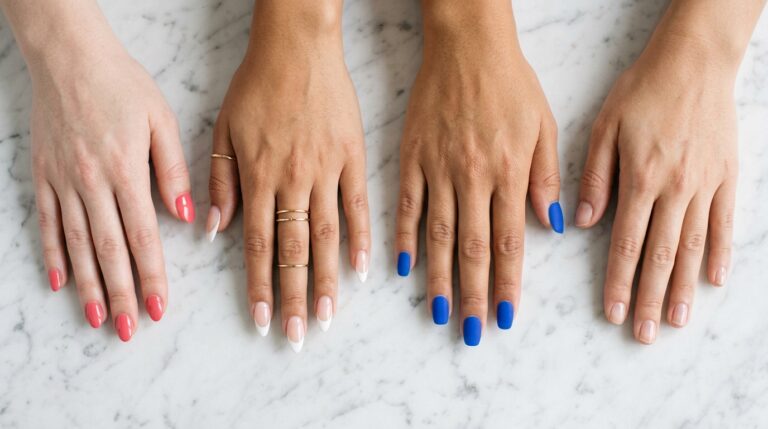
Bright, saturated colors look particularly vibrant and striking on deep skin tones because the contrast between a bold, vivid color and a rich complexion creates an eye-catching effect that tends to be more muted on lighter skin. Bright coral, vivid fuchsia, electric blue, and emerald green all look more dramatic and vibrant on deep skin than they do on lighter complexions, which makes these shades particularly rewarding choices.
Gold and warm metallic shades are among the most universally flattering options for deep and dark skin tones with warm undertones. The warmth of gold complements warm undertones beautifully and creates a luxurious, sophisticated look that tends to be genuinely stunning on deeper complexions. Copper and bronze metallics work similarly well, adding a rich warmth that harmonizes naturally with the complexion.
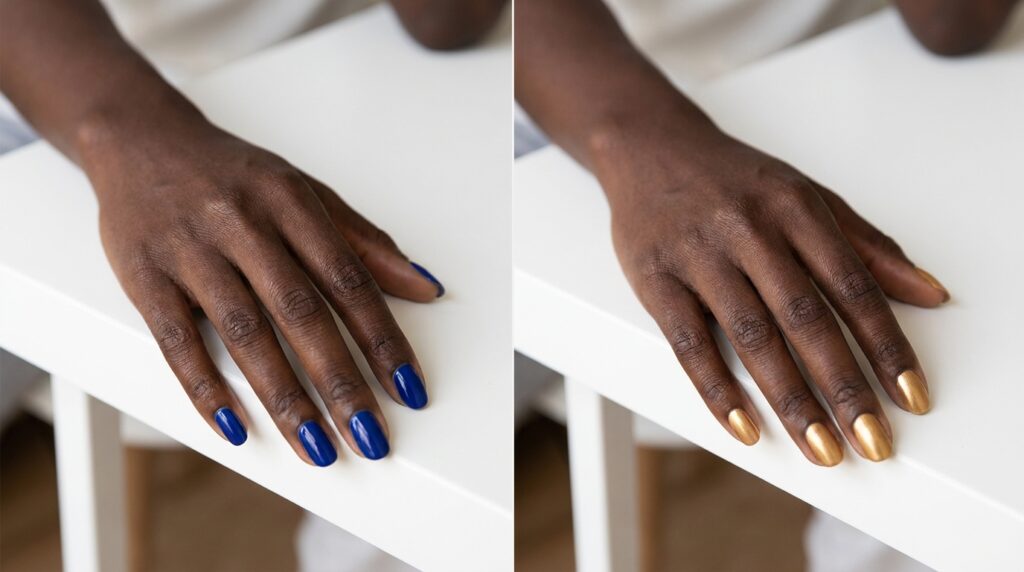
Deep jewel tones, particularly cobalt blue, emerald green, and deep purple, look rich and dramatic on dark skin tones in a way that they can sometimes look heavy or overwhelming on lighter ones. The depth of the color against the depth of the complexion creates a beautiful, layered richness rather than too much contrast.
White and very light shades create a high-contrast, bold effect on deep skin tones that reads as deliberate and striking rather than the washed-out effect the same shades can create on fair skin. A bright white or a pale lavender on deep skin makes a genuine statement and photographs beautifully.
For deep skin with cool undertones, plums, purples, and cool-leaning berries tend to be particularly harmonious. A deep plum or a cool, blue-toned red creates a beautiful complementary contrast with a cool-toned deep complexion.
Nude shades for deep skin should be rich and warm, typically in the caramel, chocolate, or deep beige range rather than the pale pink nudes designed for lighter skin. Finding a nude that truly matches a deeper complexion rather than settling for a shade several tones lighter produces the most flattering elongating effect.
Finishes and Their Effect on Different Skin Tones
Beyond the color itself, the finish of a nail polish significantly affects how it looks against different skin tones, and understanding this adds another dimension to making flattering choices. Two polishes in the same color can look noticeably different on the nail simply because of their finish.
Glossy finishes tend to be the most universally flattering because the shine adds dimension and vibrancy to any color and makes the nails look healthy and well-maintained regardless of the shade. A glossy finish on any color tends to make it look richer and more saturated than the same color in a matte finish. It also tends to make colors look more true to how they appear in the bottle.
Matte finishes can look very sophisticated and modern but tend to make colors appear lighter and more muted than their glossy counterparts. On fair skin, very pale matte shades can look ashy. On deeper skin, rich matte colors like burgundy and deep green look particularly striking and contemporary. Matte finishes work best when the color is rich and saturated enough to carry the reduced luminosity.
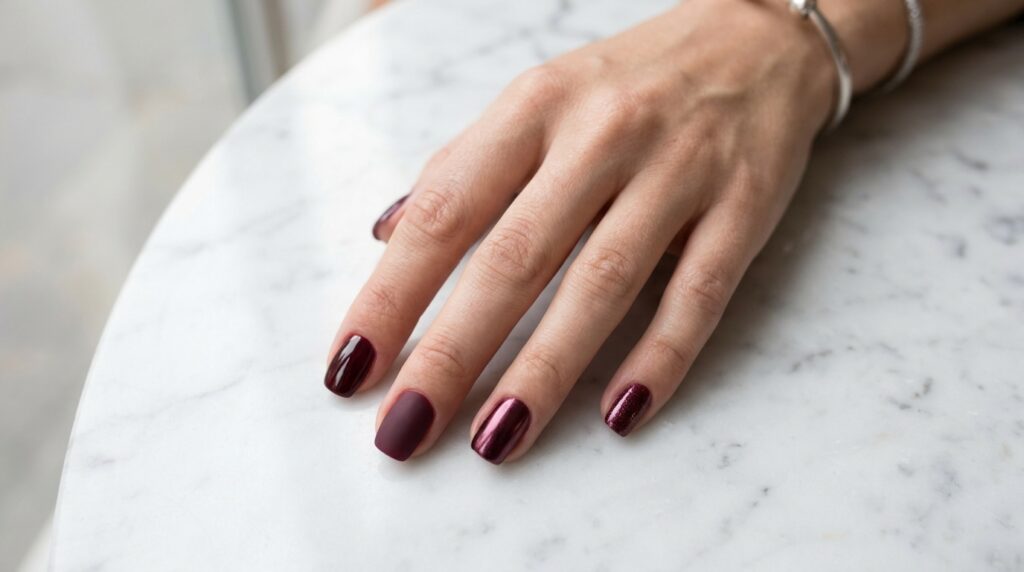
Metallic and chrome finishes tend to be most flattering when the metal tone complements the skin’s undertone. Gold and copper metallics flatter warm undertones. Silver and platinum metallics flatter cool undertones. Rose gold sits in between and tends to work well across a range of undertones, which is part of why it has remained such a consistently popular finish across different seasons and trends.
Glitter and shimmer finishes are generally flattering across most skin tones when the base color works well with the skin tone, since the shimmer adds light and dimension without significantly changing the color’s relationship to the skin.
Frequently Asked Questions
Does skin tone really affect how nail colors look?
Yes, significantly. The undertones in your skin interact with the undertones in a nail color, and colors that complement your undertones look harmonious and flattering while colors that clash can make your hands look sallow, ashy, or washed out. Understanding your undertone is the most useful single piece of information for choosing flattering nail colors.
Can I wear any color I like regardless of my skin tone?
Absolutely. Skin tone guidelines are meant to help you identify which shades within a color family will be most flattering, not to restrict which colors you’re allowed to wear. If you love a color and feel confident wearing it, that confidence will always read better than a technically flattering shade you feel uncertain about.
How do I find the right nude for my skin tone?
The most flattering nude is one that closely matches your actual skin tone rather than being significantly lighter or darker. For fair skin, look for pale pink or peachy nudes. For medium skin, warm beige or peachy nudes. For olive skin, caramel or warm tan nudes. For deep skin, rich chocolate or deep caramel nudes. Many nail brands now offer nude ranges specifically designed for different skin tones.
Why do some colors look different in the bottle than on my nails?
The color of the bottle itself affects how the polish appears inside it, and the polish looks completely different once spread thinly over the nail and seen against your skin. This is why swatching on your actual nail before committing to a color gives you a much more accurate sense of how it will look than judging from the bottle alone.
Are there nail colors that don’t suit anyone?
Very few colors are universally unflattering, but certain shades are harder to wear than others. Muddy, grayed-out shades that have no clear warmth or coolness tend to be less flattering across the board. Very yellowed or sickly greens can be difficult for most skin tones. But even these can work depending on the person’s specific complexion and how the shade is styled.
Should I consider my hand’s undertone separately from my face’s undertone? Generally they’re the same, but hands can sometimes appear slightly different from the face due to sun exposure, veining, and the different texture of the skin on the hands. Swatching nail colors on your actual hand in natural light gives you the most accurate sense of how they’ll look, since the hand is the context in which the nail color will actually be seen.