
How to Tell If Your Hair Needs More Moisture or More Protein

If you’ve ever spent money on a highly rated hair mask only to find your hair felt worse afterward, or applied a protein treatment that left your hair feeling stiff and brittle instead of strong and healthy, you’ve experienced one of the most common and frustrating mismatches in haircare: giving your hair what you thought it needed rather than what it actually needed.
The moisture versus protein question is one of the most important in haircare, and also one of the least understood. Most people treat conditioning as a single category, reaching for whichever product smells good or has appealing packaging without thinking about whether their hair is crying out for moisture, protein, or a balance of both. The result is a lot of money spent on products that don’t work, and a lot of frustration directed at hair that simply isn’t getting what it needs.
Understanding the difference between moisture deficiency and protein deficiency, recognizing the signs of each, and knowing how to address both is genuinely one of the most useful things you can learn about your hair. Once you understand this balance, a lot of other haircare decisions become simpler and more effective.
Why Both Moisture and Protein Matter
Hair needs two things in ongoing balance to stay healthy: moisture and protein. These aren’t interchangeable, and they don’t serve the same function. Both are essential, but they work in different ways and address different aspects of hair health. Understanding what each one does helps clarify why getting the balance wrong produces such noticeable and sometimes counterintuitive results. It also explains why two people with seemingly similar hair concerns can need completely different treatments to see improvement.
Protein is the structural component of hair. Each strand is made primarily of a protein called keratin, and this protein forms the internal scaffolding that gives hair its strength, resilience, and ability to hold its shape. When protein is depleted, whether through heat damage, chemical processing, mechanical stress, or simply the natural wear of daily life, the hair fiber loses structural integrity. It becomes weak, limp, and prone to breakage under even light stress. The damage isn’t always visible on the surface, which is why people sometimes assume their hair is fine when it’s actually significantly protein-depleted underneath.
Moisture is what keeps the hair flexible, soft, and elastic. A hair strand that has adequate moisture bends and stretches without snapping, feels soft to the touch, and reflects light in a way that reads as shine and health. When moisture is depleted, the hair becomes rigid and brittle, loses its ability to stretch before breaking, and takes on a rough, dull texture that no amount of smoothing products can fully address because the dryness is coming from within the hair shaft rather than from the surface.
The relationship between moisture and protein is a balance rather than a competition. Hair that has sufficient protein but insufficient moisture will feel strong but brittle and snap easily under tension. Hair that has sufficient moisture but insufficient protein will feel soft but weak and stretchy, breaking when it shouldn’t because it lacks the internal structure to hold itself together under stress. Healthy hair needs both in appropriate proportions, and the goal of a good haircare routine is to maintain that balance over time rather than overcorrecting in either direction.
The Elasticity Test: Your Most Reliable Diagnostic Tool
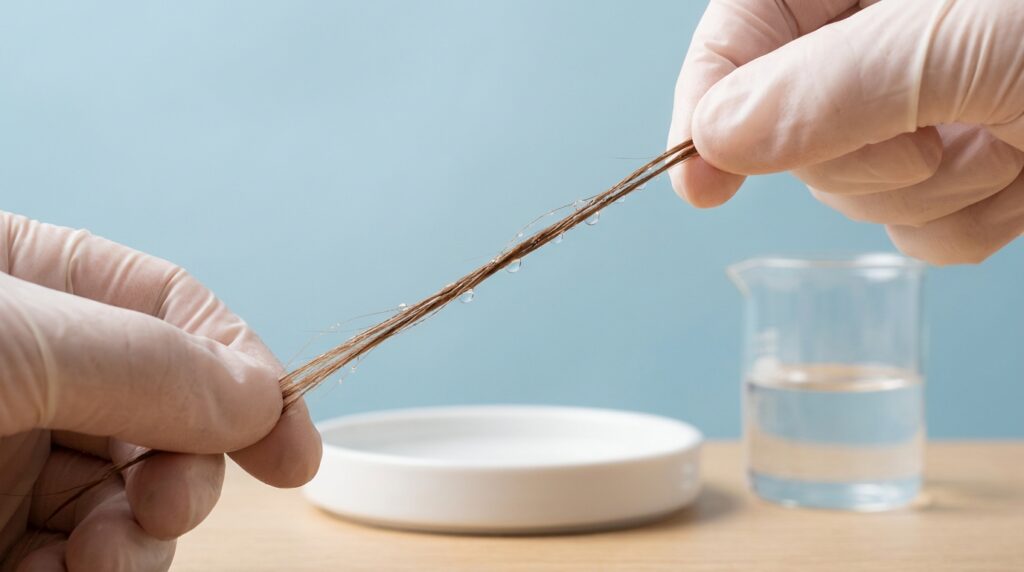
The single most useful way to assess whether your hair needs moisture, protein, or both is the elasticity test, and it costs nothing and takes about thirty seconds. Take a single strand of hair, hold it between the thumb and forefinger of both hands, and gently stretch it. What happens next tells you a great deal about your hair’s current condition.
Healthy hair with a good moisture-protein balance stretches noticeably before it breaks and then returns close to its original length when released. It has what haircare professionals call good elasticity, which is the ability to stretch under tension and recover rather than snapping or remaining permanently stretched.
Hair that snaps immediately with very little stretch is telling you it needs moisture. The hair is too rigid and brittle to handle even gentle tension, which means it lacks the flexibility that adequate hydration provides. This is one of the clearest signs of moisture deficiency, and it often accompanies other symptoms like rough texture, dullness, and dryness that doesn’t respond to conditioning.
Hair that stretches significantly but doesn’t spring back, remaining elongated and limp after being pulled, is telling you it needs protein. The hair has flexibility but no structural resilience. It can be pulled and deformed but doesn’t recover its shape, which is a sign that the keratin structure within the hair shaft is compromised and needs reinforcement. This type of hair often feels mushy or gummy when wet and breaks in a different way to dry, brittle hair.
Hair that both snaps quickly and feels gummy when wet is showing signs of both deficiencies simultaneously, which sounds complicated but is actually fairly common in hair that has been through significant chemical or heat damage. Addressing both through alternating treatments is the appropriate response.
Signs Your Hair Needs More Moisture
Persistent dryness that doesn’t improve after conditioning is the most obvious and common sign of moisture deficiency. If your hair feels dry to the touch regularly, if it returns to feeling dry within a day or two of washing no matter what products you use, and if it has a general lack of softness and suppleness, moisture is almost certainly what it’s missing. This chronic dryness is fundamentally different from the surface-level dryness that a rinse-out conditioner addresses, because it reflects a depletion within the hair shaft itself rather than just on its surface.
Rough, coarse texture that feels almost sandpaper-like when you run your fingers along the hair shaft is a strong indicator of moisture deficiency. Healthy, well-moisturized hair feels smooth because the cuticle lies flat and the hair shaft is adequately hydrated. Dry hair has a lifted, irregular cuticle that creates friction and roughness rather than the smooth surface that hydrated hair has.
Frizz that appears in all conditions, not just in humidity, points toward moisture deficiency. While humidity-induced frizz is a different phenomenon related to the hair absorbing moisture from the air when its own moisture content is low, persistent frizz that appears regardless of weather conditions often indicates that the hair is chronically under-moisturized and the cuticle is consequently lifted and rough.
Dull, flat appearance with no shine or luster is another common sign. Moisture within the hair shaft affects how the cuticle lies, and a flat, smooth cuticle reflects light in a way that reads as shine. A dehydrated cuticle that is lifted and irregular scatters light rather than reflecting it, producing the dull, flat appearance that moisture-deficient hair characteristically has.
Hair that tangles excessively and is difficult to detangle even with conditioner or detangling products can indicate moisture deficiency. Well-moisturized hair has a smoother cuticle surface that allows strands to slide past each other relatively easily. Dry hair’s rough cuticle catches on neighboring strands and creates more friction, leading to more tangling and more difficulty in detangling without breakage.
Brittleness and breakage, particularly snapping during gentle handling like detangling or styling without significant force, points toward moisture deficiency when the break is clean and dry rather than the mushy, gummy breakage associated with protein deficiency.
Signs Your Hair Needs More Protein
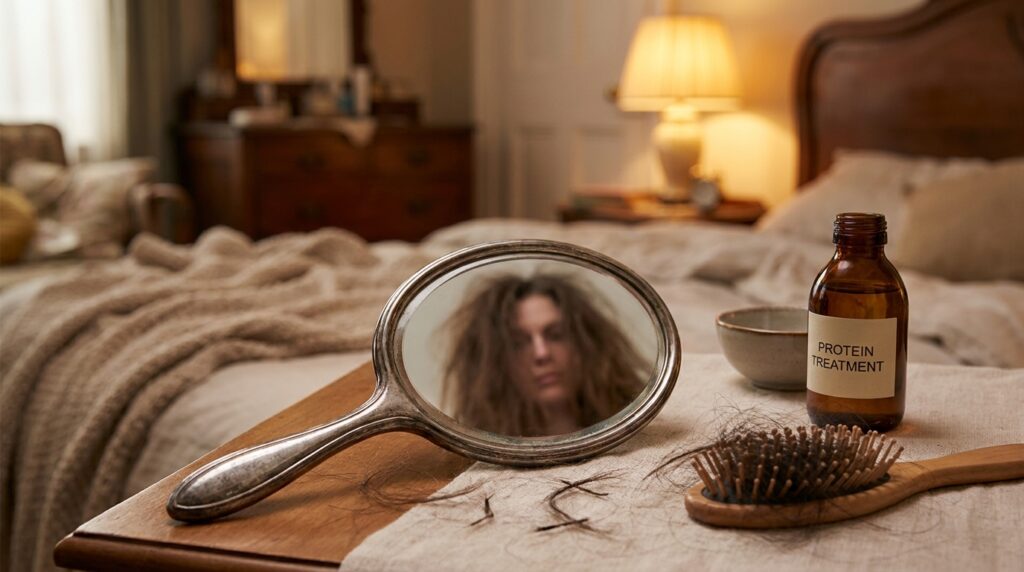
Excessive stretching without recovery is the defining sign of protein deficiency, as described in the elasticity test section above. When hair stretches significantly under gentle tension and doesn’t spring back, the internal protein structure is compromised. This kind of hair feels different to touch than dry, brittle hair. It often feels softer than you’d expect, sometimes even overly soft and limp, because moisture is present but structure is not.
A gummy or mushy feeling when the hair is wet is one of the most specific indicators of protein deficiency. Healthy wet hair feels pliable and a little slippery but still has some structural integrity. Protein-deficient wet hair feels almost gelatinous or gummy, stretching and deforming unusually easily without the structural resilience that protein provides. This feeling is quite distinct and once you’ve identified it you’ll recognize it reliably.
Hair that has lost its natural curl pattern or wave in sections, appearing straighter or less defined than it used to without any heat having been applied, can indicate protein loss. The disulfide bonds in the hair that maintain curl pattern are protein bonds, and when they’re compromised through damage, the curl loosens or disappears in the affected sections. This is a common complaint among people with naturally curly or wavy hair who have experienced significant damage.
Excessive shedding and breakage despite adequate moisture is another sign. If your hair feels reasonably soft and not obviously dry but still breaks frequently, protein deficiency may be the underlying cause. The hair has enough moisture to feel soft but lacks the structural strength to hold together under the normal stresses of styling and daily wear.
Hair that has recently undergone chemical processing such as coloring, bleaching, relaxing, or perming is almost always in need of protein support, since these processes chemically alter the hair’s protein bonds as part of how they work. Even well-executed chemical treatments remove and alter protein from the hair shaft, and supporting the hair with protein treatments after chemical services is one of the most consistently important aftercare steps for chemically treated hair.
Limpness and lack of body, where hair that used to have natural volume or texture now lies flat and lacks any spring or bounce, can indicate protein deficiency even when the hair feels soft and moisturized. Protein provides structure and resilience, and without adequate protein even well-moisturized hair can feel limp and flat rather than full and healthy.
What Happens When You Get the Balance Wrong
Applying a moisture treatment to protein-deficient hair makes the symptoms worse rather than better. Hair that is already too soft and lacking structure doesn’t benefit from more moisture. Adding a rich, moisture-focused deep conditioner to hair that is gummy, limp, and stretchy pushes it further into over-moisturized territory, making it feel even softer and weaker and increasing the likelihood of breakage. This is why understanding which deficiency you’re dealing with before reaching for a product matters so much.
Applying a protein treatment to moisture-deficient hair is equally counterproductive. Hair that is already dry, brittle, and snapping doesn’t need more structural reinforcement. Adding protein to hair that lacks moisture makes it feel stiffer and more brittle, increasing breakage rather than reducing it. This is a very common experience for people who try protein treatments without first assessing their hair’s current condition and assume that protein is always beneficial for damaged hair.
Over-proteinating hair is a real and surprisingly common problem that produces symptoms that can be mistaken for damage or dryness. Hair that has received too much protein without enough moisture to balance it feels hard, stiff, and almost crunchy rather than soft and resilient. It breaks in a snapping, brittle way that feels similar to over-dry hair, which is why people sometimes respond to over-proteinated hair by adding more protein rather than the moisture it actually needs. Recognizing the distinction between protein overload and moisture deficiency is important for addressing the problem correctly.
How to Restore the Balance
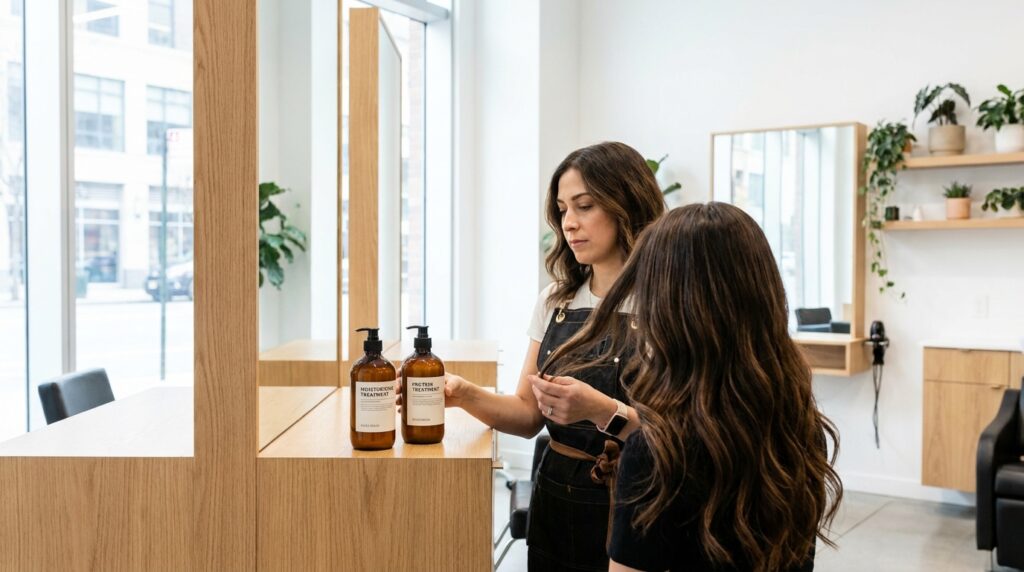
Addressing moisture deficiency starts with deep conditioning using moisture-focused products containing ingredients like shea butter, aloe vera, glycerin, honey, hyaluronic acid, and natural oils. These ingredients draw moisture into the hair shaft and help seal it in. A moisture-focused deep conditioning treatment used weekly for several weeks, combined with a leave-in conditioner on every wash day and a gentle sulfate-free shampoo, typically produces noticeable improvement in moisture-deficient hair within two to four weeks. Covering the hair with a shower cap during deep conditioning and applying gentle warmth helps the product penetrate more deeply into the hair shaft rather than sitting on the surface.
Addressing protein deficiency requires protein treatments containing ingredients like keratin, hydrolyzed wheat protein, rice protein, silk amino acids, or collagen. These ingredients temporarily fill in the gaps in the hair’s protein structure and reinforce the hair fiber from the outside while the hair grows new, undamaged growth from the root. Protein treatments range from light, daily-use products to intensive treatments used monthly, and matching the strength of the treatment to the degree of protein loss is important for avoiding over-proteination. Always follow a protein treatment with a moisture-focused conditioner to prevent the hair from feeling stiff or brittle immediately afterward.
Restoring balance when both are needed is a matter of alternating between moisture and protein treatments rather than applying both simultaneously. A common and effective approach is using a protein treatment one week and a moisture-focused deep conditioner the following week, watching how the hair responds to each and adjusting the frequency based on what the hair is showing you. Hair that still feels gummy after protein treatment may need more protein applications before moisture is reintroduced. Hair that feels stiff after protein treatment needs moisture immediately to soften and balance the effect.
Paying attention to how your hair responds to each treatment rather than following a fixed schedule is the most reliable long-term approach to maintaining the balance. Hair needs change over time, across seasons, and in response to lifestyle and styling choices. Building the habit of regularly assessing your hair’s elasticity and texture and adjusting your routine based on what you observe, rather than applying the same products in the same order regardless of what your hair is doing, produces consistently better results than any fixed protocol.
Frequently Asked Questions
Can I use a protein treatment and a moisture treatment at the same time?
It’s generally better to use them separately rather than simultaneously. Applying a protein treatment and a moisture treatment in the same session can make it difficult to assess how your hair responds to each one, and the two can sometimes interfere with each other’s effectiveness. Alternating them week by week allows you to observe the effect of each clearly and adjust accordingly.
How often should I do a protein treatment?
This depends on the degree of damage and your hair’s current protein levels. Hair that is significantly damaged from bleaching or heat may benefit from a protein treatment every one to two weeks initially. Hair that is generally healthy with minor protein depletion might only need a protein treatment once a month. Reducing frequency once balance is restored and maintaining with monthly treatments is a common long-term approach.
My hair feels soft but still breaks. What’s wrong?
This is a classic sign of protein deficiency. Hair that feels soft but lacks structural strength breaks despite adequate moisture because it doesn’t have the internal protein scaffolding to hold itself together under stress. A protein treatment rather than additional moisture is what this hair needs.
Can heat damage cause both moisture and protein deficiency?
Yes, and it frequently does. Heat damage breaks down both the cuticle structure that retains moisture and the internal protein bonds that provide structural strength. Significantly heat-damaged hair often shows signs of both deficiencies simultaneously, which is why recovery from heat damage typically involves alternating protein and moisture treatments rather than focusing exclusively on one.
How long does it take to see results from addressing the imbalance?
Most people notice an improvement in how their hair feels within one to two treatments of the appropriate type. More significant improvements in overall hair health, strength, and appearance typically take four to eight weeks of consistent, correctly targeted treatment. The speed of improvement depends on the degree of imbalance and how consistently the routine is maintained.
Is protein treatment suitable for all hair types?
Yes, though the type and frequency of protein treatment that works best varies by hair type. Fine hair benefits from lighter protein treatments used more frequently rather than intensive ones used occasionally. Thick, coarse hair can generally handle stronger protein treatments. Curly and coily hair types often need a careful balance of protein and moisture since they tend toward dryness and can become stiff with too much protein. Adjusting the strength and frequency of protein treatment based on your hair’s response is the most reliable approach regardless of type.